Last week I was a guest on the Strength Coach Podcast with Anthony Renna. During our conversation, we talked about:

  • Speed training misconceptions
  • Key differences between running speed and skating speed
  • The importance of transitional speed work (not just running straight)
  • Strategies to monitor rest to maximize speed development, on and off the ice
  • Transitioning from the private sector to the NHL, then from an Assistant to a Head role
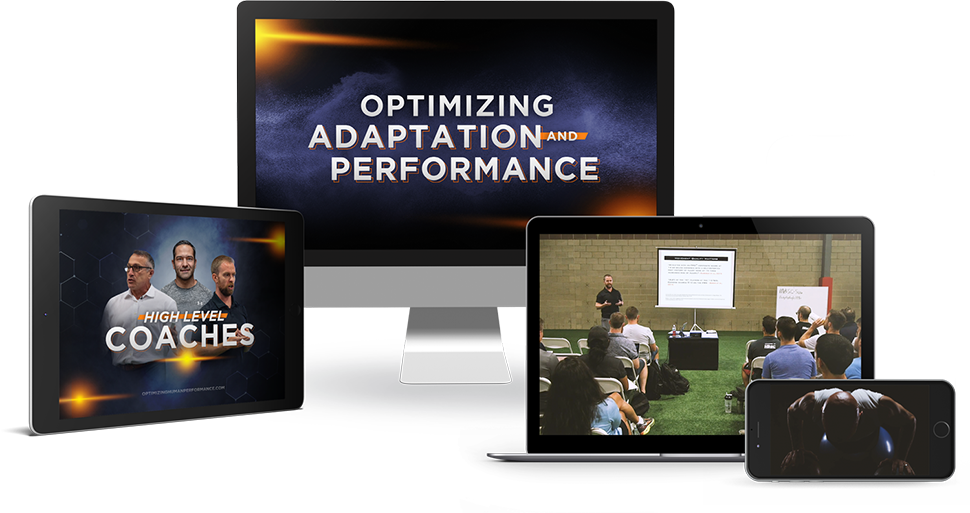
  • A behind the scenes look at our new video series Optimizing Adaptation & Performance

Listen here >> Strength Coach Podcast: Boston Bruins Strength Coach Kevin Neeld- Speed on the Ice and Optimizing Adaptation

A lack of speed is one of the most common limiting factors holding back athletes in all sports.

As a result, speed training is one of the most essential elements of a training program, but still one of the most poorly understood, particularly in hockey.

Identifying the athlete’s limiting factor to speed development is important.

Exercise selection is important.

Programming appropriate rest is important.

Integrating all of these factors, among others, is essential to optimizing speed development and transfer from off-ice training to on-ice speed. We dive into all of this in the podcast!

Listen here >> Strength Coach Podcast: Boston Bruins Strength Coach Kevin Neeld- Speed on the Ice and Optimizing Adaptation

This image has an empty alt attribute; its file name is Optimizing-Adaptation-and-Performance.png

If you want to learn more about how to use assessments to identify limiting factors in your athletes’ performance, check out our new Optimizing Adaptation & Performance video series, which is available at a huge discount until Friday!  

Click here to grab your copy and save $$$ >> Optimizing Adaptation & Performance

To your success,

Kevin Neeld
HockeyTransformation.com
OptimizingMovement.com
UltimateHockeyTraining.com

Enter your first name and email below to sign up for my FREE Athletic Development and Hockey Training Newsletter!

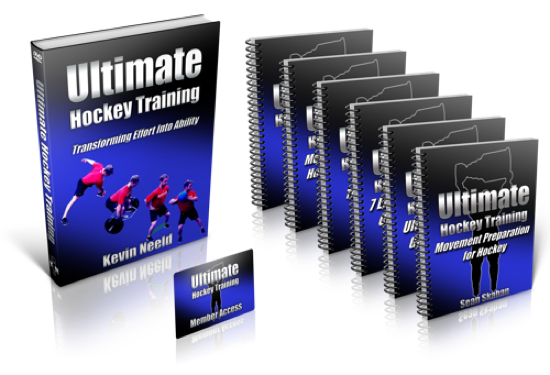
I wanted to kick things off today by saying thank you to everyone that has invested in my new book Ultimate Hockey Training. I’m truly humbled by the level of interest the book has received from a worldwide audience (I even got a request from someone from Australia!). As I mentioned in yesterday’s post, I wrote the book for you based on the questions I receive from you most often, and additional information that I felt was prudent for the hockey community to be aware of.

I also wanted to extend a sincere thank you to my colleagues, many of which I consider friends and/or mentors, in the strength and conditioning industry that have helped spread the word about the book launch. I’m honored that Mike Boyle, Charlie Weingroff, Maria Mountain, Tony Gentilcore, Jeff Cubos, Brian St. Pierre, David Lasnier, and Ben Bruno all took time to mention Ultimate Hockey Training on their sites and that people like Anthony Renna, Perry Nickelston, Joe Dowdell, and Jaime Rodriguez have all posted things on Facebook or Twitter. I appreciate the help guys!

In case you missed it yesterday, I also posted the link for you to watch the third (and final) video in the Ultimate Hockey Training series for absolutely free-no registration required at all. Click here to check it out: Complete Hockey Training System
For today’s Q&A, I want to address some of the other most common questions I’ve gotten over the last week. If you have questions that aren’t mentioned here, post them in the comments section below and I’ll get back to you ASAP!

1) Is Ultimate Hockey Training right for me?

Whenever a new product comes out, there are some people that are on the fence about whether or not it’s “right” for them. Yesterday’s post (which you can find here: Ultimate Hockey Training: The Story) exposed, if you will, the reason why I wrote the book in the first place and the justification for the price point of the product (I actually got an email from a potential buyer asking if he read something wrong! “Am I missing something? Is everything really only…”). My hope was that the post cleared up some of the “is it right for me” questions that you may have had.
To dig a little deeper, it’s fair to mention that the book does cover some pretty “scientific” topics that may catch readers coming from strictly a hockey background by surprise. If you’ve read my site regularly for the last couple years, you’ll already appreciate the importance of some of these topics. Ultimate Hockey Training discusses common, but complex hockey injuries such as chronic groin and hip flexor strains, femoroacetabular impingement (FAI), sports hernias, etc. On this topic, mechanisms of injury and preventative and restorative strategies are addressed. Ultimate Hockey Training also has a lot of detail on how the nervous system influences specific physical qualities, such as speed, power, strength, and conditioning. The nervous system is integral in driving/controlling all movement, so I think it’s imperative to identify how to manipulate the system for the development of desirable qualities.

While these topics might be a little over the head of readers without an exercise science background, I don’t think it prohibits them from using the information. The book is PACKED with practical applications. For those of you curious as to what other topics are covered, take a quick glimpse at the table of contents:

Chapter 1: Understanding The Process
Chapter 2: The Hockey Training Revolution
Chapter 3: Lifelong Hockey Development
Chapter 4: Discovering Hockey Function
Chapter 5: Unlocking Functional Movement With Self-Myofascial Release
Chapter 6: Innovative Dynamic Warm-Ups
Chapter 7: Breakaway Hockey Speed
Chapter 8: Creating Strength And Power Through Neural Manipulation
Chapter 9: The Case For Unilateral Training
Chapter 10: Strength And Power Training For Hockey
Chapter 11: Functional Core Training
Chapter 12: A New Look At Hockey Conditioning
Chapter 13: The Truth About Stretching
Chapter 14: Special Topics In Injury Prevention
Chapter 15: Year-Round Training Considerations
Chapter 16: Conclusion

Hopefully you scan that list and think “There’s nothing left. He covered it all!” That was certainly my intention!

2) Do you cover nutrition?

Brian St. Pierre added a brilliantly written hockey-specific nutrition manual “Ultimate Hockey Nutrition” that is available for purchase to Ultimate Hockey Training customers. For those of you that don’t know Brian, he’s been my go-to nutrition guy for the last five years. Not only does he have a lot of experience working with hockey players at all levels, but he actually played through juniors. I don’t many nutritionists that can “skate the skate”, so to speak. Ultimate Hockey Nutrition is great because it’s written with practical applications in mind. He even included different meal plans for high school, junior and college players (each) for before practice, games, and both home and road tournaments.
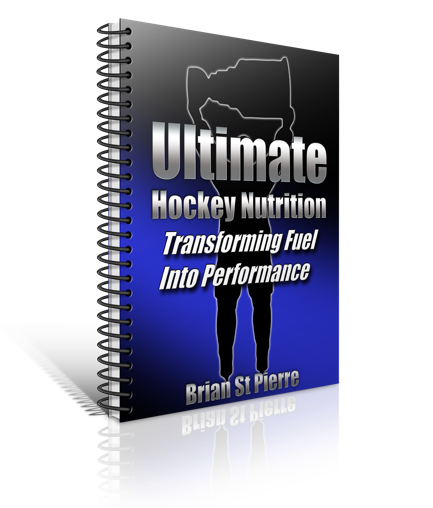
Proper Nutrition: The most recognized and least practiced component of hockey performance!

It’s truly a “player’s resource” in that it provides answers to ALL of the nutrition and supplement questions that Brian and I have gotten from hockey players over the last several years.

3) Have the things in this book been “tested”?

Absolutely. I remember hearing someone say years ago that the coolest thing about visiting Mike Boyle’s facility was that everything he talks about, he actually does. As I mentioned, the book covers some of the scientific rationale behind why I design programs the way I do because I think that’s important. In the interest of “sexier marketing”, you’ll often see people clutch on to the latest gimmick and pitch it as a cure-all.
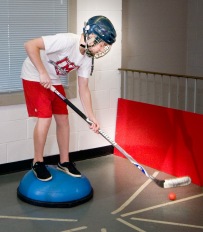
This may sell, but this kid isn’t coming out of the corner with many pucks!

I don’t have time for that. Everything we do at Endeavor is backed by a solid scientific rationale. And everything I wrote about in Ultimate Hockey Training has been tested in our facility. If it looks good on paper, but isn’t practical, then it won’t work. My understanding is that most people aren’t interested in things that don’t work!

4) Is mental preparation covered at all?

Actually, the mental side of things is the one area that I didn’t touch on. Mental training could be an entire book in itself (it is; see Hockey Tough by Saul Miller). That said, I think neglecting mental preparation is a huge mistake and is FREQUENTLY the limiting factor in an individual’s and team’s performance. In order to fill the gap, I reached out to my friend Kim McCullough, who is very knowledgeable in this area, and she put together a terrific manual called “How to Think Like a Player” that is a FREE bonus for anyone that buys the book. I also have bonuses from Sean Skahan, David Lasnier, Eric Cressey, Maria Mountain, Rick Kaselj, and Charlie Weingroff. When I said yesterday that each one of the bonuses would be worth the listed book price, I wasn’t kidding!

That’s a wrap for today! Hopefully that answers any questions you still had. If not, please post them down below and I’ll get back to you immediately.

To your success,

Kevin Neeld

Please enter your first name and email below to sign up for my FREE Athletic Development and Hockey Training Newsletter!

I have a lot of updates for you from the past week. For starters, on Wednesday I gave a 45-minute presentation titled “Hockey Hip Assessments: An in-depth look at structural abnormalities and common hip injuries” that will be available at two of my favorite membership sites: Anthony Renna’s Strength and Conditioning Webinars and Joe Heiler’s Sports Rehab Expert. In the presentation, I went over the exact hip assessments we use at Endeavor, what we’ve found in the ~40 elite level athletes we’ve tested over the last couple of months, how we approach training around structural abnormalities, and what steps we can take to prevent soft-tissue injuries around the hips. Valuable info for anyone in the hockey training world.

My friend Pete Friesen, the long-time Head Trainer/Strength and Conditioning Coach for the Carolina Hurricanes, recently sent me an email about this year’s Friesen Physio-Fitness Summit. Last year, David Lasnier and I drove down to Raleigh for the event and it was awesome. Pete put together an incredible line-up of speakers, and gave each a 30-minute time slot, which allowed us to soak up a lot of information from different professionals in a single day. The line-up for this year’s event looks even better. If you’re interested, this year’s summit is Saturday August 13th, and is probably the lease expensive 1-day seminar of this quality I’ve ever come across. Check out the brochure at the link below:

2011 Friesen PhysioFitness Summit

Getting into this week’s updates in hockey strength and conditioning, Darryl Nelson posted Phase 3 of his U-17 Off-Season Training Program. If you’re interested in how guys that train hockey players for a living design programs or just want to follow along at home, check out the program at the link below:

Click here for the program >> Summer Program Phase 3 from Darryl Nelson

Mike Potenza posted a youth core training program. Whether you train youth hockey players (or are a youth hockey player) or not, this is a great line-up of quality core exercises. Most of these exercises will be foreign to the majority of the youth hockey world, which still seems to be stuck in the stone age of core training (e.g. crunches/sit-ups, “Russian” twists, supermans, etc.), so Mike posted videos of everything. Great stuff as always from Mike.

Click here for the program/videos: Youth Core Training Program Phase 1 from Mike Potenza

Sean Skahan added a terrific article on the importance of training in improving a player’s durability. This article really resonated with me because I think it speaks to the rationale for a focused training effort even from the players that don’t have a history of injuries, but do have a history of incredible on-ice success. In other words, when the super-talented say, “I don’t need to train”, Sean’s article provides a great insight into why they do. I’m fortunate that I get to work with a lot of young high school players that are en route to D1 hockey programs, a few of which will probably make careers out of playing at some level of pro. Invariably, training and/or making dietary changes is a new and potentially undesirable experience for them. With these kids, I make an effort to educate them on the benefits, from both a short- and long-term performance and injury prevention standpoint, of getting their act together in terms of off-ice training and improving their nutrition. The habits players develop will allow them to succeed up to a given point, at which point they need to be refined. It’s likely that every player has areas they can improve on, and that these improvements will help them take their game to the next level, or at least allow them to compete at their current level for prolonged periods of time. Because Sean gets players from all backgrounds (e.g. US colleges, Canadian major junior, US juniors, overseas, etc.), he has a unique perspective on the quality of the off-ice development systems of these various organizations. Check out the article at the link below:

Click here for the article >> It’s All About Durability from Sean Skahan

As always, if you aren’t a member yet, I encourage you to try out Hockey Strength and Conditioning for a week. It’ll only cost $1, and if it’s not the best buck you’ve ever spent, I’ll personally refund you!


To your continued success,

Kevin Neeld

P.S. If you’re involved with youth hockey and are looking for an off-ice training program, check out my Off-Ice Performance Training Course! I continue to get great feedback from players, parents, and coaches just like you!

Please enter your first name and email below to sign up for my FREE Athletic Development and Hockey Training Newsletter!
I’m really looking forward to this weekend. After I wrap everything up at Endeavor for the day I’m heading into NYC to attend Joe Dowdell and Mike Roussell’s Peak Training and Diet Design Seminar. Hopefully I’ll see you there! After 6 consecutive weekends of seminars/home study courses with one wedding mixed in, I’m looking forward to having a month or so to kick it in Philadelphia with Emily and/or make a beach trip for the first time this Summer.

Caribbean water…quickly becoming a distant memory


This has been a cool week at HockeyStrengthandConditioning.com. Things got started with Kyle Bangen and Anthony Renna posting two awesome videos on the forums: one video interview with Steven Stamkos on his off-season training (he has his head on straight), and one comedic look at why the Rangers are always a disappointment (great for everyone that isn’t a Rangers fan).

Mike Potenza added a video interview with Power Skating Coach Cathy Andrade. I don’t know anything about Cathy, but the power skating strategies and teaching cues she mentions are very familiar. I like the idea Mike had here. It’s extremely helpful to hear what quality professionals in other aspects of hockey development are teaching players, so that we can send a consistent message and/or become more synchronous in our terminology. Cathy may have a sound background in exercise science, but I suspect she doesn’t. Yet, when describing ideal skating postures, she uses some terminology very similar to what I would. She gives a lot of good tips for young skaters that also serve as reminders for more experienced players. Hopefully we can get more of this type of information up on the site in the future. Check out the video at the link below:

Click here to watch >> Interview with Power Skating Coach Cathy Andrade

Sean Skahan posted Phase 4 of his ACL Rehab Program. The program was for a player 15-weeks post surgery. It’s interesting to follow the progression through the four phases of this program, as this phase includes a lot more lower body work. Sean and I have very similar philosophies on training around injuries, so I can appreciate his approach in continuing to train this player, despite a recent surgery. I think all training for players in this situation needs to coincide with some level of communication with the physical therapist, or whoever is running the site-specific rehabilitation. Often times, syncing up with the PT will allow a more aggressive strength and conditioning approach, as the PT can provide some guidance on when to hit the gas and when to back off a bit.

Check out the program here >> ACL Rehab: Phase 4

Lastly, there was a forum post last week from a pro player that had been following the programs I’ve been posting and asked a great question about how he should progress through the rest of the off-season given he had limited time to work with since the European pro camps start in early August. At this point, he’s about 3-4 weeks pre-camp and should be progressing into a more conditioning/work capacity driven program. Because he’s been following two of my previous programs, it was most appropriate for him to work off a draft of my Phase 3 off-season training program so I posted that. The program emphasizes transitional speed, power training with both a high load medium velocity and low load high velocity orientation, work capacity, and conditioning. You can check it out here:

Click here to get the program >> 4-Day Off-Season Training Program: Phase 3

As always, if you aren’t a member yet, I recommend trying out the site for $1 Hockey Strength and Conditioning for a week. If it’s not the best buck you’ve ever spent , I’ll personally refund you!


To your continued success,

Kevin Neeld

Please enter your first name and email below to sign up for my FREE Athletic Development and Hockey Training Newsletter!
Last Friday David and I made a trip up to Ramsey, NJ and White Plains, NY to hang out with Perry Nickelston and Anthony Renna. Hanging out with those guys was awesome. I really click well with entrepreneurs and people that are passionate about what they do. This is true of people in any field/industry, but especially when it comes to sports medicine and athletic development.

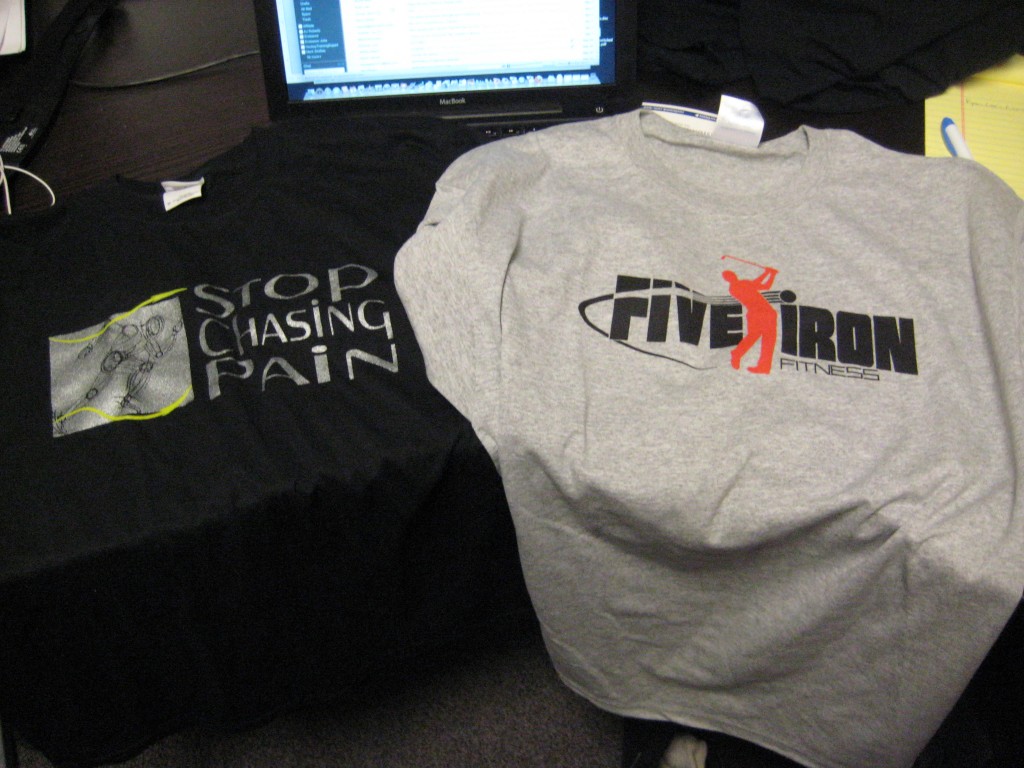
And nothing lights my lamp more than getting free t-shirts

One of the things that came out of talking with both Perry and Anthony was the value of actual training experience. The internet has completely revolutionized the education process. Because of the ease of starting a blog, everyone can share current information about how they’re training their athletes/clients. I remember Mike Boyle saying several years ago that most books were outdated by the time you get them. This may be less true with anatomy texts, but with books on training philosophies and methods, the time necessary to finish writing, editing, and publishing a book will make at least a portion of the material obsolete by the time it hits the presses. In other words, many book authors won’t agree with what they wrote in the book by the time we read it. It’s interesting because books are, or were, thought of as the “holy grail” of educational resources. The internet has gone a long way in cutting down on the deleterious effects of long publishing processes and in providing the most current information possible. This is good.

Unfortunately, the internet also spawned a population of unscrupulous “marketers.” The good thing about the long book publishing process is that it filtered the content. It’s a lot harder to get a book on any topic published than it is to start a website about it. Over the last couple years, the amount of hockey training information online has exploded. Some of it is outstanding; some of it is downright dangerous. What most casual readers don’t realize is that some of the information they’re reading comes from:

  1. People that don’t train anyone
  2. People who built a website for the sole purpose of making money (note that these people also don’t train anyone)

A lot of people in the strength and conditioning industry get really bent out of shape at the idea of people writing about training if they don’t train. To be honest, if people are reading and summarizing current research, it doesn’t bother me that they don’t work with a large athlete base because they’re writing can often introduce studies that I’m not familiar with, which leads me to seeking them out to read them myself.

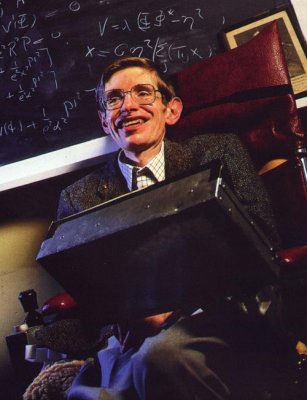
There are “theorists” in every field. I remember reading Stephen Hawking’s book “Black Holes and Baby Universes and Other Essays” several years ago and being amazed that he essentially outlined a mechanism for time travel. Of course, Hawking is known for being a profoundly intelligent mind in the field of THEORETICAL physics. Nobody actually thinks he’s traveling through time, nor would he ever represent himself as doing so.

One of the greatest minds in the history of the world

In contrast, many online crowds misrepresent themselves as working with vague, but insinuatingly large numbers of athletes. This misrepresentation is what I have a problem with. If you don’t train anyone, call yourself a theorist. If you only train one team, that you also coach, say that. If you’re training a few people, but helping out as an intern with other more advanced programs, say that. There’s no shame in developing as a professional and ramping up your business. I think most people avoid this because they’re either:

  1. Young and want to people to acknowledge their information as legitimate
  2. Selling something and want to be perceived as an expert

Obviously there are some similarities between these two, but in my view the latter is more repugnant than the former. Maybe I’m sympathetic because I started my website while I was still in grad school, but I look at writing online similar to anything else-it’s going to take time and practice to get good at it. Students that know they’re going to make a living training people wanting to start a site early in their careers just doesn’t bother me as much because their intentions are pure.

That said, I’d be interested to buy every hockey product online and then travel around the world to all of the author’s locations and see what they do on a day-to-day basis. I’d guess that many train people for less than 5 hours per week and that many have a background in playing hockey, but not in training players. This is BY FAR the biggest myth in all of hockey development:

Playing high level hockey does not qualify someone as a training expert!

Hell, playing high level hockey doesn’t even mean a player can TEACH the basics of hockey. All it means is that they were a good player. Not every good player is a good hockey coach; coaching takes special skill sets. Training is in a different universe altogether. There are BRILLIANT hockey strength and conditioning coaches that have never played a competitive game of hockey in their lives. This isn’t a knock on them at all. Having a profound knowledge of how the body functions doesn’t require playing the game, just understanding it.

Think of it like this-would you not trust a physical therapist because they’ve never played hockey? Would you not trust a hip surgeon JUST because they didn’t play?

WAIT! Before you saw off part of my femoral head…did you even play hockey??

Obviously not! These professionals make a living on their understanding of the body and perfecting their trade. Playing hockey will help strength and conditioning coaches understand the language and a bit more about the mentality of the players, but that’s it. It doesn’t in any way qualify someone without an educational background or coaching experience as an expert.

Hockey Playing Expert

Hockey Training Expert

When I see a new training product and the author’s biggest claim is that they played good hockey themselves, a red flag goes up.

Where you can find REAL hockey training experts

This is one of the reasons I have so much respect for my partners at HockeySC.com (Sean Skahan, Mike Potenza, and Darryl Nelson) and for my friend Maria Mountain; they ACTUALLY train real, live hockey players as their full time job, and the things they write about online, they actually do in real life! THESE are the people you should be getting your information from!

On a related note, I’ll conclude this long-winded rant by saying if you’re ever in the Philadelphia area and want to swing by Endeavor Sports Performance to see our facility and how we train our athletes, you’re more than welcome. I’ve always had an open door policy, and I think it’s good for people that have encountered some of my stuff on the internet to see that we’re actually implementing the same strategies I write about into our training systems, on a daily basis.

To your success,

Kevin Neeld

Please enter your first name and email below to sign up for my FREE Athletic Development and Hockey Training Newsletter!