With the off-season here, this isn’t a very timely post. Nonetheless it’s an important message that I think more parents need to hear. Last week I got an email from a parent of a high school girl we train at Endeavor asking if I thought it would benefit her daughter to continue training twice per week in-season. She was asking because her daughter is in her senior year of high school, and would soon be leaving to play division 1 lacrosse out west. That school, she pointed out, has their athletes train twice per week in-season, and she was wondering if having her daughter start that schedule now would better prepare her for college.

In-Season Training
I thought this was a great question and highlights an incredible insight that so many coaches, parents, and athletes overlook. In-season training is an absolute necessity, but is almost always completely neglected.

We even had a hockey player last year tell me that his coach told the entire team NOT to train in-season because it wasn’t good for them.

Don’t be ridiculous.

While I think this is an impressively stupid thing to say for scientific reasons, I also think it demonstrates an incredible ability to selectively neglect an obvious occurrence:

EVERY PROFESSIONAL AND DIVISION I COLLEGIATE PROGRAM FOLLOWS AN IN-SEASON TRAINING PROGRAM!

How can anyone look at the levels of every sport considered “elite”, see a commonality amongst all of them, and then say something like “in-season training isn’t good for you”?

Did you eat a lot of paint chips as a kid?

HAHAH…Why?

I think one of the reasons in-season training is so frequently neglected is because of a lack of understanding of how the volume and nature of the training program should change to accommodate the volume and nature of the stresses imposed by they sport. There are some commonalities in exercise selection, but the design of our in-season hockey training programs is DRASTICALLY different from that of our off-season programs.

Naturally, in-season training carries a number of important benefits. Unfortunately, most youth sports programs aren’t set up to accommodate in-season training. There’s an excessive focus on competition at the expense of preparation, and the “training” side of preparation is neglected altogether. Add this to the fact that most youth athletes don’t have a true off-season, and it’s easy to see why youth overuse injuries have skyrocketed over the last decade.

In the most simplistic sense, the body operates within a “use it, improve it, or lose it” framework. If athletes aren’t working to improve or maintain athletic capacities, they’re going to lose them. It’s that simple. Years ago I read about a theory stating that the fatigue associated with the end of a season isn’t just the result of of accumulated wear and tear, it was also the result of trying to maintain a given performance level while athletic capacities like strength, power, and speed were diminishing. Think of an athlete’s maximum capacity being a 10/10 and the maximum amount of this capacity needed to perform optimally at any given time being a 8/10, or 80% of their capacity. With a lack of in-season training, athletic capacity may diminish to an 8.5. Now for the athlete to perform at that same level (8 out of 8.5), they’ll be operating at ~95% of their capacity. Which do you think will be tougher to maintain through the end of the season?

With in-season training, less if more. The goal is to create the bare minimum stress to the body that results in the largest improvements in strength and power, and the restoration of structural balance across the major joints in the body. If youth organizations would sacrifice 45 minutes of practice time twice per week to get a quick lift in, they’d notice substantial performance improvements and reductions in injury rates. It’s a shame that more people aren’t doing this.

To your success,

Kevin Neeld

Please enter your first name and email below to sign up for my FREE Athletic Development and Hockey Training Newsletter!

This week has been crazy, both for me at Endeavor (we had about a couple dozen new hockey players start), and over at Hockey Strength and Conditioning. In the last week, we’ve added 6 new articles, programs, and videos, including a couple REALLY great ones from Mike Potenza and Sean Skahan.

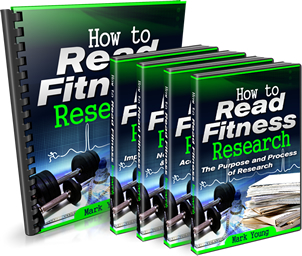
Before I get into that, I want to let you know about a new product from my friend Mark Young that some of you may be interested in. As you know, I’m big on using research to design my hockey training programs. Amongst other things, research can provide insight into injury rates and mechanisms, how to correct movement pattern impairments, and more effective program design strategies. Unfortunately, a lot of research is also crap and is almost invariably MISQUOTED by the media. In other words, a lot of the research findings we’re fed are, well, wrong. I had a chance to review Mark’s “How to Read Fitness Research” a few weeks ago and was impressed. He provides a framework to critically analyze research in light of your goals, and presents it without boring you to tears (something I can’t say of some of my old college professors!). This certainly isn’t for everyone, but if you’re a fitness professional, it’s worth looking into. And he’s offering a 40% discount that ends tonight at midnight, so you’ll have to act quick. Click the image/link below for more information.

Click here for more information >> How to Read Fitness Research

On to today’s post on Hockey Strength and Conditioning:

Scap Stability Exercises Part 2 from Mike Potenza
A follow-up from Mike with more videos of scapular stability exercises that hockey players should be doing to keep their shoulders healthy and performing optimally.

Off-Season Weight Gain: Eat that Elephant from me
It’s not what you think…actually maybe it’s exactly what you think (who doesn’t enjoy a delicious elephant steak every now and then?). You’ll have to read to find out. This article provides a birds-eye view of my approach to helping the dozens of players that come through our doors with lofty off-season weight gain goals stay on track and get results.

Youth In-Season Introductory Program from Sean Skahan
This is an addition to our new “Youth Hockey Training Program” feature to HockeySC.com. Sean lays out a great program for youth players and includes videos of all the exercises. The idea with these programs is to provide structure for the thousands of players at the youth level that want to start training, but don’t have access to a well-equipped gym or strength and conditioning coach. Following a program like this from a guy like Sean is certainly a much better approach that perusing the internet and downloading some bodybuilding program from a guy that probably doesn’t train anyone.

Identifying Strength Qualities for Your Training Program from Mike Potenza
This is a monster from Mike. The first time I ever saw Mike, he was presenting at a conference at Northeastern (I think it was the 1st Boston Hockey Summit) and discussing the system he uses for categorizing his athletes based on their training age. It was a brilliant, objective concept and shed some light on the complexities of his job at the NHL level…and some light on how poorly some players train at the youth levels. This articles outlines the qualities that hockey players need to focus on at different training ages and provides a common language for strength and conditioning coaches and hockey coaches. One of the best articles to date.

Grier Persevered to Carve Out Lengthy NHL Career from Mike Potenza
A feature story on Mike Grier that holds a lot of lessons for up and coming hockey players. Potenza, Sean Skahan, and Mike Boyle have all worked with Mike Grier during the off-season. Grier is a great example of what consistent, focused, hard work can get you.

Changes to the In-Season Program from Sean Skahan
This was an awesome article from Sean that highlights some of the difficulties that NHL Strength and Conditioning Coaches face when implementing in-season programs. Sean points out that there are times when he’s more of a “recovery coach” than a “strength coach.” This articles dives into how Sean has made a pretty significant change to the Ducks’ in-season training program this year based on their schedule. Good read.

Remember that the BSMPG is offering HockeySC.com members a $50 discount on admission. It’s cool of them to do it and well worth every penny. Download the coupon at the link below:

>> BSMPG Hockey Symposium Coupon <<

I hope to see you there!

That’s a wrap for today! If you aren’t a member yet, shell out the $1 to test drive Hockey Strength and Conditioning for a week. If it’s not the best buck you’ve ever spent, I’ll personally refund you!

To your continued success,

Kevin Neeld

Please enter your first name and email below to sign up for my FREE Athletic Development and Hockey Training Newsletter!

The NHL playoffs have officially started, which means one thing….the playoff beard is back! Last year a couple of the Endeavor guys and I decided on a no-shaving policy while our teams were still in the playoffs. The Flyers, who barely snuck into the playoffs, made it to game 6 of the finals, which lead to…

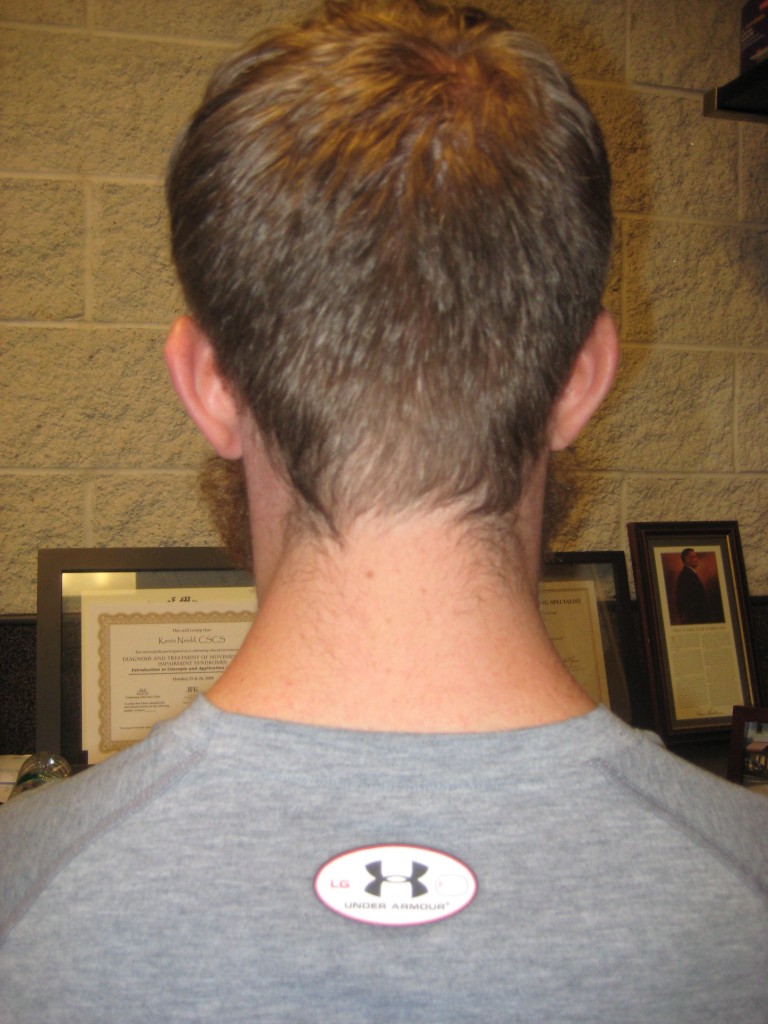
Chicks dig guys with thick playoff beards

Beards even look good from behind.

I wish I had a picture of Emily’s perpetual look of disappointment over the last 6 weeks of their playoff run. While she wasn’t exactly thrilled with the 2 inches of multi-colored fur covering my face (I think she was just jealous that she couldn’t participate), she came around when she saw how sweet my handle-bar mustache looked.

Sorry ladies. I’m taken.

Anyway, traditions need to start somewhere, and where better than my face. The Endeavor playoff beard contest is back. If you’re feeling daring and want to join the fun, fire over some pictures once it starts to look more ridiculous and less socially acceptable. We can do a post-playoff beard gallery.

On to this week’s hockey training content…

Mike Potenza added a video on a few exercises that are great for improving shoulder health on hockey players. The shoulder is a complex area, and ensuring it performs optimally requires understanding how the thoracic spine, scapula, clavical, and humerus bones and their surrounding musculature all interact to produce and control movement. Scapular muscle exercises are often overlooked in hockey training programs, but really need to be incorporated. Check out Mike’s Video:

Click here >> Scap Stability Exercises from Mike Potenza

On a similar note, Darryl Nelson added a video with a half dozen or so anterior core exercises. Some of these I’ve seen and used in the past with our players, others were interesting variations that I’ll likely use in the future. As I’ve said in the past, I really enjoy these videos because they’re great for idea generation. It’s helpful to have multiple strategies/exercises to achieve similar goals to keep things interesting for your athletes over the long haul. Darryl’s video had a few interesting core variations that you probably haven’t seen before.

Click here >> Anterior Core Variations from Darryl Nelson

Lastly, the 3rd annual Boston Sports Medicine and Performance Group Hockey Symposium is rapidly approaching. I went to the first two and they were awesome. Not only is it an incredible learning experience, but it’s also an outstanding networking opportunity. In previous years, there have been a number of NHL and D1 NCAA hockey strength and conditioning coaches in attendance, not to mention a number of coaches from private facilities like mine. I’ll definitely be in attendance again this year. The line-up looks better than ever. Simply, if you train hockey players or are involved in hockey sports medicine to any capacity, this is a “must-attend.”

The great news is that the BSMPG is offering HockeySC.com members a $50 discount on admission. It’s cool of them to do it and well worth every penny. Download the coupon at the link below:

>> BSMPG Hockey Symposium Coupon <<

I hope to see you there!

That’s a wrap for today! If you aren’t a member yet, shell out the $1 to test drive Hockey Strength and Conditioning for a week. If it’s not the best buck you’ve ever spent, I’ll personally refund you!

To your continued success,

Kevin Neeld

Please enter your first name and email below to sign up for my FREE Athletic Development and Hockey Training Newsletter!

The Endeavor staff just started a new training program last week, and it has been absolutely brutal. David was quoted saying, “this is the last time I let you write our program.”
Volume. My worst enemy.

I was quoted saying, “uh…ah…oh…I hope I don’t throw up on myself.” In brighter news, I have some great info for you today. Before I get to that, I want to let you know about an upcoming event that I’m really excited to attend.

My friend Joe Dowdell is probably the best strength and conditioning coach you’ve never heard of. Unlike the guys that preach, but don’t practice, Joe has been quietly developing his systems over the last 17 years and has built one of the U.S.’s top training facilities in Peak Performance NYC. In fact, Men’s Health voted Peak the “Hottest Gym in America.” Joe and I spoke for an hour on Monday and, in a nutshell, he’s going to start revealing the secrets to his success, both from a training and a business standpoint. He’s kicking it off with a webinar called: The 5 Key Ingredients to Building a Successful Fitness Business & Career.

This may not appeal to all of you depending on your situation, but I grabbed a spot and am really looking forward to it so I wanted to share it with you. Joe is a great guy and his success speaks for itself, so I’m sure we could all pick up on a thing or two to help us do our jobs a little more effectively.  Go to the link below to read more about:

>> The 5 Key Ingredients to Building a Successful Fitness Business & Career <<

Moving on to today’s content…

A lot of times “new” training information will come out and a group of people will start regurgitating it with a sense of evangelical enthusiasm. Unfortunately, it tends to be the people with the least profound comprehension that have the loudest voices (more on this in last week’s post: Internet Hockey Training Experts). The “experts” that don’t actually train people aside, some people just catch wind of something and don’t understand the context in which it’s meant to be interpreted.

One example of this is when a lot of the strength and conditioning world started getting into Stuart McGill’s lower back research. I think it’s fair to credit Mike Boyle with really bringing McGill’s work to the forefront of the training industry. Although McGill’s work is incredibly extensive (if you actually read his research!), the major interpretations that came out of what people interpreted his work to say were:

  1. We shouldn’t flex at the lumbar spine during exercise
  2. We shouldn’t rotate through the lumbar spine

The implications for these messages will differ depending on your setting, but the most important thing to note is that NOTHING IN HUMAN PERFORMANCE IS BLACK OR WHITE!

McGill’s research demonstrated that a certain number of flexion/extension cycles would lead to a lumbar disc herniation. This research was performed on unsupported pig spines.
How will I maintain my six-pack without crunches!

In other words, in this experimental model, there was essentially no ligamentous or muscular support to attenuate (reduce) the force being transmitted through the spinal column. This is an important limitation to the implications of McGill’s findings. This isn’t to say that they should be completely dismissed. In fact, I think McGill’s findings in this area specifically shed a lot of light on the insanity that is the common practice of sitting for 18 hours/day and then rolling onto the floor to bang out a few hundred crunches. That is stupid, and no one should do it. It also highlights the importance of being able to dissociate hip and lumbar movement so that people don’t unnecessarily flex and load through the lumbar spine, when they should be flexing and loading through the hips.

On the other hand, for people that spend the majority of their day in upright positions, have decent posture and generally don’t subject themselves to significant amounts of prolonged spinal flexed postures and the associated tissue creep, using some spinal flexion exercises intermittently probably isn’t the worst thing in the world. The reason you haven’t heard me mention this stance much (if ever) here is because this applies to a very small percentage of the population and therefore shouldn’t be made as a general recommendation. In other words, I recognize the room for misinterpretation in saying “crunches are good” or “crunches are bad” and would rather err on the side of being safer for a larger audience than the alternative.

That said, there is a very fundamental principle that the body abides by-use it or lose it! If you never flex or extend at the lumbar spine, eventually you will lose this range of motion and the neuromuscular control of the ROM, which will have negative implications for your overall health and performance. This isn’t to say that you need to program flexion/extension exercises into your program, only that these movements are available for a reason and that you shouldn’t go out of your way to never move at the lumbar spine. As Charlie Weingroff pointed out in Training = Rehab Rehab = Training, there is a difference between movement and exercise. What is good for a movement isn’t necessarily good to hammer with load or volume in your training programs.

Charlie is a genius.

A similar thing can be said about lumbar rotation. Because of the structure of the lateral processes of the lumbar spine, rotation in this area is EXTREMELY limited (~13 degrees). In contrast, the thoracic spine is more appropriately built for rotary movements (~70 degrees). Again, this information should cause some people to stop doing 300 reps of Russian twists during their “core” work, but it certainly doesn’t mean the lumbar spine shouldn’t rotate at all. Repetitively and forcefully driving loaded lumbar rotation through end range is stupid. Rotating within the lumbar spine’s given rotation range of motion is not.

In fact, telling someone to never rotate through their lumbar spine at all is flat-out dangerous. If you’re rotating through the thoracic spine, you want a clean continuation of the rotation through the spinal column. If you cue someone to consciously stop the rotation at some point along the column (e.g. T12/L1), they’ll lose the rotation ROM below that point. Although the rotation below this point is not very substantial, it’s still quite important. A loss of ROM at any point will cause a compensatory increase in range of motion at some other point in the pathway. In this case, it’s likely to be higher up the spinal column. In other words, the conscious cessation of ANY lumbar rotation ROM will cause a lumbar HYPOmobility (less ROM), which will result in a thoracic HYPERmobility (too much ROM), neither of which are desirable.

WAIT! Do NOT rotate through your lumbar spine! I don’t care how unnatural it feels to stop spinal rotation segmentally.

I can’t emphasize enough that I’m NOT saying to go back to archaic core training methods of doing thousands of crunches, sit-up, leg throwdowns, Russian Twists, etc. We’ve come a long way in our understanding of the true function of the core and going back to these things as a primary training modality would be unacceptably regressive. The point is that every exercise recommendation has a context and you can’t overlook that in making recommendations or judging the recommendations of others. Are lumbar flexion and rotation great exercise choices for the majority of the population? Certainly not. But they are necessary movement capacities that everyone should maintain and learn to control. When people take a completely black or white outlook on movement concepts, people usually end up hurt. It’s important to understand the context in which information is being conveyed before spreading it on a massive scale.

To your success,

Kevin Neeld

Please enter your first name and email below to sign up for my FREE Athletic Development and Hockey Training Newsletter!

I hope you enjoyed your weekend. A lot of the players we train were in Districts so I went out to watch a few games with David and Matt on Saturday. It was great to get out of the house (and Endeavor) for a few hours to watch the kids play.

Last week I mentioned that I had an important announcement for you today. This is something I’m really excited about because I know it will have a HUGE impact on a few select hockey players’ performance and careers.

Click here to check it out >> Premier Hockey Training Program

I’ve done this in the past with a few players, but have never advertised it publicly because I never had the time to work with more than one or two players. The player’s I’ve worked with in the past have raved about their experience, which brought me to the conclusion that I need to MAKE time to offer this to more players. Enrollment is still limited though, so don’t put this off. Go to the link below and watch the video now.

Click here to check it out >> Premier Hockey Training Program

To your success,

Kevin Neeld

Please enter your first name and email below to sign up for my FREE Athletic Development and Hockey Training Newsletter!