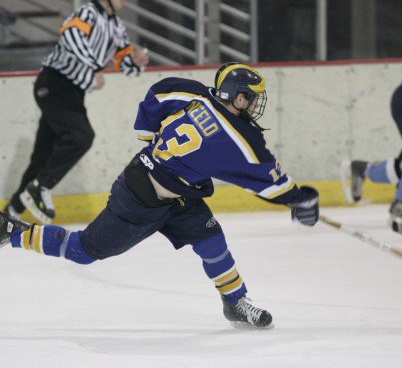
It’s an exciting time. With the opening of the NHL pre-season last week (and football season starting), we know that our days of watching the same diving catch and double play ball on Sports Center’s Top 10 everyday are FINALLY coming to a close. This is also an exciting time of year because a lot of our Endeavor players are fighting for roster spots and commitments for various programs. In the last couple months, a few Endeavor hockey players received great offers:

John Gaudreau (’93): Full ride to Northeastern (NCAA D1)
Matt Gaudreau (’94): Full ride to Northeastern (NCAA D1)
Gabe Antoni (’92): Full ride to Clarkson (NCAA D1)
Charlie Vasaturo (’90): Union (NCAA D1)

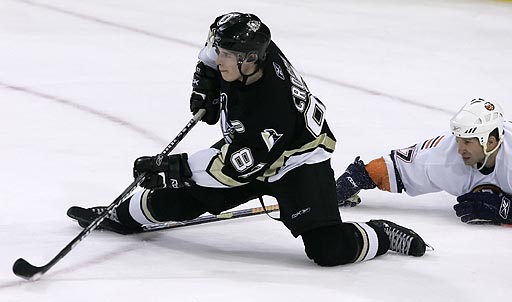
Because Colby Cohen and Eric Tangradi are fighting for roster spots on the Avalanche and Penguins, respectively, I find myself following those teams a bit more closely than I usually would. During the Penguin’s pre-season opener against the Red Wings last Wednesday, Crosby left during the second period with a hip flexor strain.

If a hockey player told me they strained their hip flexor in the first game of the season, I’d usually chalk it up to a lack of off-season preparation. However, I’ve been told Crosby has an admirable work ethic, so I imagine that was not the case with him. Interestingly, reports have said that it was poor ice quality that may have contributed to the injury (which is very minor). I’m surprised that ice quality is a problem at the NHL level, but I can understand that heat and enormous buildings are a hard combination to counteract at this time of year.
Unfortunately, not every hockey player has the work ethic of Sidney Crosby…and not every pre-season hip flexor or groin strain can be chalked up to poor ice quality. In fact, many of these injuries are preventable if a few precautions are taken.  A while back I wrote a detailed outline of how to assess for hip injury risk. These posts were written in the context of adductor or “groin” strains, but the process is similar for hip flexor strains. I highly encourage you to read (or re-read) the posts below. Remember, it doesn’t matter if you have Crosby’s skill if you’re injured!

Groin Pain 101
Groin Pain 101: Posture Analysis
Groin Pain 101: How’s Your Range of Motion
Groin Pain 101: Testing Muscle Function
Groin Pain 101: Movement Analysis
Groin Pain 101: Screen/Assessment Review

To your success,

Kevin Neeld
Please enter your first name and email below to sign up for my FREE Athletic Development and Hockey Training Newsletter!

With another season of internships wrapping up at Endeavor, I thought it’d be appropriate to outline a few things that all interns should be aware of.

1&2) Show up early. Stay late. This is probably the easiest way for an intern in any industry to make an impression. One of our Summer interns regularly stuck around for 13 hour days just because he liked being there. Not surprisingly, we asked him to start doing some part-time work with us in the Fall. Dedication goes a long way.

3) Don’t get too comfortable. This is a mistake I’ve made in the past. Depending on the internship, you may be surrounded by people around your own age (including your “superiors”). It’s okay to joke around every now and then, but certain topics about your extra curricular activities probably shouldn’t be brought up ever and a certain comfortable/familiar tone you should avoid using with your superiors.

4) Study your superiors. I use superior due to lack of a better term. In our industry, almost everyone has a blog. At Endeavor, I have my site, I write for Endeavor, and David Lasnier has his site. Our interns also know that both David and I read Eric Cressey, Mike Robertson, Mike Boyle, and Carson Boddicker’s sites on a regular basis (amongst others). Make it a habit to read everything your superiors write and try to follow along with the people that they’re reading too.

5) Try new exercises. If something isn’t familiar to you, try it. Become proficient at it. You need to be able to demonstrate every exercise to coach it anyway and actively jumping in to try an exercise shows you’re interested in learning.

6) Ask well thought out questions. One of my favorite things is when an intern says something along the lines of, “I was reading the book you let me borrow; I have a question about…”. Doing outside reading shows they’re passionate about the field and getting better. Asking questions shows they aren’t glazing over the text, but really trying to critically analyze everything. This can also be applied to questions you have about the purpose of certain exercises and/or why they’re included in certain parts of the program.

7) Ask for feedback. Feedback about your performance will make you better. This is true in any industry. If you don’t ask for feedback you may not get it. It’s important to learn what your strong and weak parts are so you know how to improve in the future.

To your success,

Kevin Neeld

Please enter your first name and email below to sign up for my FREE Athletic Development and Hockey Training Newsletter!

Interdisciplinary learning is a hot topic in the human performance industry right now. Many strength and conditioning coaches will argue that we don’t need to study physical therapy or athletic training. Others swear by it.

Frankly, I find it hard to imagine doing my job without knowing a bit about physical therapy and athletic training. I understand it’s not my job to diagnose injuries or do initial rehab. I also understand that athletes with persistent pain need to get it looked at by the appropriate professional.

With that said, I rarely see a completely pain-free athlete without injury complications. Take a look at one of the elite level hockey training groups we had last Summer at Endeavor:

  • Posterior shoulder dislocation
  • Chronic groin pain
  • Thumb surgery and knee “giving way” at angles >90°
  • Sports hernia
  • 2 players with shoulder labral repair

6 high level players; 5 significant problems. Unfortunately, groups like this are becoming the norm. With the increased emphasis on year-round hockey, it’s becoming almost inevitable for older players to have some sort of hip dysfunction. With the horrible rounded over posture that most hockey players carry themselves with, it’s becoming almost inevitable for older players to have some sort of shoulder dysfunction.

Not every strength coach or “trainer” needs to be a licensed PT or AT, but we should have, at a minimum, a profound understanding of functional anatomy. There are dozens of great resources out there, but many are pretty hard to digest.

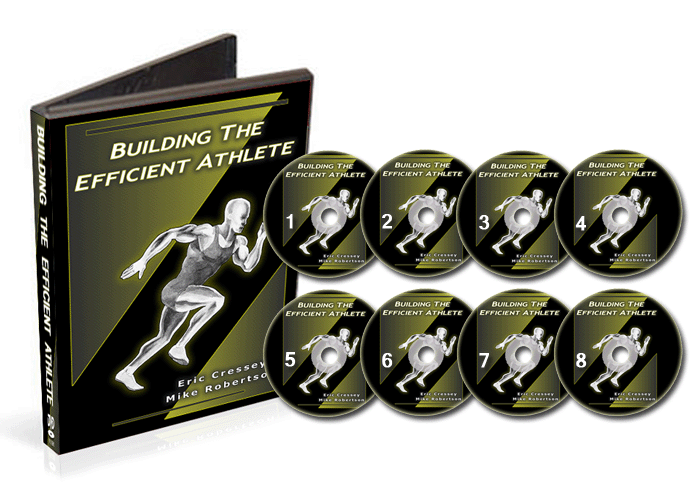
The one resource that I couldn’t live without (and reference on a pretty regular basis) is Building the Efficient Athlete with Mike Robertson and Eric Cressey.

Building the Efficient Athlete

This DVD set is truely timeless. I liken it to taking a functional anatomy course in college, with one major exception. I paid over $3,000 out-of-pocket to take a 4-credit functional anatomy class as part of a Doctorate of Physical Therapy program at a reputable university. I can honestly say I learned less implementable information from that course than I did from watching and re-watching Building the Efficient Athlete (and it’s a hell of a lot cheaper!).

Recognizing dysfunction and abnormal movement patterns can prevent injuries, but you can’t do that if you don’t know what you’re looking for.

Step 1: Watch Building the Efficient Athlete

Step 2: Repeat Step 1

Step 3: Recognize dysfunction in your athletes and help them prevent future injuries

-Kevin Neeld

Please enter your first name and email below to sign up for my FREE Athletic Development and Hockey Training Newsletter!

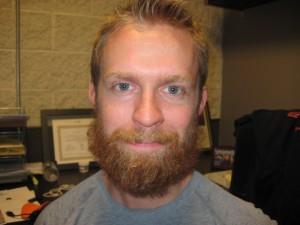
Last week was tough. The Blackhawks winning the Stanley Cup marks the end of one of the most exciting years of hockey in my lifetime, and the end of my 3-month Flyers playoff beard. Maybe that’s not a bad thing since I was accused of looking over 10 years older. Although…at least I wasn’t being carded for rated-R movies!

BeardWow.

The off-season is here. Within the next few weeks, almost all kids will be out of school and the Summer will officially be upon us. That means most of the players, if they haven’t yet, will be receiving invitations to tryouts for any of the seemingly never-ending list of “select teams”.

I could rant forever about how most of these will get you no exposure at all and are geared toward sucking as many kids as possible into an overpriced tryout…but I’ll spare you. In my lifetime, I’ve seen many qualified players get dismissed from these teams. They usually don’t take it well. Players start comparing themselves to the players that made it, wondering why they aren’t good enough and what they’re doing wrong. As with any tryout, kids that make it gain confidence and feel like they have a future in hockey. Players that get cut start to question whether or not they’ll ever realize their dreams. It’s unfortunate.

At Endeavor last week, I overheard two of our hockey players talking between sets about these select teams. One said, “I got cut every year and was told I’d never play at a high level.” The other responded, “I never even got the tryout invitation!”

The funny thing is, BOTH of these players are top NHL prospects. Yep. They weren’t quite regional select team material, but the NHL will give them a shot. Seems a little backwards.

Two Hockey Development Truths:

1) Every player develops at different rates. Many stars at the peewee level plateau shortly after and/or quit.

2) Even exceptionally great coaches make mistakes.

One of the players I mentioned above said, “I should probably thank them. Getting cut pissed me off so much it motivated me to prove them wrong.” This is the EXACT attitude you should have if you get cut from a team. Make them regret overlooking you. Put the work in to develop your skills and athleticism.

Hockey players need to stop waiting to be discovered and start making themselves impossible to ignore.

Countless players have been late bloomers and went on to have extremely successful careers. You can too.

Kevin Neeld

Please enter your first name and email below to sign up for my FREE Athletic Development and Hockey Training Newsletter!

A couple weeks ago, my colleague Dr. Jeff Cubos told me to check out a relatively new assessment protocol called the Bunkie Test. I had never heard of it before so I took a look and found some interesting stuff. We haven’t integrated these “tests” into our assessment protcol at Endeavor, but I am integrating a few of the concepts into our hockey training programs.

The whole idea behind the Bunkie Tests is to assess the performance of different functional lines within the body. As an example, there is a well established connection between the external obliques and contralateral (opposite side) hip adductors (“groin” muscles). They frequently serve integrated functions in athletic movements. If you look at this picture of me taking a slap shot while at Delaware, you’ll see that my upper body is turning to the left, while my right leg extends and external rotates. This means that my left external oblique and right hip adductors are decelerating the movement. On the opposite side of things, my right external oblique and left hip adductors are both shortening.

Slapshot

This is just one illustration of this connection between the trunk and hip “core” musculature. Below is a video of an advanced core training exercise we’ve been using with a lot of our athletes recently.

There is also a lateral connection between the obliques and same side hip abductors. A great core training exercise to strengthen this functional path is:

To your continued success,

Kevin Neeld

Ice Hockey Training
Hockey Strength and Conditioning

Please enter your first name and email below to sign up for my FREE Athletic Development and Hockey Training Newsletter!