I’ve been slacking on these updates over the last couple weeks. Between the traveling I’ve done over the last month and my work at Endeavor I find that my training hours have been cut back, but that I’m still as busy as ever!

There have been a ton of updates at Hockey Strength and Conditioning since my last post. Without further ado…

Training Programs

2-Day Strength Training Program from Darryl Nelson

Off-Season Phase 1 from Sean Skahan

2-Day In-Season Training Program: Phase 1 from me

In-Season Youth Training Program: Phase 1 from me

Complex Training from Mike Potenza

The two programs I posted are the ones we’re using with a youth organization that we’re working with locally. The first is for the oldest groups (U16-U18), and the latter, which also includes videos for all the exercises, is for the youngest kids (’02-’00). These, along with the articles series I have planned to go up over the next couple months, will provide a great template for those of you training players in suboptimal conditions (e.g. minimal space and equipment, poor coach-to-athlete ratio, etc.).

New Articles

Book Review: Spark by John Ratey from Darryl Nelson

Great Advice to Start the Season by Dan Bauer

Both of these articles were terrific. Because long-term athletic development is fresh on my mind from the USA Hockey ADM seminar last weekend, both of these articles really struck a chord with me. I actually ordered the book Darryl reviews here after he mentioned it at his presentation last weekend. I think we have a ton of room for improvement in the way we develop our kids, both as people and as hockey players, and Spark discusses some of the evidence supporting the need for a change. Dan’s article was really written for hockey parents, but as a coach or player you’ll get a kick out of it too.

Exercise Videos

Hip Stabilization Exercises from me

Goblet Squat from Sean Skahan

The hip stabilization exercises are ones we’ve used following correction of hip alignment to help reinforce a more neutral position. For those working in pro settings, or with a LONG (e.g. 10+ years) training background, mixing these in to your routine will add a little variety and still provide a great benefit. Sean’s video was pretty straight forward, but it was interesting to read about how this particular exercise is influencing the design of his programs. I’m glad he included the quick blurb along with the video.

As always, if you aren’t a member yet, I encourage you to try out Hockey Strength and Conditioning for a week. It’ll only cost $1, and if it’s not the best buck you’ve ever spent, I’ll personally refund you!

As a quick note, a while back I received an email from a reader that was frustrated because she got really excited reading these emails, but didn’t like that the content was “membership only” because it felt like a tease.  HockeyStrengthandConditioning.com is a membership site. It costs $1 to try it for a week and then it’s $9.95/month after that. Honestly, these posts are MEANT to spark your interest in it. I don’t do this in an effort to trick you into registering for the site; I would never be deceptive. I write these posts because such a large proportion of my site visitors are members and appreciate getting updates in case they haven’t checked in for a few days AND I truly believe that EVERY single one of you that isn’t yet a member should make the investment to try it out.

I think the overwhelming amount of information on the internet has lead some people to downplay the quality of membership sites. Honestly, to get a glimpse of what Mike Potenza and Sean Skahan are doing at the NHL level and what Darryl Nelson is doing with the US National Team Development Program is absolutely invaluable. Aside from their current positions, these are all guys that have worked with players at all ages over the years and have successfully DEVELOPED world-class players. I emphasize develop to distinguish this from the strength coaches that work with elite level players AFTER they achieve elite level status. That’s certainly not to undermine the work of coaches that work with these players, as players at that level have a ton of special considerations that warrant high level coaching expertise, but it’s even more impressive when a strength coach can help develop young players into elite level competitors AND still have the expertise to help take elite players to the next level. Mike, Sean, and Darryl all fit that mold.

To put it in perspective, for the price of a new set of skates, you could have a membership for about 5 years, and the information would benefit you for a lifetime. For the price of a single graphite stick, you could have a membership to the site for 2 full years. The monthly bill comes out to about the cost of a skate sharpening and roll of tape. I don’t think the cost of membership could be any more reasonable, and the information could be career changing, for players AND coaches! I apologize for the rant (kind of), but it’s important you understand where I’m coming from. When I started my site several years ago, I do so with the intention of providing FREE quality information on hockey training and athletic development AND in providing anyone that reads my site with information on great resources that could benefit them. Hockey Strength and Conditioning fits the latter. Give it a whirl today and you’ll understand why.

To your success,

Kevin Neeld

Please enter your first name and email below to sign up for my FREE Athletic Development and Hockey Training Newsletter!
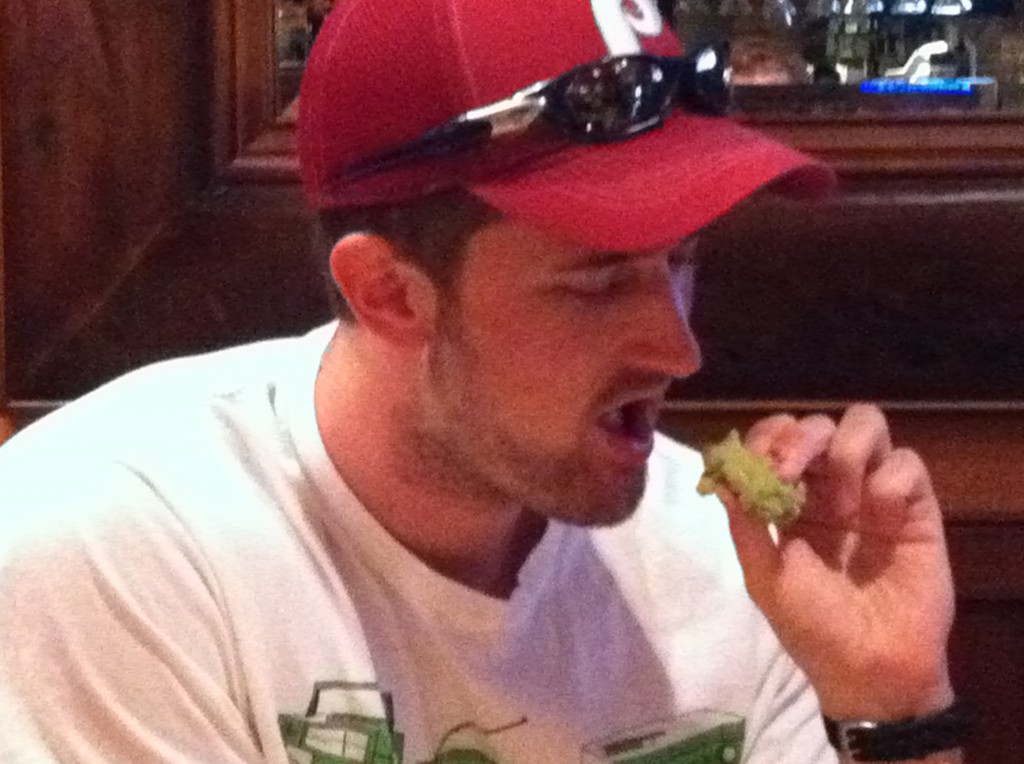
I hope you had a great weekend. This was the first weekend in a month that I’ve been home so it was nice to spend some time with Emily and relax a bit. On Saturday, Emily and I “doubled” with David Lasnier and his ladyfriend at Raw, my favorite sushi place in Philadelphia. Because of the company, David refrained from rolling all of the wasabi into one big clump and eating it whole.

I just assume this is common behavior in Canada

Last weekend I had an opportunity to attend an invite-only symposium on USA Hockey’s American Development Model. They did a great job bringing in speakers from different sports, countries, and disciplines, and I couldn’t say enough good things about the direction USA Hockey is going in general. In a few upcoming posts, I’ll explain more about the state of youth hockey, what USA Hockey is hoping to do, and what you can do to help. In the meantime, it’s been a while since I’ve done a “random thoughts” post and there are a lot of little things I want to share with you.

  1. I get questions about supplements ALL the time, usually from kids that eat like crap and have been “educated” (I use that term VERY loosely) by fellow high school students. Supplements can be very beneficial, but as an athletic society, we need to do a better job of educating our youth on the performance enhancing benefits of proper eating. I think kids view supplements as the key to performance enhancement, and eating a quality diet just as a means of improving general health, which they have no utility for as they’ve never suffered any consequences of impaired health (these things come much later in life). Often times, the best strategies for building muscle, facilitating recovery, and ensuring adequate energy to train and perform at a high intensity are found in pretty basic eating and hydration strategies that don’t require supplements.
  2. If you’re a high school player, it’s safe to say that EVERYTHING you’ve been told from your buddies about supplements is wrong.
  3. Speaking of misinformation, I’m amazed at the amount of garbage that is perpetrated as “goalie-specific training” for hockey goalies. Luckily, Maria Mountain has really stepped up as a CREDIBLE expert in this area and has done an outstanding job of providing goalies with training advice that will actually make them better. If you’re a goalie and haven’t heard of Maria, you’re spending more time pulling pucks out of your net than you should be. Check out her site here: Hockey Training Pro
  4. Citrulline Malate may be the most effective supplement you’ve never heard of. Dr. Mike Roussell first brought this to my attention at a seminar over the Summer and it’s definitely worth looking into. He recently wrote a great review of it on Joel Jamieson’s site here: Citrulline Malate – Your Key to Winning In the Last Round?
  5. Dave Ritter and Anne Davis, two presenters at USA Hockey’s ADM Symposium from the US Tennis Association recommended two NY Times articles that I had an opportunity to read through last week. They were just long enough to test my attention span, but I’m glad I worked my way through to the end. Both question current trends/thoughts in our country in the areas of athletic development and success. Check them out here: What if the Secret to Success is Failure?, How to Grow a Super-Athlete
  6. I’m always on the prowl for new resources. Recently I’ve found myself looking to these 4 guys more and more for new information or a different look at program design/implementation: Joel Jamieson’s 8 Weeks Out, Cal Dietz’s XL Athlete, Jim Snider’s Neuro Explosion, and Kyle Bangen’s Bangen Athletic Development
  7. Have you ever watched a mite or squirt hockey practice and noticed that the coach seems to be yelling more than teaching? Those kids should be having fun the ENTIRE time they’re on the ice. Similarly, the COACH should be having fun the entire time. If you don’t like kids, don’t coach them!
  8. With the popularity Facebook has enjoyed, it seems like every industry is trying to develop their own social media site. I can’t tell you how many requests I’ve received to join DIFFERENT business referral sites! Do we really need a social media site for people to say, “I think you should go train with Kevin at Endeavor”? Inevitably, the industry will overgrow before dying back down to a few reasonable, valuable resources. A local group has started a sports-driven site called UR Sports Page that I think may survive the process. Great idea to provide an exclusive site just for athletes.
  9. Core training continues to be a hot topic in athletic development and fitness crowds alike. Naturally, this means that a lot of people will fall victim (e.g. waste their time and money) to unscrupulous marketers making amazing claims about the crap they peddle. It’s great to see that Mike Robertson has spent the time and energy to put together a quality core training resource. If you haven’t been following Mike’s work over the last week, check out these posts: Should You Crunch?, Should You Crunch? Part 2, My Core Training Story. I know he has some other great posts planned for this week too. Click any of the links above to head over to his site now, read through the content and sign up for his webinar “Complete Core Training”. It’s free!

That’s a wrap for today. Check back in a couple days for a few interesting insights into the chicken and egg cycle with postural adaptations and goalie-specific performance.

To your success,

Kevin Neeld

Please enter your first name and email below to sign up for my FREE Athletic Development and Hockey Training Newsletter!
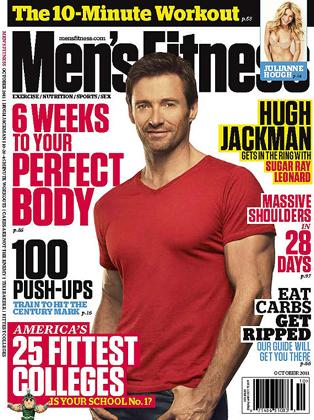
Push-ups are one of the most popular exercises out there, especially in youth sports. When performed correctly, push-ups are a terrific exercise to promote core/shoulder stability, upper body strength, and a proper upper body pressing movement pattern. I was recently featured in Men’s Fitness for a segment on how to train to perform 100 push-ups consecutively.


As you can imagine, the first step in being able to perform 100 push-ups is being able to perform one, correctly. In reality, the push-up form I see most frequently is pretty far from optimal. This is the result of never being taught how to perform the movement correctly or having been taught incorrectly. In either case, the result is a continued development of an improper movement pattern, which will inevitably lead to a breakdown SOMEWHERE (front/top of the shoulder, back of the next, and lower back are the most likely culprits). Shortly after the Men’s Fitness article went live, I received an email from a reader that had to perform a push-up test for his work (police officer) and noted that his performance was limited by shoulder pain. My response to his email was:

If I understand your case correctly, it’s not uncommon. The reality is that most people have never been taught to do a push-up correctly, and MANY have been taught how to do them incorrectly. Assuming your shoulder pain is a result of a suboptimal movement pattern and not the result of another underlying issue (you should get that checked out by a doctor), you can improve your push-up ability immensely by following the guidelines I wrote about here: Shoulder Pain with Pressing Exercises

Rather than reinvent the wheel here with a new post on how to address shoulder pain with pressing exercises like push-ups, I’ll just direct you to a post I wrote a while back that covers the issue in-depth. Check it out here:

Click here >> Shoulder Pain with Pressing Exercises

One of the major take homes I try to reinforce with our athletes is that PROPER movement is more important (or at least equally as important) as strong, powerful, or quick movement. In general, athletes tend to overemphasize quantity and underemphasize quality, probably because it’s more easily observable and quantifiable. A perfect running stride resulting in a lost race doesn’t get much credit. On the other hand, a sloppy running stride that wins a race gets praise. Proper movement doesn’t only optimize long-term performance, it also SIGNIFICANTLY decreases the risk of non-contact injuries, which have become unacceptably overwhelming in youth sports. Optimization of all basic movement patterns (lower body push, lower body pull, upper body push, upper body pull, linear and transitional running mechanics, etc.) is a worth goal and should be the focus of early athletic development endeavors. This post will go into specific details on how to do this for upper body pushing patterns:

Click here >> Shoulder Pain with Pressing Exercises

To your success,

Kevin Neeld

P.S. My friend Mike Robertson has posted two great articles on the pros and cons of a very popular core exercise. The posts include thoughts from a couple of really bright guest contributors (including Stuart McGill). Check them out here: Should You Crunch: Part 1 , Should You Crunch: Part 2

Please enter your first name and email below to sign up for my FREE Athletic Development and Hockey Training Newsletter!

After a great weekend in Pittsburgh at USA Hockey’s ADM Symposium (and one of Tangradi’s pre-season games) and a busy Summer of travel in general, I’m finally back and getting resettled in Philadelphia.

Despite the popularity of these posts, I don’t write a lot about how specific off-ice training methods transfer to specific on-ice skills. My fear is that players will say “I need a quicker first step” and only do a few thing that I recommend for speed training, or in this case, “I need a harder slap shot” and only do the exercises in this article. The truth is that ALL players should be following a comprehensive training program and using single goals as a means of designing your plan will inevitably create imbalances and ultimately fail in helping you realize your true potential. I say that as a preface to this post with the hopes that you’ll understand that this the exercises referenced below were simply pulled from a more complete program to demonstrate how these components will help transfer to an on-ice ability.

Tips for Improving Slap Shot Power
Hockey players, especially young ones, frequently seek out ways to improve their shot power. In reality, shooting a harder slap shot often comes down to mastering the technical components (e.g. foot positioning, puck placement, stick contact point, hand position, hip drive, etc). That said, a lot of progress can be made by removing physical barriers and improving both general and movement-specific strength and power.

From a barrier standpoint, shooting requires a great deal of mobility through the hips and thoracic spine (upper back). Two great exercises to improve and maintain optimal mobility in these areas are:

The Lying Knee-to-Knee Mobilization
Purpose: Improve hip internal rotation range of motion

Side-Lying Diagonal Arm Arc
Purpose: Improve thoracic rotation range of motion


A player cannot realize their full power potential with significant mobility restrictions. Because we live in a more sedentary society than ever, the hips and thoracic spine are common points of restriction and can lead to a number of other problems in addition to diminished shot power. Once a player has full mobility through the hips and spine, the next step is to improve core strength. While mobility and stability can be developed somewhat simultaneously, it’s important to understand that proper reflexive stability depends on proper proprioception, which is driven by optimal range of motion. In other words, range of motion restrictions will impair the body’s ability to properly activate stabilization-oriented muscles. Stability work will help ensure that the power generated from the lower body is effectively transferred to the upper body and into the puck. One great exercise for this is:

½ Kneeling Belly Press
Purpose: Improve rotational core strength


There are dozens of other exercises that serve this purpose well, but this is a good one to start with. The final stage in developing a harder shot is to improve rotational power. Power expression can range from high load, low velocity to low load, high velocity. Because a puck weighs a mere 6 oz., there will be a better transfer of power improvements if exercises on the low load, high velocity end of the continuum are selected. Medicine ball exercises serve this purpose perfectly.

One basic rotational power exercise is:

Front Standing Med Ball Scoop
Purpose: Develop rotational power, emphasizing weight transfer, hip rotation, and upper body follow through.

(well-groomed playoff beard optional)

A more dynamic variation of this quality:

Side Standing Med Ball Shotput with Rapid Step Behind
Purpose: Develop rotational power in a more dynamic environment. This more closely mimics the changing foot positions where power will need to be generated on the ice (think of adjusting feet to take a one timer).


While these are a few specific exercises that will help improve rotational power, a more general approach to strength training will also have a positive impact. The great thing about a quality hockey training program is that the same tactics used to develop a harder slap shot will also improve maximum and transitional skating speed, the ability to give and withstand hits, general conditioning, and injury resistance. In general, I think the hockey hockey world is due for a paradigm shift away from a direct skill-transfer driven training approach to off-ice development and toward a more complete athletic development system.

To your success,

Kevin Neeld

Please enter your first name and email below to sign up for my FREE Athletic Development and Hockey Training Newsletter!

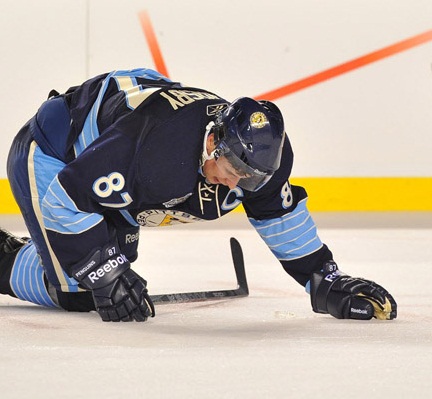
Sidney Crosby’s concussion has been the cause of a bit of a stir within the hockey community. There has been an ongoing fear that Crosby, arguably the best player in the world, may be forced into an early retirement due to recurring symptoms from a concussion. Maybe on a larger scale, Crosby represents a larger problem in sports medicine in that a lot of athletes from different sports have suffered from longstanding concussion symptoms and there don’t appear to be easily identifiable solutions to these problems.

The Penguins recently posted a video from a press conference with Crosby and two of his doctors, Dr. Michael Collins and Dr. Ted Carrick, discussing his recovery process. The doctors do a great job of discussing his recovery and their approach to his rehabilitation.

Check out the video below:

One of the worst things a player can do is rush back too quickly. I picked up an alarming statistic from Dr. Josh Bloom at Pete Friesen’s Physio-Fitness Summit a couple years ago that 75% and 92% of repeat concussions occur within 7 and 10 days of the original incident, respectively. The recovery process and severity of symptoms tends to become increasingly worse with repeat incidences, which could be prevented with a more conservative return to play strategy. Understanding the nature of these repeat injuries has certainly been an instrumental part in prolonging the return to play recommendations. The doctors allude to the appropriate return to play process, but the general progression is:

  1. Sit out the remainder of the game
  2. No symptoms at rest
  3. No symptoms with light activity (aerobic only; no resistance training)
  4. No symptoms with more intense training
  5. No symptoms with non-contact sports participation
  6. No symptoms with controlled contact sports participation
  7. Return to play

In reality, most hockey players probably skip #1, half-ass #2, and then jump right to #7. Contrary to common practice, headaches are not supposed to be a normal part of the game, and the decision of whether or not a player is fit to play should never be left to the player, ESPECIALLY at the youth levels. Youth players simply don’t understand the severity if these injuries and will always err on the side of their competitiveness. It’s important that these injuries be taken seriously at ALL levels of play. The long-term implications can be severe and certainly warrant a more cautious approach than what has traditionally been taken. While no one would wish Crosby’s symptoms on anyone, I hope that his injury will bring an increased level of awareness to the severity of traumatic head injuries and that quality information will trickle down to youth, junior, college, and semi-pro levels where the quality of care may not be as thorough as what Crosby has access to.

To your health and success,

Kevin Neeld

Please enter your first name and email below to sign up for my FREE Athletic Development and Hockey Training Newsletter!