When I was a Bantam (13 y/o), I played for a coach that emphasized that we always keep our feet moving. The second we stepped on the ice, we were supposed to buzz around constantly. The goal was to force a high tempo; it worked. At that level, our team was extremely fast and the strategy of constant movement was overwhelming for other teams.

Unfortunately, this strategy does not work at higher levels. Speed kills and tenacity intimidates, but constant high speed movement is inefficient. At any given level of conditioning capacity, a player can improve his/her level of expressed conditioning by learning how to conserve energy on the ice.

Think about it this way: The goal is rarely to skate as fast as possible at any given moment on the ice. Instead, the goal is to skate just fast enough to win possession of the puck or positioning relative to an opponent. Sometimes this requires all-out efforts. Sometimes it does not. In every case, a player can improve his/her ability to win the race or gain optimal positioning by reading the play faster than their opponent.

Hockey conditioning comes down to preparing the body to delay fatigue to the greatest extent possible. In my setting, conditioning is mostly a preparatory effort. In other words, the idea is to pre-emptively overload the body and allow recovery time so that it is well-prepared for the rigors of the game. In reality, there is also a strategic component to conditioning that most players are never taught.


Off-ice conditioning is important, but only part of the equation

When a player hops on the ice and goes all out for the entire shift, they rely on a metabolic process known to have a longer recovery time and lead to impaired future performance. In contrast, if a player becomes an expert at alternating periods of near all-out efforts with periods of strategic gliding and repositioning, the shift is transformed from a 30-45s interval to something more like 8 x 2-3s/6s. In other words, the player skates all out for 2-3s, then strategically glides/rests/repositions for 6s, 8 times throughout the shift. This allows for less fatigue accumulation and a more prolonged maintenance of near-peak performance.

Naturally, hockey isn’t nearly this regimented. The game is chaotic in nature. However, players can adopt this strategy based on the demands of any given shift to help build in recovery intervals on the ice. To be clear, the message here isn’t to “loaf” on the ice. Certain shifts will mandate constant motion at maximal efforts. However, not all shifts do, and it’s important for players (especially at higher levels) to learn to read the game so they can position themselves properly to conserve energy without impairing performance.
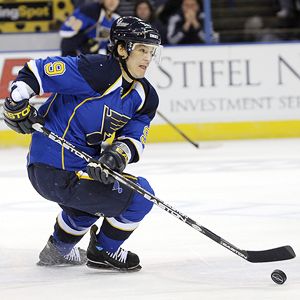
One of my favorite players of all time. Known for being a student of the game.

In the training world, we measure performance through things like time to move a given distance (speed and conditioning) and weight lifted. On the ice, all that matters is goals for and goals against. There are ways to maximize objective on-ice outcomes, while strategically conserving energy. Become a student of the game. Learn to anticipate play development. Develop the habit of creating time and space. More optimal on-ice positioning leads to shorter races to the puck and/or open areas on the ice, leading to less fatigue accumulation and more desirable hockey-specific outcomes (e.g. goals scored or prevented). Conditioning isn’t just a physiological state of being; it’s also a playing style-specific strategy. Maximize both and optimize your on-ice performance.

To your success,

Kevin Neeld

Please enter your first name and email below to sign up for my FREE Athletic Development and Hockey Training Newsletter!

I’m really looking forward to this weekend. After I wrap everything up at Endeavor for the day I’m heading into NYC to attend Joe Dowdell and Mike Roussell’s Peak Training and Diet Design Seminar. Hopefully I’ll see you there! After 6 consecutive weekends of seminars/home study courses with one wedding mixed in, I’m looking forward to having a month or so to kick it in Philadelphia with Emily and/or make a beach trip for the first time this Summer.

Caribbean water…quickly becoming a distant memory


This has been a cool week at HockeyStrengthandConditioning.com. Things got started with Kyle Bangen and Anthony Renna posting two awesome videos on the forums: one video interview with Steven Stamkos on his off-season training (he has his head on straight), and one comedic look at why the Rangers are always a disappointment (great for everyone that isn’t a Rangers fan).

Mike Potenza added a video interview with Power Skating Coach Cathy Andrade. I don’t know anything about Cathy, but the power skating strategies and teaching cues she mentions are very familiar. I like the idea Mike had here. It’s extremely helpful to hear what quality professionals in other aspects of hockey development are teaching players, so that we can send a consistent message and/or become more synchronous in our terminology. Cathy may have a sound background in exercise science, but I suspect she doesn’t. Yet, when describing ideal skating postures, she uses some terminology very similar to what I would. She gives a lot of good tips for young skaters that also serve as reminders for more experienced players. Hopefully we can get more of this type of information up on the site in the future. Check out the video at the link below:

Click here to watch >> Interview with Power Skating Coach Cathy Andrade

Sean Skahan posted Phase 4 of his ACL Rehab Program. The program was for a player 15-weeks post surgery. It’s interesting to follow the progression through the four phases of this program, as this phase includes a lot more lower body work. Sean and I have very similar philosophies on training around injuries, so I can appreciate his approach in continuing to train this player, despite a recent surgery. I think all training for players in this situation needs to coincide with some level of communication with the physical therapist, or whoever is running the site-specific rehabilitation. Often times, syncing up with the PT will allow a more aggressive strength and conditioning approach, as the PT can provide some guidance on when to hit the gas and when to back off a bit.

Check out the program here >> ACL Rehab: Phase 4

Lastly, there was a forum post last week from a pro player that had been following the programs I’ve been posting and asked a great question about how he should progress through the rest of the off-season given he had limited time to work with since the European pro camps start in early August. At this point, he’s about 3-4 weeks pre-camp and should be progressing into a more conditioning/work capacity driven program. Because he’s been following two of my previous programs, it was most appropriate for him to work off a draft of my Phase 3 off-season training program so I posted that. The program emphasizes transitional speed, power training with both a high load medium velocity and low load high velocity orientation, work capacity, and conditioning. You can check it out here:

Click here to get the program >> 4-Day Off-Season Training Program: Phase 3

As always, if you aren’t a member yet, I recommend trying out the site for $1 Hockey Strength and Conditioning for a week. If it’s not the best buck you’ve ever spent , I’ll personally refund you!


To your continued success,

Kevin Neeld

Please enter your first name and email below to sign up for my FREE Athletic Development and Hockey Training Newsletter!

On Friday I had an opportunity to spend an hour catching up with Mike T Nelson (Check out this site: Extreme Human Performance). Mike is an “internet friend” that I got to know in part through my writing at TMuscle.  Mike has been a great resource over the years because he continues to stay neck deep in the performance research and understand the limitations and applications (or lack thereof) of various studies.

What’s up Mike!

Mike is doing his dissertation work at the University of Minnesota, in part, on the performance effects of a very commonly used energy drink. I was hoping to get Mike’s thoughts on energy drinks in general:

  • Do they do what they claim to do?
  • Are there any concerns with younger kids drinking them?
  • Is there a connection between energy drink consumption and ADD symptoms? (I have my own theory on this)

Is it because you’ve spent the majority of your life simultaneously balancing watching tv, listening to music, and text messaging with your lap top in front of you?

Instead, Mike and I, as we usually do, tangentially discussed energy drinks, a couple other sports supplements (including the best supplement for hockey players that most players still aren’t familiar with), limitations in research application, the role of the placebo effect, and the performance implications of mental state association. Click the link below to download the call!

Click here to listen >> Mike T Nelson Call

I’m interested to hear your thoughts on young kids drinking energy drinks. As I mentioned in the call, because of the hassles associated with doing research on adolescent subjects, and because of the complications in monitoring long-term outcomes, there really isn’t any research in this area. But what do you think? Post your comments below!

To your success,

Kevin Neeld

Please enter your first name and email below to sign up for my FREE Athletic Development and Hockey Training Newsletter!

This is an exciting time for hockey players. Hockey development has come a long way over the last decade, and as hockey-specific skill and hockey training systems develop, it improves both the peak level of the game in general, and the ability of players that follow these systems to compete at the most elite levels. In other words, for the players that are willing to consistently put the energy into their development, elite status is possible. This is a foundational concept in one of my favorite books of all time: Bounce by Mathew Syed.

Bounce: Mozart, Federer, Picasso, Beckham, and the Science of Success

The underlying theme of the book is that EVERYONE can fulfill their dreams if they just keep at it, and find people to help them in the right direction. This is the case even in elite level performers that are considered “prodigies” in their sport or field. It always comes down to consistent, focused practice with the guidance of an experience mentor.

“Purposeful practice is about striving for what is just out of reach and not quite making it; it is about grappling with tasks beyond current limitations and falling short again and again. Excellence is about stepping outside the comfort zone, training with a spirit of endeavor, and accepting the inevitability of trials and tribulations. Progress is built, in effect, upon the foundations of necessary failure. That is the essential paradox of expert performance.” -Matt Syed, Author of Bounce

“I wasn’t naturally gifted in terms of size and speed; everything I did in hockey I worked for. The highest compliment that you can pay me is to say that I worked hard every day….That’s how I came to know where the puck was going before it even got there.” -Wayne Gretzky (he played hockey)

When discussing the potential opportunity for any given player to compete at the most elite levels (NHL or National Team) the limitation of genetic make-up always arises. In reality, genetics will play an important role in determining an athlete’s true peak performance in any given sport. This is, in part, because genetics determine the functional make-up of the musculoskeletal system. Things like bony make-up, muscle fiber type distribution, and tendinous insertion locations will all play a role in the athlete’s ability to develop comparatively high levels of force production/speed or endurance capacity. With that said, it is an OVERWHELMING MINORITY of athletes that actually approach their true genetic limitation.

While genetics will absolutely determine the upper limits of an athlete’s performance, the truth is that most athletes never work hard or smart enough to reach this limitation. The idea of “making it” means different things to different people. In other words, different players have different goals, which inevitably evolve over time. For example, one player’s dream may be to play Division 1 hockey; another player’s dream may be to play in the NHL. Regardless of the endpoint, there are always steps along the way, more short-term goals that lead to the eventual attainment of the end goal. A player that wants to play at the NCAA D1 level may need to work his way up to playing Tier I youth hockey, then make a USHL team before finally committing to a D1 school. The NHL hopeful will likely need to play Tier I youth hockey, and then either go the USHL -> NCAA D1 -> AHL -> NHL route or the OHL -> AHL -> NHL route. These are far from the only options, but will suffice for our purposes today.

Through my work at Endeavor Sports Performance, I see hockey players at literally EVERY level, both in terms of age and ability, that express a desire to pursue some goal of higher level playing. When I meet them, typically their enthusiasm and willingness to make sacrifices to achieve their goal are at an all time high. The most unfortunate, yet most common situation involves a player achieving an intermediary goal (e.g. making a Tier I youth or USHL team), and developing a sense of complacency. With complacency comes stalled progress, failed dreams, and inevitable self-excusing internal dialogue.

Where aspirational hockey players train to fulfill their dreams

Play the Underdog
An underdog is defined as a competitor thought to have little chance of winning a fight or contest. Everyone roots for the underdog. More important than fan support is an examination of the underdog’s mentality.

Be this guy.

Underdog’s tend to present with a quiet sense of confidence. Knowing they have nothing to lose removes some of the high performance pressure associated with the fear of failure. Just as importantly, underdogs know that they will NEVER be outworked. They may not have the best skills, and they may not have the most advantageous physical stature, but they know that they will outwork their competition, regardless of who it is. This is true both in terms of their preparation and during competitive events.

There are uncontrollable variables in hockey that cause some players to lose enthusiasm or development momentum. The one thing that every player ALWAYS has control over is their own work ethic. If every player viewed him/herself as and accepted the mentality of an underdog, it’s inevitable that the development plateaus associated with a sense of complacency or entitlement would dissipate and the opportunity to reach a true genetic limitation would present. My advice to hockey players everywhere: Play the role of the underdog. You’ll be happy with where you finish, and during your journey to elite performance.

To your success,

Kevin Neeld

Please enter your first name and email below to sign up for my FREE Athletic Development and Hockey Training Newsletter!

It’s been a great week at Endeavor. We had a about a half dozen extremely motivated hockey players join our off-season training groups, including Colby Cohen, who came with a bittersweet present.

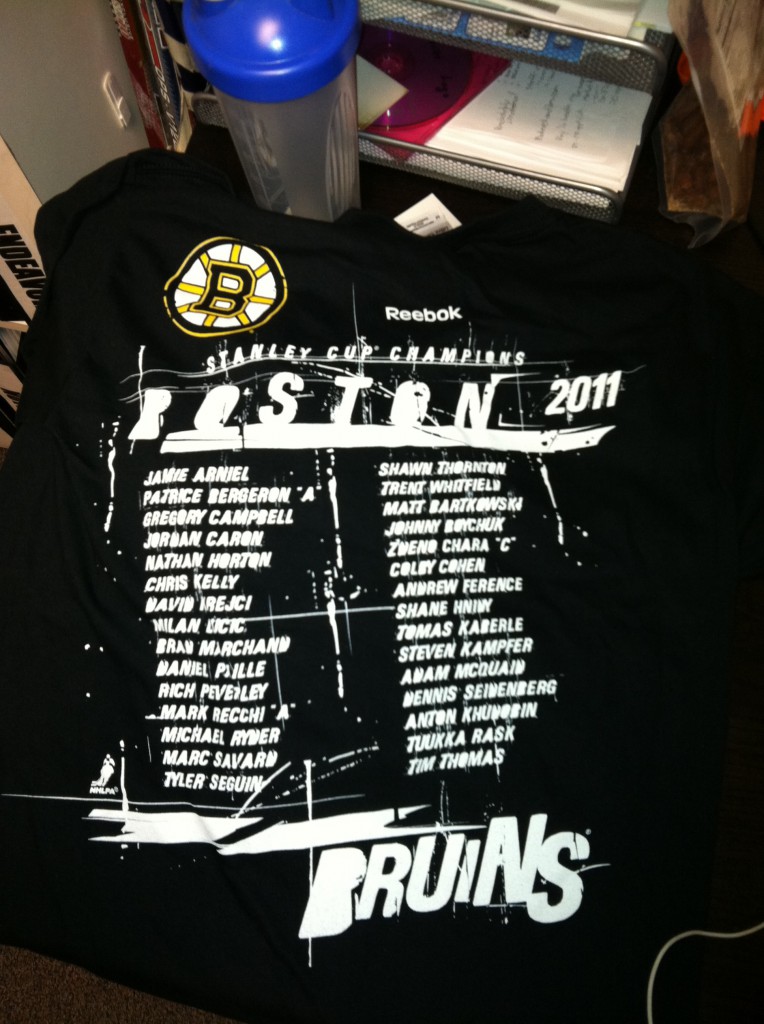
Bruins Stanley Cup Champion T-Shirt (damn it)

As a Flyers fan, it’s tough to have a Bruins Stanley Cup Champion t-shirt in my office, but I’m happy that Colby got to be a part of their run (6th name from the top on the right hand column).

Speaking of hockey players looking to get better, we’ve added some great content to  Hockey Strength and Conditioning that you’ll want to check out over the weekend.

My friend and long-time Carolina Hurricanes Athletic Trainer and Strength and Conditioning Coach Pete Friesen added a video interview with him on the fitness demands of hockey and highlights some of the things his athletes do in the off-season. Pete’s an awesome guy and has a ton of experience. This was a cool feature.

Check out the video here >> Training with the NHL Carolina Hurricanes from Pete Friesen

Darryl Nelson wrote an article on core training for hockey players. I think the major concepts in Darryl’s article are commonly accepted amongst well-educated hockey strength and conditioning coaches, I don’t think the concepts have trickled down to players, parents, and coaches yet. In other words, the information hasn’t yet reached the populations that need it most. Darryl’s article highlights an important function of the true core (not what most people define it as), and identifies why a few of the most common core exercises can actually be counterproductive. Quick read with powerful implications.

Check out the article here >> Core Training from Darryl Nelson

Sean Skahan added an awesome webinar on in-season training for professional players. Hopefully the title doesn’t mislead you. Sean outlines the importance of in-season training and discusses the goals of in-season training, the components of the program, how he assesses for common movement impairments that predispose players to injuries, and details his progressions for core training, strength work, and power training for hockey players. There is a ton of valuable information in here for hockey training programs at all levels.

Check out the webinar here >> In-Season Training from Sean Skahan

The forums have had some good discussions recently too. As I said last week, because of the quality and timeliness of the training programs we post online, we’re starting to get more semi-pro hockey players signing up as members, using the programs, and posting their questions on the forums. Basically they get access to high quality programs and can have professional hockey strength coaches answer all of their individual questions. Not bad for less than $10/month! I appreciate those of you that have helped spread the word about HockeySC.com. One of the reasons I like training hockey players so much is because they’re dedicated to doing whatever it takes to get better (something Sean pointed out in his webinar…with the help of the Hanson brothers). Unfortunately, most players, parents, and coaches still aren’t aware of the resources available to them, so it’s great to have your support in spreading the word about our site.

As always, if you aren’t a member yet, I recommend trying out the site for $1 Hockey Strength and Conditioning for a week. If it’s not the best buck you’ve ever spent , I’ll personally refund you!


To your continued success,

Kevin Neeld

P.S. Just a friendly reminder that you only have a couple days left until the price jumps up significantly on Maria Mountain’s Ultimate Goalie Training 2.0. If you’re looking for a complete off-ice goalie training program, this is it!

Please enter your first name and email below to sign up for my FREE Athletic Development and Hockey Training Newsletter!