Over the last 6 weeks we’ve been training a lot of youth soccer teams. As a general rule, the kids are great, which in part stems from the fact that the organization is very well run and therefore draws in great athletes with comparable attitudes.

Last Wednesday, as it always does, our night ended with two (one U-14 and one U-15) girls soccer teams that both started at 8:30pm. For our facility, accommodating 35+ athletes at once is a challenge, and as you can imagine, getting that many adolescence athletes at that hour leads to a wide range of blood sugar, fatigue, and interest levels.

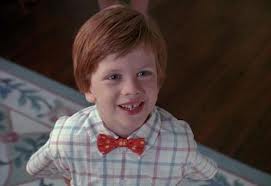
For what was probably only the 2nd or 3rd time in my career, I heard what could very well be the most deflating statement an athlete could make, and it came from one of the girls ~10 seconds after getting everyone lined up for the warm-up, standing in the front of one of the lines, at concert level volume for the whole room to hear.

Not ideal.

Here’s the thing…I completely understood where she was coming from. And while I didn’t agree with her timing, I didn’t resent the feeling.

Over the past couple weeks I started asking a lot of the girls what time they wake up in the morning. Most are around 5:30am. They spend some variable amount of time getting ready for and bussed to school, then sit in school for ~6 hours, come home to do homework, then go off to practice for an hour, then in to train with us.

Tired Teen

The “My head is up, but I’m actually sleeping” pose. I don’t think you’ll find a single science or history teacher at Henderson High School in West Chester, PA that couldn’t vouche for my mastery of this. Sneaking in a quality 30 minute nap each day is what allowed me to train hard at practice that night.

Pretty easy schedule no?

As an aside, it’s funny to watch the parents that stick around in our waiting area while their kid(s) train. Most parents are up at a comparable hour (although most of the kids I asked said their parents were up after them), go work an 8-hour work day, then come home to take care of the kids (dinner, transportation, etc). When they get to our facility, many will sit with their heads against the wall and either stare blankly across the turf for about an hour or they’ll actually nod off.

In other words, they check out, mentally and physically, while the kids are expected to be fully engaged with us.

Complaining about teenagers

This is only marginally related to this article, but I’m not one to pass up an opportunity to tie in a Big Lebowski reference.

Simply, no one can be on their “A Game” every day, and it’s easy to understand how the schedules of most youth athletes would lead to the occasional feeling of “I’d much rather be napping”.

What would you do?

You might be wondering how I handled the comment.

What would you do? Reprimand her? Kick her out? Suggest she suck it up?

In the past, I may have done any of these things. In this case, I just laughed and said “I hear you. Do the best you can.”

I believe very strongly that, as a coach, it’s more beneficial to highlight positive things than negative ones. If I would have made a big deal of the comment, the group likely would have gotten off to a collectively awkward start and I suspect more girls would be thinking about how much they also didn’t want to be there.

Instead, we all moved on and quickly forgot about it.

Then I said this…

At the end of the session, I pulled her aside and said 4 of the most powerful words in coaching:

“I’m proud of you.”

And here’s why…

After she made the comment, she absolutely crushed the training session. It may have been out of rebellious rage, but she did her best and actually set a great tempo for the rest of the group.

She was also one of the first ones to start encouraging the rest of the group when the conditioning started to get tough.

Athletes in that mood can be HUGE detriments to the group. They can sloth around and spread their negativity. In these cases, they aren’t only hurting themselves, they’re actually hurting the whole team.

Not only did this athlete not do that, but she actually raised the bar for everyone.

If on your WORST day, you still make your team better, you’ll find success in everything you do. That, to me, is something to be proud of.

To your success,

Kevin Neeld
HockeyTransformation.com
OptimizingMovement.com
UltimateHockeyTraining.com

Please enter your first name and email below to sign up for my FREE Athletic Development and Hockey Training Newsletter!

Get Ultimate Hockey Transformation Now!

Year-round age-specific hockey training programs complete with a comprehensive instructional video database!

Ultimate Hockey Transformation Pro Package-small

Get access to your game-changing program now >> Ultimate Hockey Transformation

“Kevin Neeld is one of the top 5-6 strength and conditioning coaches in the ice hockey world.”
– Mike Boyle, Head S&C Coach, US Women’s Olympic Team

“…if you want to be the best, Kevin is the one you have to train with”
– Brijesh Patel, Head S&C Coach, Quinnipiac University

Today I wanted to share a pretty cool story with you.

Over the Summer, Emily and I bought our first house together. It was something we’d talked about doing at some point in the future, but the process from starting to look to closing happened FAST. Like 6 weeks fast.

We bought a house!

Holding each other up after a long move in day.

Because we moved in July, the middle of the hockey off-season (e.g. my busiest time of year at work), we didn’t move in as much as just drop boxes inside of our new house and then carry on with our lives.

When the dust finally settled on processing all the testing data from our off-season hockey group, the pre-season testing/programs from the Flyers Junior Team, and the two camps I had with the US Women’s National Team, I was finally able to spend some time working on the house and digging through some of my boxes.

In doing so, I came across something awesome that I forgot I had.

When I was a kid, my older brother (Jim) and I used to write letters to our favorite professional hockey players. In the letters, we’d always ask for advice about becoming better players, and what they thought really helped them along their career. Of course, we also politely suggested that getting an autograph would be cool too.

As you can imagine, we didn’t get any letters back, as those guys are inundated with fan mail and don’t have the time (and probably the desire) to personally respond.

What Jim and I were both pretty surprised about, though, was that we almost always got an autographed picture back. Over the years, we built an awesome collection that included guys like Wayne Gretzkey, Mario Lemieux, Eric Lindros, Paul Kariya (my favorite player growing up), Joe Sakic (my brother’s favorite player), Mats Sundin, Teemu Selanne, John LeClair, Pavel Bure, Valeri Kamensky, Patrick Roy, and many, many more.

It was sweet. Those were always the best days. We’d run home from school and check the mailbox everyday for weeks after we sent out our letters.

Growing up, I always wanted to go to the University of Michigan. I don’t know why (it as the helmets), but I just thought that the team and school were awesome. In fact, my first plane trip ever was when my mom took me to Ann Arbor to visit for my 10th birthday. Somewhere I think I still have the silky yellow jersey I got that year too (the best present ever)!

One day, I looked up the University of Michigan hockey roster and wrote every player on the team an individual letter letting them know I was a huge fan, wishing them luck, asking for advice on how to become a Division 1 hockey player, and, of course, requesting an autograph.

As a quick aside, the practice of writing to people that have attained what I aspired to attain, which my brother taught me, has stuck with me to this day. While I don’t write asking for autographs anymore, since entering the field I’ve reached out to a TON of strength coaches, physical therapists, researchers, coaches, and agents to introduce myself, ask for advice, and/or thank them for the help their writing/products have provided me. This was ultimately how I connected with guys like Mike Boyle, Mike Potenza, Eric Cressey, Sean Skahan, Charlie Weingroff, and a number of other guys that have had a huge impact on my career.

…getting back to Michigan.

The cool thing about the experience with Michigan is that a number of the players actually wrote back, including players like Brendan Morrison and Mike Knuble that went on to have great NHL careers.

First, I think it’s a great gesture and testament to the character of those players. I was 9.  It would have been easy for them to just laugh at the letter and throw it out. But they didn’t. They took the time out of a schedule packed with schoolwork, training, practicing, travel, and games to write back.

Second, I got great advice that had a huge impact on my motivation and work ethic at a young, impressionable age. And frankly, I think a lot of those characteristics have stuck with me to this day.

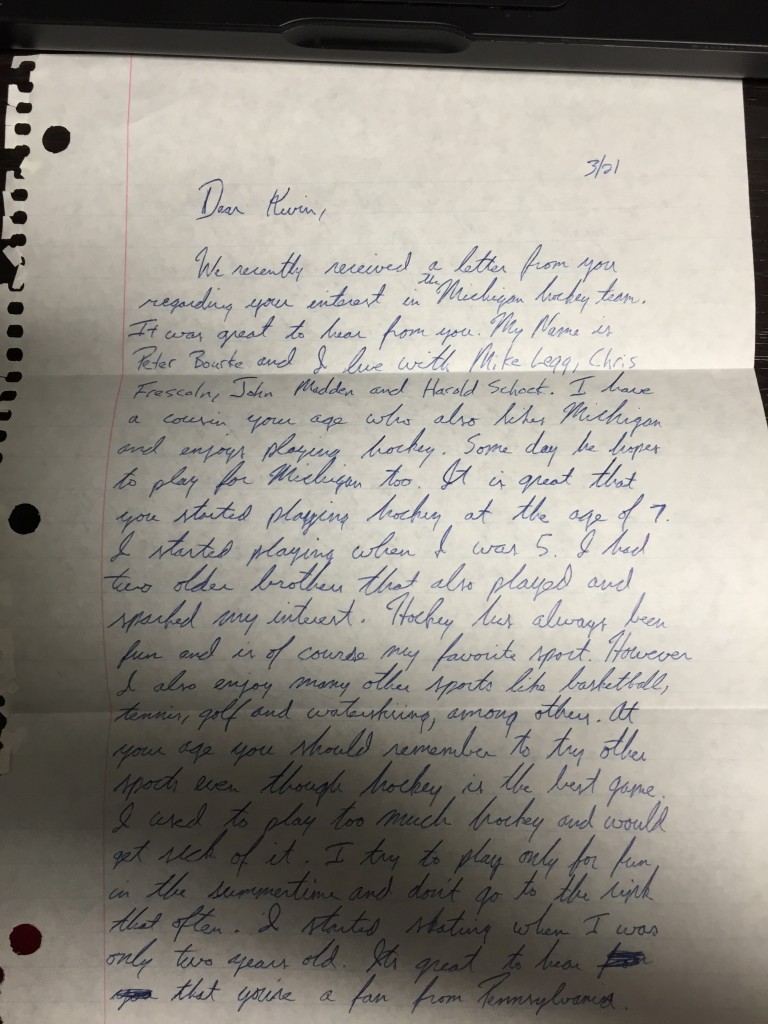
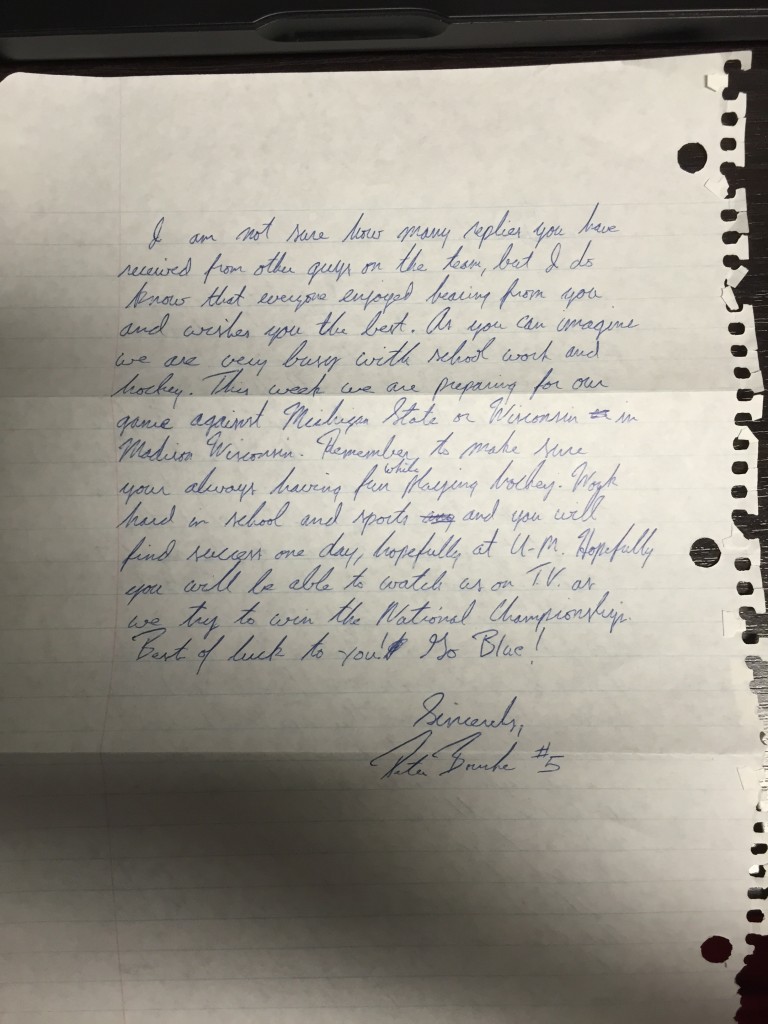
In digging through one of the boxes, I found a letter from Peter Bourke, a defensemen on the team.

 IMG_2385 IMG_2386

The Best Advice I’ve Ever Gotten

I reread the letter when I found it and it’s amazing how much good advice there is that is extremely relevant to youth athletes today.

With that in mind, I wanted to share a few things that Peter told me when I was 9, that I think will really help the youth athletes you know:

  1. “Hockey has always been fun and is of course my favorite sport. However I also enjoy many other sports like basketball, tennis, golf and water skiing, among others. At your age you should remember to try other sports even though hockey is the best game.”
  2. “I used to play too much hockey and would get sick of it. I try to play only for fun in the Summer time and don’t go to the rink that often.”
  3. “Work hard in school and sports and you will find success one day.”

What This Means To You

  1. Playing multiple sports is essential at young ages, not only to avoid burnout, but also to maximize the athleticism necessary to become an elite hockey player at older ages.
  2. Athletes need an OFF-season. This is an especially important note today as the trend is continuing to move toward year-round competition and an increase in competition at the expense of preparation and restoration.
  3. Hard work is inherently valuable. If you work hard and don’t accomplish your goals, you’ll never have to live with the regret of knowing that you may have achieved your goal if you just put forth a little more effort. Sports provide a great opportunity for kids to see how their hard work translates to accomplishments (even small ones like scoring a good goal in practice), which will ultimately help cultivate the character needed to be successful when they make the transition to the “real world”. Bottom line, developing the habit of working hard toward your goals will pay dividends in every component of your life.

Hearing these things from an athlete I looked up had a profound impact on my life.  Hopefully these words can do the same for you.

To Peter and the rest of the University of Michigan team, THANK YOU for taking the time to write back to me, and any other young kids that reached out to you. You truly made an impact on my life.

To your success,

Kevin Neeld
HockeyTransformation.com
OptimizingMovement.com
UltimateHockeyTraining.com

Please enter your first name and email below to sign up for my FREE Athletic Development and Hockey Training Newsletter!

Get Ultimate Hockey Transformation Now!

Year-round age-specific hockey training programs complete with a comprehensive instructional video database!

Ultimate Hockey Transformation Pro Package-small

Get access to your game-changing program now >> Ultimate Hockey Transformation

“Kevin Neeld is one of the top 5-6 strength and conditioning coaches in the ice hockey world.”
– Mike Boyle, Head S&C Coach, US Women’s Olympic Team

“…if you want to be the best, Kevin is the one you have to train with”
– Brijesh Patel, Head S&C Coach, Quinnipiac University
Over the last several weeks I’ve been thinking a lot about what makes a successful athlete and reflecting on how good of a job we’re doing at cultivating these qualities in our athletes.

Running a sports performance facility puts us in a great position to influence an athlete’s physical development, which will have a profound effect on their overall athletic development. With the teams we work with, however, I think we also have a great opportunity to influence the athletes’ character and the overall team dynamic.

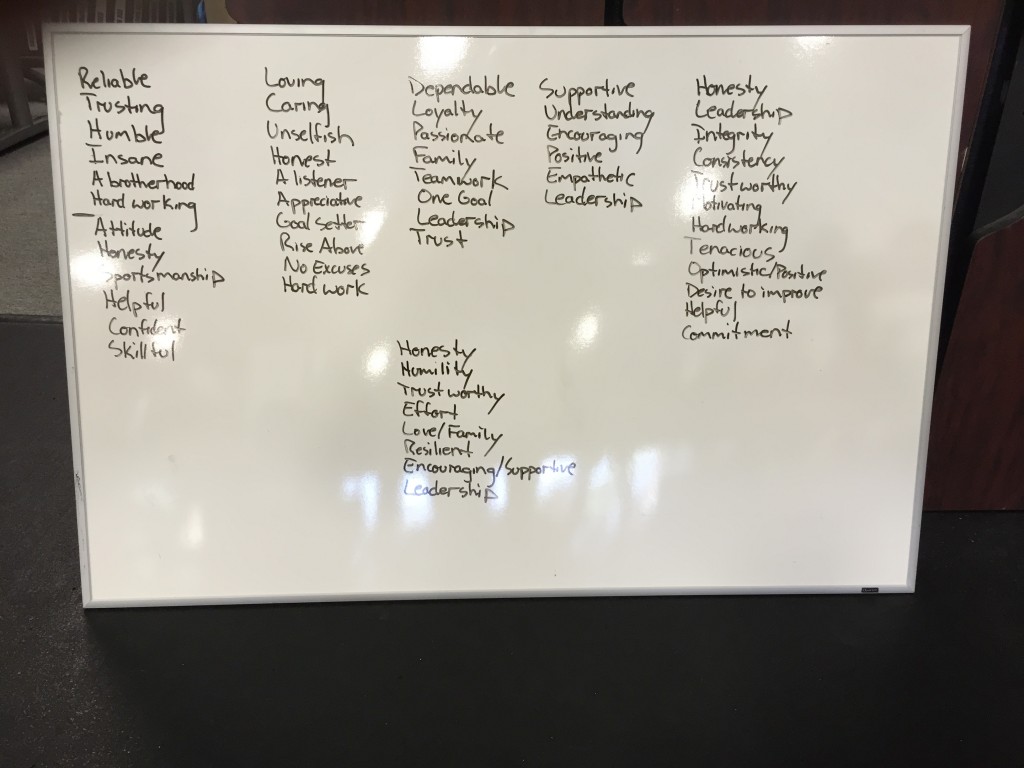
With this in mind, at our staff meeting last Friday I threw 60 seconds on the clock and I, along with the rest of our coaches, wrote down every word/phrase that came to mind when we thought of a great teammate.

IMG_2314

The activity was interesting as most of us came up with similar or complimentary concepts. It also sparked a good conversation on how we can better instill these qualities in our athletes.

Below are 10 of the top qualities of a great teammate, and what every youth athlete should aspire to represent!

1) Effort: I always come back to the idea that there are a lot of things you can’t control as an athlete, but your effort is never one of them. The only way to get better is to consistently apply yourself to your fullest ability. This not only makes you better, it makes the teammates around you better as well.

2) Honesty: All great relationships are built on honesty. As an athlete, there is nothing more frustrating to your teammates and your coaches than not knowing whether you’re telling the truth or not. If you made a mistake, own up to it.

3) Humility: Whether you’re the best or worst athlete on any given roster, you’re still part of a TEAM. A team may have a few “stars”, but the success of the team is dependent upon the whole group. Always think of your successes as part of a team effort and be quick to share praise with the rest of your teammates.

4) Responsibility: My coach at the University of Delaware once said to us “this program was here long before you guys were and will be here long after you leave.” All of your actions, within and away from the team, are a representation of the organization/team you play for. Take responsibility for your behavior and actions as if you have a younger brother or sister that will model everything you do (even when you’re away from the team). You never know who is looking at you for cues on how to behave.

5) Family Atmosphere: The best teams I’ve ever played for, both in terms of the team’s success and how enjoyable the season was, have always felt more like a family than just a group of teammates. It’s more fun to go compete with a group of people you know have your back and will support you through tough times. Everyone makes mistakes; this is inevitable. When teams have players that are quick to point out the errors of others and tie how they treat a player to his/her performance on any given day, the team unravels quickly. Support your teammates like family.

6) Resiliency: Every season has its ups and downs. Every team will face adversity. The GREAT teams thrive on adversity, are motivated by it, and use temporary defeats as an opportunity to grow and improve. As an athlete, pride yourself on being resilient. Your behavior is contagious and ultimately exhibiting this quality will lead to a mentally tougher team.

7) Leadership: In youth sports, unfortunately, leadership roles are often given to the most talented athletes. The reality is that EVERY athlete on a team can be a leader in some way. Leadership comes in a lot of different forms, not all of which are vocal. When I work with youth teams, I often ask athletes “Is what you’re doing right now going to make your team better or worse?” If you can always answer “better”, you’re leading the team in a positive direction. If you’re not a captain, you can still be a leader. Lead with your actions. As the saying goes, actions speak louder than words. Exhibit the qualities you want every one of your teammates to exhibit.

8) Respect: This is simple, but incredibly important. Respect your teammates. Respect your coaches. Respect your facilities. Clean up after yourself. Shake your coach’s hand when you see him/her. Say thank you to teammates. These little gestures go a long way in creating a culture of mutual respect, which is key to long-term success.

9) Optimism: Nothing can be more cancerous to a team than someone that is constantly pointing out what’s wrong with a player or the team as a whole. Look for the good in everything your teammates do. Emphasis is a form of reinforcement. If you harp on the negatives, they’re more likely to be repeated. Positives give you something to build from, and focusing on these will help reinforce positive behaviors/actions in yourself and all of your teammates.

10) Desire to Improve: Simply, never be satisfied with where you’re at. There is always room for improvement, and the harder you work toward improving yourself, the harder your teammates will work to do the same.

Wrap Up

Whether you’re an athlete or a coach, you’re still part of a team. Think of how good of a job you do exhibiting the qualities above consistently and work to improve in any areas you’re lacking.

If you have any comments about how you’ve successfully cultivated these characteristics in yourself, your teammates, or players (as a coach), feel free to post them below!

To your success,

Kevin Neeld
HockeyTransformation.com
OptimizingMovement.com
UltimateHockeyTraining.com

Please enter your first name and email below to sign up for my FREE Athletic Development and Hockey Training Newsletter!

Get Ultimate Hockey Transformation Now!

Year-round age-specific hockey training programs complete with a comprehensive instructional video database!

Ultimate Hockey Transformation Pro Package-small

Get access to your game-changing program now >> Ultimate Hockey Transformation

“Kevin Neeld is one of the top 5-6 strength and conditioning coaches in the ice hockey world.”
– Mike Boyle, Head S&C Coach, US Women’s Olympic Team

“…if you want to be the best, Kevin is the one you have to train with”
– Brijesh Patel, Head S&C Coach, Quinnipiac University
Let’s face it, every youth hockey team has a few (or…more than a few) knuckleheads that have their own agenda. Some just don’t buy into off-ice (yet); some don’t respect authority; some may suspect blood sugar fluctuations due to their even more suspect food choices; and some may have just had a bad day/week.

Problem Child

What do you mean you don’t want to do a spiderman lunge?

In the years that I’ve been around hockey, I’ve seen these cases handled in a variety of ways. In most cases, the coach will either verbally coerce the player into submission, attempt to ignore the player, or simply kick him/her out. While I think all of these methods may have some merit depending on the player and the situation, I’ve had pretty good success over the years taking a different approach, especially with “chronic offenders”.

A few years ago I made the realization that many coaches, including myself at the time (despite my unconditional optimism), spend more time reprimanding negatives than acknowledging or rewarding positives. In a youth team off-ice setting, this can be disruptive to the overall success of the team, and, frankly, gets old very quick. It makes coaching exhausting! I realized that some of the kids that are chronically misbehaving aren’t necessarily “bad kids”, they just thrive on the attention. They may have a tough home life, one parent, abusive sibling, or generally be under-confidant. Regardless, the key here is that they just want attention. In these cases, I’ll often pull the kid aside before or after off-ice (depending on what’s most appropriate for that given day) and let them know that I view them as a natural leader, and acknowledge that for better or worse, teammates follow his/her actions. The next off-ice, I’ll pull them from the back of the line and put them up front to lead the dynamic warm-up. I’ll also use them to demo exercises and commend them in front of everyone when they do something well. This has had a SIGNIFICANT impact on curtailing undesirable behavior, and can ultimately change the player’s course.

All of this comes back to an idea I read…in a book.

Give them a reputation to live up to.

In other words, if you want to influence behavior, sometimes it’s ideal to commend the individual for the behaviors you WANT to see, even if it doesn’t exactly fit their current profile. In this case, describing the player as a “leader” instead of a misfit may change the player’s view of themselves and the role they play on the team. This isn’t lying; it’s outlining expectations in a different manner. In my opinion, if we keep reminding kids of how bad they are, they’ll keep reminding us of how right we are!

Next time you have a problem child in your group, give this strategy a shot!

To your success,

Kevin Neeld
UltimateHockeyTraining.com

Please enter your first name and email below to sign up for my FREE Athletic Development and Hockey Training Newsletter!

When I was growing up, the captains on my teams were always the best players. Having trained several dozen youth players over the last couple years, it doesn’t seem much has changed in that regard. The most skilled/talented players are awarded “letters” and the rest of the team tends to look to those players for answers.

I never questioned this growing up, but I do now. Unfortunately many of the more skilled players completely lack any semblance of leadership ability. In a team setting, leadership means:

  • Attentively paying attention to the coach when he/she is speaking
  • Being in the front of the line to start drills
  • Encouraging teammates when they need it
  • Saying and doing the things that will make the TEAM better
  • Having INTEGRITY

I can’t tell you how many times I’ve heard so-called leaders say things like “we lost 7-2, but I had our two goals!” To be clear, I never under-recognize individual achievement. It’s these small “wins” that build confidence in a player. I also understand that youth players are, well, just kids, and that they haven’t always learned the importance of self-sacrifice for the greater good of a larger group.

Instilling Leadership Values in Players
That said, I think leadership qualities can and should be taught and reinforced. As coaches, it would be helpful to place a greater focus on habits than outcomes. For example, if a slow player is working extremely hard, commend the work ethic instead of the outcome (mediocre speed). Giving the players responsibility and holding them accountable also goes a long way. In an off-ice training setting, I had the captains on one of the peewee teams I trained run the warm-up for the second half of the year. I made it clear that they were expected to know it inside and out and to run the team through it, smoothly. And they did.

If you’re a coach, try to find ways to encourage your players to take responsibility for their own success and to reward habits, instead of outcomes. Reinforcing these things will not only make your players better at hockey, it will likely make them better citizens and functioning members of society in the future.

Becoming a Leader as a Player
If you’re a player, know that integrity is the number one requisite to being a leader of any group. Integrity, simply, is doing the right thing whether someone is watching or not. Players that joke around, but then work hard when the coach is watching are usually hated by their teammates, regardless of how talented they are. Be the player that is recognized for always doing the right things, constantly working hard, and making those around you better, and you’ll always be regarded as a leader.

It’s also important to know that not every leader will have a letter on his/her jersey, and that different teammates will look for different things in leaders. On a personal note, my final year at Delaware, I was the captain of our team (quite an honor). We had one assistant. Realistically, we could have had 3 “C’s” and 3 or 4 “A’s”. There was a lot of character on that team. After talking it over with the assistant captain, we agreed to not put letters on our jerseys at all. The thought was that we were a TEAM of leaders. While we had some responsibilities and expectations that other players didn’t, I frequently looked to other players for leadership or motivation.

Manliest mascot ever…

A few players in particular really stood out to me:

Every practice ended with “over backs”, which is just a brief conditioning drill skating between boards width-wise. Every practice, regardless of how terrible I felt, I lined up next to my friend Joe, because I knew that, regardless of how terrible he felt, he was going to go 100% every time. To me, THAT is leadership (not surprisingly, he was the captain the following year).

We had another player, Ben, that was probably the best penalty killer I’ve ever played with. I’ll never forget one game, where he went down to block a shot and took it in an unprotected area. He was hurt. He was slowly getting back up to his feet, when he picked his head up to realize that, oddly, the puck had bounced off him right back to the defenseman who took the original shot. The defenseman immediately wound up to take another shot, which Ben immediately dropped back down to block, again, taking it in an unprotected area (a different one). It’s not a glorious job, but it helps a team win. That behavior is contagious. Nothing makes other players want to sacrifice to help the team succeed more than watching a teammate sacrifice to help the team win. THAT is leadership.

Players need to recognize that leaders come in multiple forms and play multiple roles on a team. EVERY  player can be a leader, and not every leader needs to wear a letter. In fact, I’d recommend that no leaders do. You may find the team is more cohesive that way.

To your success,

Kevin Neeld

Please enter your first name and email below to sign up for my FREE Athletic Development and Hockey Training Newsletter!