A lot of attention has been paid to long-term athletic development and strategies to develop elite performers. The inarguable truth is… it takes time, and a lot of work.

Unfortunately, this fact has led to aggressive training and athlete development strategies being pushed on athletes at younger and younger ages, which is counter-productive.

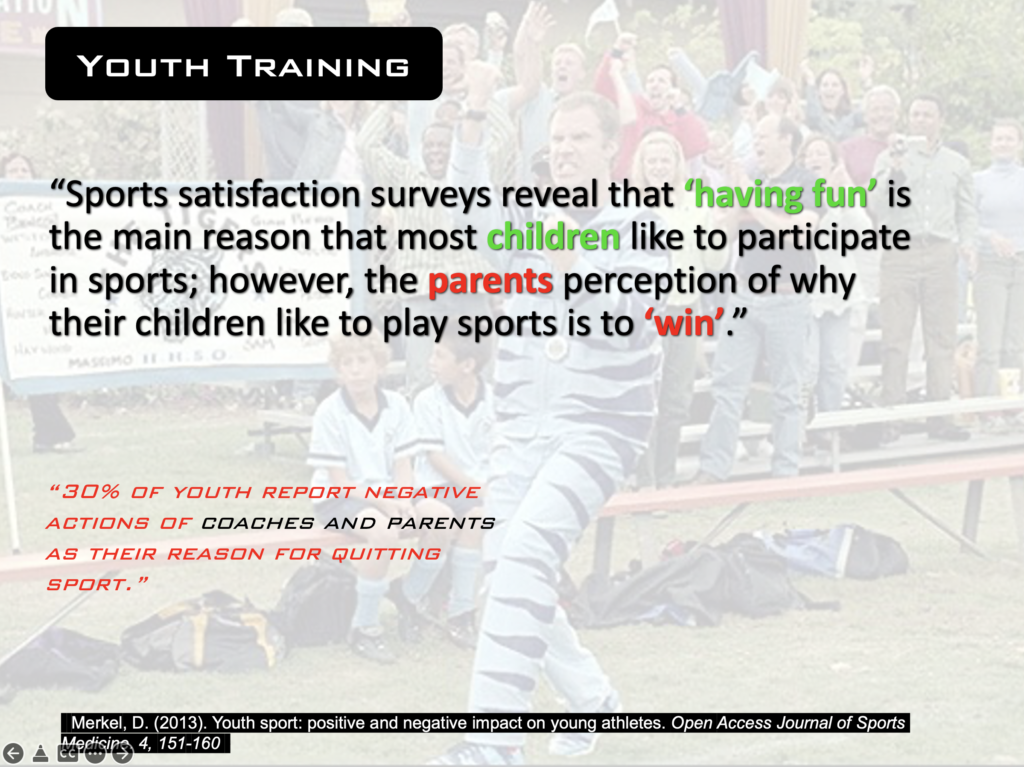
A 2013 study revealed that kids reported the main reason for playing sports was to have fun, whereas the parents thought the kids liked to play to win.

30% reported the behaviors of their parents and coaches as the reason for quitting.

As adults, we have an incredibly skewed perception of why kids play sports. Kids are motivated by being involved and having fun. Winning is way down on the list. The message is very clear here for parents and for coaches; we need to emphasize fun more and winning less.

The reality is that the MAIN driver in athletic development is kids developing a passion/love for the sport, and WANTING to put in the extra time/work to improve. This can’t happen if they quit.

With youth athletes, our responsibility is not to rush development or maximize performance, it’s to create an environment for the athletes to develop a passion for sport.

Feel free to post any comments/questions below. If you found this helpful, please share/re-post it so others can benefit.

To your success,

Kevin Neeld
SpeedTrainingforHockey.com
HockeyTransformation.com
OptimizingAdaptation.com

P.S. Interested in age-specific year-round hockey training programs? Check out Ultimate Hockey Transformation

Enter your first name and email below to sign up for my FREE Sports Performance and Hockey Training Newsletter!

As part of the release of my new book Speed Training for Hockey, I recently wrote a guest article for Mike Robertson’s website discussing how to apply long-term athletic development models to maximize speed development in youth athletes.

Read the article here: Long-Term Athletic Development Applications to Speed Training

In the article, I discuss:

  • How understanding LTAD models can help parents, coaches, and athletes understand the development process and know when to train specific qualities to maximize speed
  • Gender-specific ages where specific qualities develop at an accelerated rate
  • Specific changes to three primary systems within the body that drive improvements in performance
  • 3 training applications to help youth athletes maximize their speed development

Read the article here: Long-Term Athletic Development Applications to Speed Training

Save 39% on Speed Training for Hockey until May 26th at midnight here: Speed Training for Hockey

To your success,

Kevin Neeld
HockeyTransformation.com
OptimizingMovement.com
UltimateHockeyTraining.com

Enter your first name and email below to sign up for my FREE Athletic Development and Hockey Training Newsletter!

Every year, in recognition of the giving spirit of the holidays, the Endeavor staff does a small gift exchange. This year the guys got me two books that were awesome. The first of which was called The Big Lebowski and Philosophy: Keeping your Mind Limber with Abiding Wisdom. I wasn’t really sure what to expect with this, but it’s basically a philosophy book that uses scenes from the movie to make philosophical arguments.

As I’m writing that, I realize how lame it sounds, but the movie is so funny that the book was actually awesome. And once every few years I really like a good philosophy book. I found out there’s actually a whole series of those books, some of which seemed more interesting than others (i.e. The Inception book could be a good read).

Big Lebowski Meme

The other book, which sounds even nerdier than the last, was a book that used mathematics and historical math-related stories to challenge many common sense ideas. Yes, while you were out watching Fifty Shades of Grey, I was finishing a book about math and logic.

The book is called How Not to be Wrong by Jordan Ellenberg, and was probably the best book I’ve read in the last two years.

It was in this text that I found incredibly wise words pertaining to long-term athletic development.

Check out the first excerpt below:

“One of the most painful parts of teaching mathematics is seeing students damaged by the cult of genius. The genius cult tells students it’s not worth doing mathematics unless you’re the best at mathematics, because those special few are the only ones whose contributions matter. We don’t treat any other subject that way! I’ve never heard a student say, “I like Hamlet, but I don’t really belong in AP English – that kid who sits in the front row knows all the players, and he started reading Shakespeare when he was nine!” Athletes don’t quiet their sport just because one of their teammates outshines them. And yet I see promising young mathematicians quit every year, even though they love mathematics, because someone in their range of vision was “ahead” of them.

We lose a lot of math majors this way. Thus, we lose a lot of future mathematicians; but that’s not the whole of the problem. I think we need more math majors who don’t become mathematicians. More math major doctors, more math major high school teachers, more math major CEOs, more math major senators. But we won’t get there until we dump the stereotype that math is only worthwhile for kid geniuses.”

When I first read this, the thing that jumped out to me was how much in sports, as in math, we overvalue early achievers. There is now very clear evidence that early success is NOT a strong predictor of future success and anyone that’s been around any sport for a long time has seen studs at younger levels fall into irrelevance at older levels.

He continues…

“The cult of the genius also tends to undervalue hard work. When I was starting out, I thought “hardworking” was a kind of veiled insult – something to say about a student when you can’t honestly say they’re smart. But the ability to work hard – to keep one’s whole attention and energy focused on a problem, systematically turning it over and over and pushing at everything that looks like a crack, despite the lack of outward signs of progress – is not a skill everybody has. Psychologists nowadays call it “grit”, and it’s impossible to do math without it. It’s easy to lose sight of the importance of work, because mathematical inspiration, when it finally does come, can feel effortless and instant. I remember the first theorem I ever proved; I was in college, working on my senior thesis, and I was completely stuck. One night I was at an editorial meeting of the campus literary magazine, drinking red wine and participating fitfully in the discussion of a somewhat boring short story, when all at once something turned over in my mind and I understood how to get past the block. No details, but it didn’t matter; there was no doubt in my mind that the thing was done.

That moment of inspiration is the product of weeks of work, both conscious and unconscious, which somehow prepare the mind to make the necessary connection of ideas. Sitting around waiting for inspiration leads to failure, no matter how much of a whiz kid you are.

Does the second sentence sound familiar? It is almost verbatim what a former D1 player said to me a few years ago at our facility (Ok, he wasn’t as elegant, but the thought was the same), which I alluded to here: This may be why you’re not playing.

“It can be hard for me to make this case, because I was one of those prodigious kids myself. I knew I was going to be a mathematician when I was six years old. I took courses way above my grade level and won a neckful of medals in math contests. And I was pretty sure, when I went off to college, that the competitors I knew from Math Olympiad were the great mathematicians of my generation. It didn’t exactly turn out that way. That group of young starts produced many excellent mathematicians, like Terry Tao, the Fields Medal-winning harmonic analyst. But most of the mathematicians I work with now weren’t ace mathletes at thirteen; they developed their abilities and talents on a different time-scale. Should they have given up in middle school?

What you learn after a long time in math-and I think the lesson applies much more broadly-is that there’s always somebody ahead of you, whether they’re right there in class with you or not. People just starting out look to people with good theorems, people with some good theorems look to people with lots of good theorems, people with lots of good theorems look to people with Fields Medals, people with Fields Medals look to the “inner circle” medalists, and those people can always look toward the dead.”

The thought process here is very simple:

Overvaluing the idea of “natural talent” and early success can cripple an athlete’s work ethic.

As a coach, it’s incredibly important to reward behaviors and not outcomes. It’s equally vital to acknowledge successes, but help the kids place more value on working as hard as they can and focusing on getting a little better each day.

To help you understand why this is so important, let me share another story about one of the soccer teams we’ve been training recently (and really there’s at least one of these kids on every team).

One of the teams we train is a very talented boys team of HS kids. At the end of the training session, we typically wrap up with some form of shuttle run, most recently of which was 75-yard shuttles (cones at 0 and 25) where the kids are expected to give 100% effort on the entire run.

While the entire team is talented, and most are very athletic, there’s one kid that stands out as being faster and springier than the other kids. Because of this, he runs every shuttle just fast enough to beat the other 2-3 kids he’s running against, and he almost always wins. The exceptions are when he completely packs it in and just trots, in which case he comes in right behind the next fastest kid.

Here’s the problem: Being the fastest kid on your team can give you a false sense of security.

First off, he may be the fastest kid on his team NOW, but as puberty (and training) catches up with the other kids, he may not be the fastest for long. Maybe more importantly, is being the fastest on your team doesn’t mean you’re the fastest on every team.

And as athletes get older, the funnel gets narrower. This is probably best highlighted by the women’s hockey teams with USA Hockey. You can be the best player at the U-18 level, but the next year you need to be a top 20 player on the ~U-35 (or however old the oldest player) team. This means you not only need to beat out everyone in your age group, but basically every player on the U-18 teams for the preceding decade.

Not everyone has what it takes to compete at the most elite levels. There are a lot of things athletes can’t control, most notably their genetic ceiling.

The one thing that every athlete has 100% control over is his or her work ethic.

In the example above, the soccer player may be running fast enough to beat his teammates, but not fast enough to cause his body to adapt favorably. So while the kids he’s just barely beating are getting a little better every time they train, he’s doing just enough to stay where he is.

I always come back to the question “Where’s your finish line?”

Do you want to be a good U-16 player, or a great college player?

I think most athletes need raise their expectations for themselves.  In fact, I believe this so strongly that we plastered these words on our back wall so it’s the first thing you see when you walk into our facility.
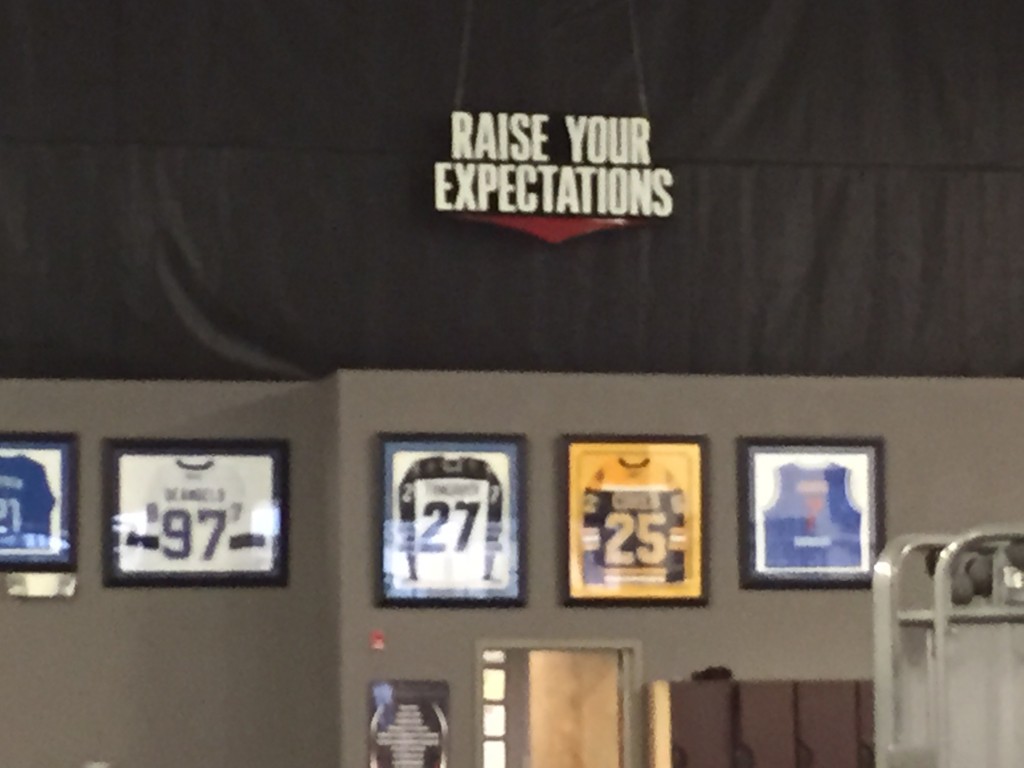
Raise Your Expectations

Most athletes are capable of way more than they’ll ever realize. And while the athletes need to expect more of themselves, coaches (and parents) would benefit from placing a greater emphasis on LONG-term development and developing positive behaviors at young ages that will benefit the kids not only in their athletic endeavors, but throughout the rest of their lives.

This is not only true in sports, but as Ellenberg points out, also true in academia.

To your success,

Kevin Neeld
HockeyTransformation.com
OptimizingMovement.com
UltimateHockeyTraining.com

Please enter your first name and email below to sign up for my FREE Athletic Development and Hockey Training Newsletter!

Get Ultimate Hockey Transformation Now!

Year-round age-specific hockey training programs complete with a comprehensive instructional video database!

Ultimate Hockey Transformation Pro Package-small

Get access to your game-changing program now >> Ultimate Hockey Transformation

“Kevin Neeld is one of the top 5-6 strength and conditioning coaches in the ice hockey world.”
– Mike Boyle, Head S&C Coach, US Women’s Olympic Team

“…if you want to be the best, Kevin is the one you have to train with”
– Brijesh Patel, Head S&C Coach, Quinnipiac University

One of the questions we receive most frequently from parents and coaches about our programs at Endeavor is “Is it sport-specific?” Hopefully, based on the discussions from last week, you recognize that there are a lot of things to consider when helping an athlete improve physically for their sport(s). If you missed the preceding posts, you can check them out here:

  1. Understanding Range of Motion: more is not better
  2. Dissecting Performance Limitations
  3. Assessing and Monitoring Performance Limitations

The interesting thing about the question “Is it sport-specific?” is I don’t think the person asking it really has a firm grasp on what that actually means. Instead, I think there’s this pervasive fear that all athletes will be “trained like football players”, and what they’re really asking is “will this training help better prepare my athlete(s) for their sport?”

As an aside, I think there are worse stereotypes to model on a widescale than football. Football players are known for being among the strongest and most explosive in all sports, they have the longest preparatory off-season, and they have the highest practice:game ratio of all the major sports. If I was going to make a blanket statement, which I understand will be inherently wrong in specific cases, I would say that almost every athlete in every sport would benefit from being stronger, quicker, and more powerful, and from an increased emphasis on preparation and a decreased emphasis on competition.

That notwithstanding, I also don’t know what the parents and coaches asking this question expect to hear as an answer…

“No, we throw a piece of paper for each sport in a hat and randomly draw one to decide what we’ll prepare your athlete for. Hopefully he doesn’t draw polo!”

Using football as an example, consider these questions?

  1. Do quarterbacks, running backs, and offensive lineman have the same needs?
  2. What if the above kids were all 12 years old?
  3. Does an overweight running back with poor fitness have the same needs as a lean running back with great fitness?
  4. Does an explosive running back with poor strength have the same needs as a strong running back with relatively poor power?
  5. Do football players have the same needs during the off- and in-season periods?

Painted in this light, maybe a better question is “will the training be specific to my athlete’s individual goals and needs?”

The reality is that there are several “layers of individualization” that all need to be kept in perspective when designing a program and making recommendations for a specific athlete. The discussion below will highlight several, and provide some insight into the hierarchy of when to prioritize certain qualities.

1) LTAD
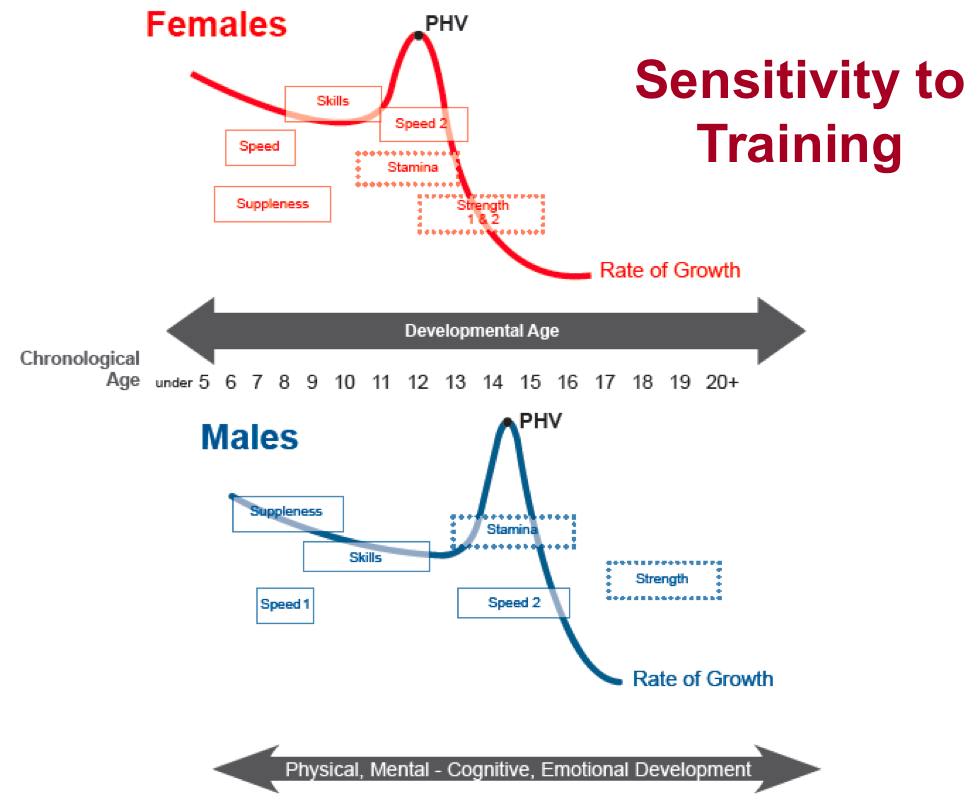
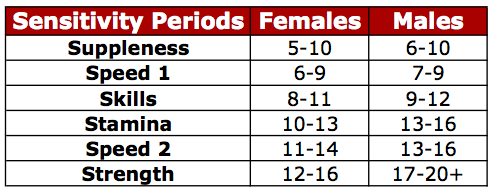
The first layer of individualization is where the athlete is within the long-term athletic development model. Different age groups are associated with the accelerated development of specific athletic qualities, so it’s important to include an emphasis on these qualities while the kids are in this window. Use the below graph from USA Hockey and the accompanying chart I made for a USA Hockey Level 4 Coaching Clinic presentation a few years back to help guide your decision making. The general thought process here should be selecting training methods to directly train the stage-specific target qualities or to train supporting qualities (e.g. sometimes strength is the limiting factor to speed, so strength training can be viewed as strength training).

Long-Term Athletic Development-Sensitivity to Training

LTAD Model from USA Hockey’s ADM

Sensitivity Periods

Simplified table of sensitive periods for specific qualities at various ages.

2) Gender
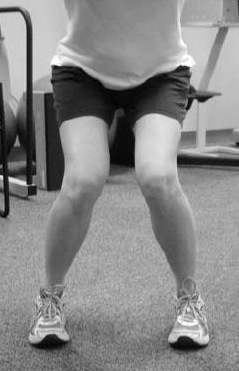
Male and female athletes, especially once puberty kicks in, have moderately different needs. While this really depends on the individual (as does everything), female athletes tend to have greater joint laxity, less strength, a greater tolerance for higher volumes of training, and have greater risk of non-contact knee injuries than their male counterparts. There are also differences in coaching methods and motivational sources between genders that need to be accounted for. From a programming standpoint, female athletes may need less flexibility work, more “stability” work, a mildly greater emphasis on strategies to prevent common knee injuries (e.g. ACL tears), and may be able to get away with one more set or 1-2 more reps for each set at any given load percentage. This doesn’t mean that females need an entirely different program, only that slight tweaks may make it more beneficial than using the same strategies for their male counterparts.

Valgus Collapse
This isn’t acceptable for anyone, but we see this type of inward collapse more frequently in female athletes.

3) Sport
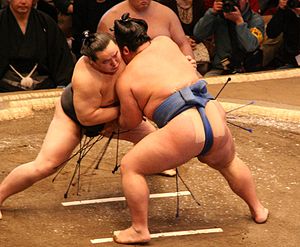
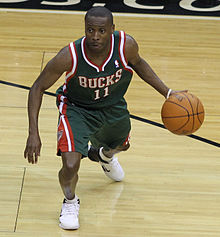
Different sports have different movement pattern, neuromuscular drive/force, and energy system requirements that will need to be accounted for in the training process. As a general rule, off-season programs should progress from general to specific in all of these qualities, which will allow for a smooth transition to the pre-season of that sport.

Sumo Wrestling  Earl Boykins

Different training goals for different sports.

4) Position
While many sports share common characteristics among positions, there are also notable differences between some positions within a sport. For example, a football quarterback, kicker, offensive lineman, and cornerback have fairly different needs in terms of their speed, strength, and conditioning. Similarly, a soccer goalie has different needs than a midfielder.

5) Role Within Team
How an athlete is used within a team should influence the way that athlete prepares for the season. For example, if you take a 4th line NHL forward, depending on the team, this guy may play somewhat regular shifts and be used on penalty kills and amass close to 13-15 minutes on average each game. In contrast, another team (or another player on the same team) may only be used sporadically to give the team an energy boost. In the case of the latter, the player would need sufficient conditioning to tolerate the stresses associated with daily practice and travel, and the skill/work capacity to not get killed in a fight (the reality for players in these roles), but would likely benefit from more time spent developing their acceleration, speed, and alactic power. Quite simply, if you’re only on the ice for 15-25s once every 10-15 minutes, you don’t need to have the same conditioning profile as someone playing 30-45s shifts once every 5 minutes. When you play 5 minutes across 3 hours, you’ll probably have a larger impact if you can make a difference with your strength and speed during the 20s you’re out there, opposed to be a little slower, but able to repeat that effort with short rest.

6) Performance Characteristics
Instead of identifying these all separately, it’s fairly intuitive that different athletes will need to have different characteristics regarding acceleration, speed, power, strength, and conditioning to be successful in their sport. This idea is very much encompassed in all of the above ideas. What may not be as obvious, is that all of the above factors can be considered in light of what the athlete currently brings to the table to develop the program that most specifically develops the limiting factor. For example, if the primary limiting factor to be an athlete being more successful is his speed, it’s important to break down speed to the supporting physical qualities: Alignment, mobility, stability, movement pattern efficiency, strength, power/rate of force development. A thorough assessment should identify whether the athlete has an ankle mobility restriction that may be limiting his ability to absorb and transfer force into the ground, he doesn’t run with proper mechanics, his strength is insufficient to support faster running speeds, or he’s strong, but not powerful enough to translate that strength at the required speeds, among others limitations. Once a specific limitation is identified, it’s much easier to target that limitation through specific training.

7) Body Composition
Certain sports and certain positions within sports have certain body composition requirements. I’ve seen very good hockey players be written off as lazy and incompetent because their body fat was 11-12% instead of below the typical standard of 10%. This message has two important lessons: 1) Training programs can be designed to pursue specific body compositions. As a result, training to improve body composition can also be viewed through the lens of how it will improve other qualities (think speed, power, conditioning), not in terms of the training itself, but in terms of how much easier and more efficiently the athlete will move when they’re not carrying around excessive body fat.  2) The perception of an athlete’s work ethic can be tied to their performance strengths/weaknesses (e.g. faster athletes are less likely to be considered lazy in many cases than slower ones), and their body composition. This is interesting because, as with all scenarios, sometimes the athlete with the higher body comp and/or the slower speeds is actually lazy and this stereotype is accurate; sometimes it’s completely off-base and the athlete isn’t one of the fastest and/or leanest because of genetic predispositions. If I’m an athlete, however, I don’t want to give my coach any reason to assume that I’m lazy, which means if I’m not one of the fastest, I would be EXTRA sure to get my body fat below the team standard and make it clear that my performance would not in any way be limited by a lack of effort.

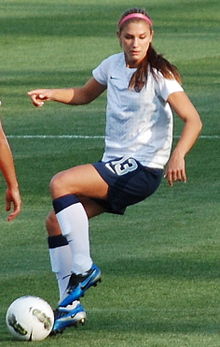
8) Injury History/Predisposition
Training programs can be written to specifically address past injuries to decrease the risk of future injuries. In most cases, this does not need to occur at the expense of other training goals, but simply must be a consideration within a broader program.

Clayton Kershaw  Alex Morgan

Likely to have very different injury predispositions/concerns.

9) Psychological Profile
Simply, the most talented player on the team that is too mentally soft to overcome the “targeting” from opponents and the stress of adverse circumstances common in big games will be of little use to a team. In this context, training that may not fit the physiologically specificity of the sport, but is hard and requires the athlete to dig deep and battle through the challenge may be very appropriate for that individual. Again, I don’t necessarily think this needs to be done at the expense of other training benefits, but I think you can include specific methods within a broader program to provide the athlete with regular opportunities to battle the voice in their head that wants to quit.

Wrapping Up
With all of these factors in mind, there is very clearly more to designing a training program than just considering the needs of a sport. Naturally, it’s not always possible to design the “perfect” program, but I think it’s important to recognize what’s optimal so you can make informed decisions about any compromises you need to make based on logistical factors. As a general rule, I think parents and coaches (and S&C coaches designing programs) should start to think more in terms of “How is this program going to benefit my athlete based on his/her individual needs?” opposed to “Is this sport-specific?” As always, if you have any comments or questions, please post them below!

To your success,

Kevin Neeld
OptimizingMovement.com
UltimateHockeyTraining.com

Please enter your first name and email below to sign up for my FREE Athletic Development and Hockey Training Newsletter!

Get Optimizing Movement Now!

“…one of the best DVDs I’ve ever watched”
“A must for anyone interested in coaching and performance!”

Optimizing Movement DVD Package

Click here for more information >> Optimizing Movement

I’ve been buried at work this week trying to work on a few different projects, so I haven’t had much time to write. Fortunately, I’ve come across a few great articles/videos that I think you’ll enjoy. Check them out at the link below:

Does your player have the passion necessary to become elite? from Josh Levine
This is another piece from Josh Levine discussing long-term athletic development concepts that I really enjoyed. In my mind, athletic success almost always stems from this key component, which seems to paradoxically be what most youth sports systems kill/challenge first. If I were a youth sport parent, coach or administrator (in any sport), I would print this article out and read it everyday before I went to work. It’s easy to get caught up in performance and lose sight of the most important part of sports participation, especially at younger ages. Remember, EARLY development and ELITE development are not the same thing.

Vitamin D Deficiencies in Soccer Athletes (Premier League) from Matt Siniscalchi
Matt, who is celebrating a birthday today (Wish him happy birthday here: Matt Siniscalchi), recently wrote a succinct, but very clear summary of Vitamin D deficiencies in elite athletes and why Vitamin D is so powerful. As I’ve mentioned in the past, I tend to think of supplements as falling within one of two buckets: Performance or Health. The reality is that you can’t REALLY separate health from performance, but the distinction helps illustrate why everyone may want to look into certain “health” supplements (e.g. Vitamin D), whereas a “performance” supplement like Beta Alanine may be reserved for competitive athletes in specific sports. More great stuff from Matt.

How to make stress your friend from Kelly McGonigal
This is a TED Talk video that I came across last week and really enjoyed. In the video, Dr. McGonigal discusses how our interpretation of stress influences how we react to it. This, as a stand alone statement, is fairly intuitive, but the repercussions of this simple idea are significant. At the end of the video, she says “Chasing meaning is better for your health than trying to avoid discomfort.” This statement can be interpreted in a variety of ways, but within the athletic realms it seems to highlight how hard work (in the sport or in training settings) could be interpreted differently physiologically depending on whether or not the athlete is passionate about the sport, which again highlights why you should read the first article every day! Check out the video below:

To your success,

Kevin Neeld
OptimizingMovement.com
UltimateHockeyTraining.com

Please enter your first name and email below to sign up for my FREE Athletic Development and Hockey Training Newsletter!

Get Optimizing Movement Now!

“…one of the best DVDs I’ve ever watched”
“A must for anyone interested in coaching and performance!”

Optimizing Movement DVD Package

Click here for more information >> Optimizing Movement