While I was in Burlington, VT watching one of Team USA’s games during the Women’s World Hockey Championship, I was sitting in the stands behind two coaches talking about USA Hockey’s American Development Model (ADM). If you aren’t familiar with the ADM, I highly encourage you to check out the ADM website here: USA Hockey’s ADM.

The conversation went something like:

Coach 1: The program by us started using the ADM. All cross-ice. Small area games and skill work. No full-ice drills at all.

Coach 2: Even at older ages? What about bantams?

Coach 1: Same thing.

Coach 2: So when do you teach team concepts?

Coach 1: Say you’re supposed to do it on a clipboard during the game.

Swing and a miss folks. From what I could gather, “Coach 1”, the educator in this instance, was under the impression that the ADM was nothing more than a cross-ice, station-based practice system. It’s as if he sat in on the first 20 minutes of an 8 and under ADM presentation and walked out assuming that’s the way the entire program runs.

Let’s set the record straight. USA Hockey’s ADM is nothing more than age-appropriate development recommendations. That’s it. It’s a very simple, yet INCREDIBLY powerful idea, and they’ve done a brilliant job in putting their guidelines together.

I’ve written quite a bit about different reasons why hockey programs should rapidly embrace the ADM. If you’re new to the site, check out these posts to get caught up:

  1. The State of Youth Hockey
  2. Hockey Development Resistance
  3. The Truth About Practice: The 10,000 Hour Rule
  4. Hockey Development Recommendations
  5. What if Talent Doesn’t Exist?

I don’t work for USA Hockey’s ADM. I have no financial incentive to support them. Interestingly, my introduction to the ADM team came about because I was writing about a lot of similar concepts regarding age-appropriate training based on research I had done, and people were forwarding the articles along to USA Hockey, who later got in touch with me to make me aware of their ADM. When reading a little further about the ADM, I discovered that USA Hockey had put together comprehensive age-appropriate on- and off-ice training guidelines for every level of hockey based on decades of research from athletic development experts from all over the world. In other words, they weren’t and aren’t promoting their opinion. It’s not a former successful player saying, “I think this is what it takes to reach elite levels.” It’s not a hockey director saying, “this is what the successful players that have come through our organization have done.”

The more research I do into long-term athletic development, which could just as appropriately be thought of as “the road map to developing world-class athletes/hockey players”, the more I continue to find other sources with no allegiance to USA Hockey providing information that validates their ADM.

What the majority of coaches may not realize is that our current system has largely failed at developing world-class players. On an international scale, the US succeeds because we have drastically more participants to choose from than other countries (with the exception of Canada). Think about it. If you coach a U-16 team in a district that had 30 total players at that level to choose a team of 20 from, and you played a game against a team that had 10,000 total players to choose 20 from, who would you expect to win that game? Would that team constantly beating you by a goal or two be an indication that they had a development system that should be mimicked? Obviously not, yet, as a country (and really a continent), we consistently overlook the incredibly skilled players that continue emerging from European countries with a DRASTICALLY smaller participant pool to pick from.

While there are a number of “leaks” in the system that could be addressed, much of what is wrong in youth hockey today stems from placing adult values on youth sports. We push for early excellence at the expense of development. We replace preparation with competition. It’s an incredibly short-sighted approach, and the early emphasis on selecting elite players pushes a significant number of players out of the game, including many “late bloomers” who would have surpassed their early-bloomer counterparts late in their high school years. There is no such thing as an elite 12 year-old, but our current system forces a lot of what would be elite 23 year-olds out of the game because they aren’t the best at 12.

We’re winning the race to the wrong finish line. It’s not about winning championships at 8 years old. Frankly, there shouldn’t even be championships at 8. There shouldn’t even really be leagues! The goal is to maximize the skill development, overall athleticism, and CHARACTER while having a ton of fun, so the player develops a passion for the sport. As the player progresses in age and ability, so to must the intended developmental goals. But force-feeding young players advanced tactical concepts, or doing anything with an intent to win at the expense of development is cheating the players, and cheating the game.

We need to make a change. We need to continue pushing for a system that favors inclusion and equal participation at younger ages. One that allows players to develop a passion and love for the game that will fuel their efforts throughout the rest of their career. One that creates more world-class players. We need a system that provides age-appropriate guidelines so that players at all levels can maximize their development at each stage of the game, and stop assuming that pushing the tactics of more advanced levels down to younger ages will bring about more desirable results. For the first time, we have exactly that: USA Hockey’s American Development Model

If we do it right, we’ll have a lot more players like this:

To your success,

Kevin Neeld

Please enter your first name and email below to sign up for my FREE Athletic Development and Hockey Training Newsletter!

We live in an era where the human genome has been mapped, gene cloning is available, and specific physical traits can be traced back to the presence or absence of specific genes. This is “nature”, or maybe more appropriately, mankind’s discovery and manipulation of it. In understanding how much peak performance in any category (physical, psychological, etc.) is pre-determined by genetic limitations, it’s easy to see why so much attention is being paid to the nature component of athletic excellence. After all, it’s extremely unlikely that the son of two short, overweight, generally unathletic parents will grow up to be a world-class hockey player. It’s a sad reality.

That said, extremely unlikely certainly does not mean impossible. Athletes in every sport have gone on to compete at high levels despite having the cards stacked against them. Using height deficiencies as an illustrative example, look at what athletes like:

  1. Muggsy Bogues, who at 5’3″ was drafted 12th overall in the 1987 NBA draft, competing 14 years in the world’s most elite basketball league as the smallest player ever to reach that level. He still holds records as the Hornets’ career leader in minutes played (19,768), assists (5,557), steals (1,067), turnovers (1,118), and assists per 48 minutes (13.5).
  2. Wes Welker, who at 5’9″, entered the NFL, a league that boasts largest, fastest, and strongest athletes in the world, and is 2nd all-time in all purpose yards during his first three seasons, holds the Dolphins’ all-time records for total kickoff returns, kickoff return yardage, total punt returns, and return touchdowns, has led the Patriots in receptions twice (2007 and 2009), holds the four highest single-season reception totals in Patriots history, as well as four of the top ten receiving yardage totals, including the franchise record. He also holds the franchise records for most receptions in a single game, most receiving yards in a single game, and longest reception. He had three consecutive 110-reception seasons, is the only receiver in NFL history with at least 110 receptions in any three seasons.
  3. Theo Fleury, who at 5’6″ and having been drafted in the 8th round of the 1987 NHL draft, went on to have 1,088 points (455 goals, 633 assists) in 1,084 NHL games. He also won a Gold Medal with Canada at the World Juniors and Olympics, a Stanley Cup with Calgary in 1989, and was elected to 7 NHL All-Star games.

 While all of these athletes surely have/had other redeeming qualities, the point is that they succeeded despite clear genetic disadvantages. It’s worth pointing out that, while the genetic ceiling is very real, only an exceptionally small percentage of the athletic population ever converges on that limitation. Most don’t put in nearly enough general and specific preparation work to ever fully realize their potential. And while some do possess the raw genetic gifts to still succeed at high levels despite this lack of preparation, this provides a distinct advantage for the athlete that, whether among the world’s elite talents or relatively average, is willing to maximize his or her potential. In other words, 70% of 100 (the raw talent) isn’t as high as 90% of 85 (the potential filler).

The more important question that arises out of this discussion is what should we be emphasizing to our youth athletes? Do we discourage participation simply because someone does not have the genetic gifts thought to be important in any given sport?

This raises an equally important question about the true purpose of sports participation. Expanding the capacity of the game is undoubtedly a goal of athletic development programs, but on a wider scale, for reasons related to nature and nurture, this only applies to an exceptionally small segment of the athletic population. At USA Hockey’s ADM Symposium last year, Kristen Dieffenbach presented that roughly 10.9% of high school hockey players will go on to play NCAA hockey, and roughly 3.7% of NCAA players or 0.31% of high school players will go on to play pro hockey. So for the other 99.69% of high school players, a system solely designed toward expanding the capacities of the game doesn’t seem worthwhile. Not to mention that our current systems force most kids out of sports before they even reach the high school ranks.

 In reality, many of the major benefits of sports participation stem from the character-building opportunities associated with playing. Amongst other things, this includes setting and hunting goals, building confidence and resilience through practice and competition successes, learning to appropriately process criticism, and developing social skills related to teamwork and leadership. These are all qualities that will serve to enhance the athlete’s quality of life long after his or her “career” ends. Theoretically, this would make playing sports inherently valuable, regardless of the athletic outcome. Of course, the development of these qualities is dependent upon a system of inclusion and relative equal opportunity.

In the U.S. the well-documented flaws of early talent identification haven’t prevented most youth sports programs from forming elite teams and funneling kids into single-sports participation with short-term success aspirations despite participating in long term athletic development sports. This system has created PHENOMENAL youth athletes that quit, sustain unnecessary injuries or simply plateau when they reach the age of actual elite competition, causing many advisers, junior programs, colleges, and even pro teams to regret their early commitments. These athletes win the race to the wrong finish line. And in the process, have the fun, freedom and development associated with unstructured play stripped from their youth. Surely, this is not the answer.

We have created a development system that produces worse athletes, which is largely masked by the absolute growth in sports participation. More athletes participate, so a few succeed DESPITE the system, not because of it. Without question, sports participation should prioritize athletic development, but not at the expense of all of the other benefits. Placing an excessive emphasis on genetic limitations undermines the path, and all of its associated lessons, an athlete could take to fulfilling his or her potential. From an athlete perspective, they need to focus on what they can control, and not be victimized by the things they can’t. From an athletic development systems perspective, we need to make a significant change toward the restoration of sanity, toward allowing kids to develop a love for playing before we superimpose adult paradigms of pressured competition. It starts with parents and coaches standing up for what is right, and spreading the word to as many people as they can. What are you going to do today to help right the ship?

To your success,

Kevin Neeld

P.S. Arguably the best long-term athletic development model, to maximize participation and fun, as well as long-term peak performance and excellence, can be found in USA Hockey’s American Development Model. If you haven’t already, check out their site: USA Hockey’s ADM

P.S.2. Want a comprehensive long-term off-ice training plan for hockey players? Check out my new book Ultimate Hockey Training

Please enter your first name and email below to sign up for my FREE Athletic Development and Hockey Training Newsletter!

As you likely know by now, I think the athletic development model that most youth programs follow is entirely backwards. It drives early specialization without even a loose consideration of psychological and physical readiness. It forces commitment, instead of letting a developed love and passion for the game naturally reveal it. Working smart is replaced by working harder, longer, and more frequently. Burnout and “overuse” injuries are at all time highs. It’s not a pretty picture, and I commend the parents, coaches, and organizations that have taken a stand against this ludicrousy.

Coinciding with the emphasis on early specialization is an emphasis on early talent identification. After all, you want the kid to specialize in whatever sport they’re best at, right? Again, as a seasoned reader of this newsletter, you now know that early athletic success has ZERO correlation to later athletic success. There is superfluous evidence for long-term athletic development sitting right in front of us. That Tom Brady guy has done pretty well for a 6th round draft pick. Michael Jordan, a multi-sport athlete (baseball, football, and basketball) was cut from his high school varsity basketball team as a sophomore because he was too short. He turned out pretty well too. The reality is that these cases are the norm more than the exception. In the cases where early identification DOES work, it is largely because these athletes are then put in programs with more practices and better coaching, not because of some inherent gift that the individual has.

There is now research in academic settings that has been extended to military settings regarding what truly predicts future success. If you’re familiar with the character of athletes like Tom Brady and Michael Jordan, the trait identified in this research probably won’t surprise you. Is it ability? No.

The quality found to be most predictive of future success is grit. Grit can also be described as “stickwithitness”, or an ability to not let short-term barriers interfere with long-term goals. As you may be thinking, early talent identification undermines the very quality that produces top performers. Check out the short video below from Dr. Angela Duckworth, who is responsible for plowing the path of the influence of grit on performance. This is a message that needs to be heard by every athlete, parent, coach, and organization head. Help pass this along by forwarding this email to your friends, family, coworkers, and teammates!

Angela Duckworth on Grit

To your success,

Kevin Neeld

P.S. Special thanks to Brijesh Patel for introducing this video to me!

Please enter your first name and email below to sign up for my FREE Athletic Development and Hockey Training Newsletter!
I’m really looking forward to this week. On Wednesday I’m taking off for Lincoln, Nebraska for a 4-day course called Advanced Integration from the Postural Restoration Institute. Lincoln isn’t exactly the most ideal December destination (I would have preferred they host the course in St. Maarten), but the course is going to cover integrated ways to assess for and apply corrective strategies for the hip and thoracic dysfunctions covered in two previous courses that I’ve taken. Should be a great experience.

It’s been a while since I’ve touched on some of the “newer” hockey-related research, so I wanted to give you a quick update on what’s been going on in the literature. Some of these studies are over a year old, but I’m coming across them for the first time.

Accuracy of professional sports drafts in predicting career potential
This was an interesting study looking at the relationship between games played and draft round in NFL, NHL, NBA, and MLB athletes drafted from 1980-1988. The analyses included 4,874 athletes over that time span. The assumption is that games played is indicative of career success. Naturally, there are some inherent limitations to using such a general marker of success, but overall I think it’s probably the best choice, especially in consideration of the intent to make generalizations across several sports. As would be expected, they found a significant difference in games played across draft rounds, and a significant negative relationship between draft round and games played (earlier draftees played more games). However, the authors note that draft round accounts for only 17% of the variance in games played. In other words, while the relationship between draft round and games played may be statistically significant, the relationship between draft round and future professional success is extremely weak. This provides support for the long-term athletic development model, as it’s evident that early successes (indicated by being drafted early) do not always develop into later success at the professional level. I’ve written quite a bit about this in the past, but this same concept can be applied when looking at how dominant peewees play at the midget level, how dominant midgets play at the junior or college level, and how dominant college players play at the pro level. Development is a long-term process!

Examination of birthplace and birthdate in World Junior ice hockey players
This study examined 566 junior ice hockey players from the U.S., Canada, Sweden, and Finland that competed in the International Ice Hockey Federation World U20 Championship between 2001 and 2009. They found a consistent relative age effect (RAE) across ALL FOUR countries, and that players were less likely to be from major cities. They also noted that there was no interaction between RAE and birthplace. For those of you that aren’t familiar, RAE refers to a phenomenon whereby players born earlier in the calendar year (e.g. January-March births) are relatively older than those born later in the calendar year (e.g. October-December births), and therefore are more developed and perform at a higher level compared to their age-matched peers. This leads to these players being selected as “more elite” and being provided with better development opportunities (play at higher levels with more ice time and better coaches, more positive reinforcement of them being “elite”, more exposure opportunities, etc.). This is strictly a consequence of our rush to identify early talent, which inevitably cheats many potential high-performers out of development opportunities strictly because they were born later in the year. This finding also prevails in the NHL. Turns out if you want to create an NHL player, you need to cluster your romantic endeavors around April and May!

Intragame blood-lactate values during ice hockey and their relationships to commonly used hockey testing protocols
This study looked at blood lactate levels in 6 NCAA division 1 hockey players during certain shifts in the first and third period of a game. They found that players’ blood-lactate values ranged from 4.4 to 13.7 mmol/L with a mean value of 8.15 (+2.72) mmol/L. As a general statement, the thought is that the ability for the body to provide energy using primarily aerobic systems diminishes around work intensities that results in blood lactate levels ~4 mmol/L. This is obviously an over-generalization, but will suffice for our purposes here.  The findings of this study are far from groundbreaking, but highlights the intensity and fatigue accumulation associated with typical hockey shifts. This should not be interpreted as evidence AGAINST the use of aerobic training for hockey players. Quite the contrary. It’s the adaptations from aerobic training that facilitate an expedited recovery from these intense work bouts, AND that can minimize the metabolic damage associated with prolonged high intensity work (e.g. provide more energy from aerobic systems at higher intensities, so to somewhat spare the lactic system).

That’s a wrap for today. In a couple days I’ll be back with research updates on a common hip abnormality that is leading many players to get surgery. Stay tuned!

To your success,

Kevin Neeld

P.S. I also wanted to remind you that I’ve added an “ebook only” option to Ultimate Hockey Training, so if you don’t want to shell out for shipping a physical copy, you can now get instant access to the entire package digitally here: Ultimate Hockey Training


Please enter your first name and email below to sign up for my FREE Athletic Development and Hockey Training Newsletter!
A few weeks ago, after returning from USA Hockey’s ADM Symposium I ordered a half dozen books, many of which were recommended by the presenters. After wrapping up On Combat: The Psychology and Physiology of Deady Conflict in War and in Peace by Lt. Col Dave Grossman and Loren W. Christensen (a really interesting insight into “warrior preparation”), I opened The Talent Code: Greatness Isn’t Born, It’s Grown by Daniel Coyle. I knew I would have a hard time putting The Talent Code down, as Bounce by Matt Syed, which is written on a similar topic, is one of my favorite books of all time.

As you may have noticed, I’m on a bit of a long-term athletic development kick recently. That USA Hockey Symposium really “lit my lamp”.  The symposium was largely responsible for sparking these posts, which I encourage you to read if you haven’t already:

  1. The State of Youth Hockey
  2. Hockey Development Resistance
  3. The Truth About Practice: The 10,000 Hour Rule
  4. Hockey Development Recommendations

There are clearly areas for improvement in our long-term hockey development programs, and I think USA Hockey is on the right track with their guidelines and recommendations. As I anticipated, components of their ADM are being criticized largely by people that haven’t taken the time to fully understand the intentions, guidelines, and progressions of the system. It’s a shame that the people with the loudest voices have a tendency to be the least well-informed.

Getting back to my reading endeavors, I thought Bounce was interesting because it systematically challenged the idea of “natural talent”. While this doesn’t quite do the book service, I think Bounce was a creative way of explaining the 10,000 Hour Rule, and how seemingly “natural” talents can always, regardless of the chosen field, be explained via dedicated practice. As Michaelangelo said,

“If people knew how hard I worked to get my mastery, it wouldn’t seem so wonderful at all.”

What we consider, or should I say what we don’t consider practice may be the reason that people miss this. This topic could be a post in itself (it is. see The Truth About Practice above), I’ll point out that WATCHING higher level performance is one of the most overlooked and incredibly powerful forms of practice. Many of the “young geniuses” accumulated SUBSTANTIAL practice hours watching/listening to their parents or some other mentor at a young age.
Lesson 1: Quality mentors accelerate excellence.
The Talent Code uses similar examples of unexpected excellence, such as the international dominance of Russian female tennis players (from ONE club!), Curacao little league teams, and even the true story of the Renaissance artists to illustrate the same point. These stories are truly miraculous when you consider how few resources many of these outstanding achievers had. Natural talents? Hardly.

Simply, in every case, peak performers have put forth a RIDICULOUS amount of focused, progressive effort to achieve their excellence. They don’t just go through the motions; they attempt, refine, and attempt again until they get it right. Daniel Coyle does a great job of explaining the physiology behind how this eventually leads to automacity (consistent performance without conscious thought).

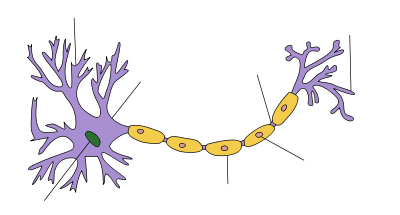
The secret lies in myelin. Myelin forms a sheath around the axon of neurons. Think of the neuron’s axon as a wire, and myelin as the casing around it. Myelin serves to “insulate” the axon, creating a smoother, faster signal. Because all active human movement (and thought for that matter) results from the coordinated firing of vast neuronal networks, myelin has a profound effect on our everyday lives.

Cartoon Neuron. Myelin in yellow.

Think about it. EVERYTHING you think or do involves the firing of a vast network of neurons. When you drink Generation UCAN after your practice, a specific network of neurons fires. When you celebrate after a great game, a specific network of neurons fires. When you get mad because you don’t like a coaching decision, a specific network of neurons fires. As a network fires more and more, more myelin is laid down to insulate the connecting axons (the cord connecting one neuron to another). In other words, that pathway is reinforced and becomes more efficient. As I’ve mentioned, this has tremendous physical AND psychological implications. Essentially, this explains “muscle memory”, why highly practiced skills can be replicated with decent proficiency even after a long hiatus. This also explains why it becomes increasingly easy to skip going to the gym to train.

Lesson 2: Every decision or indecision, action or inaction results in a physiological response that makes you more likely to do it the same way again in the future.

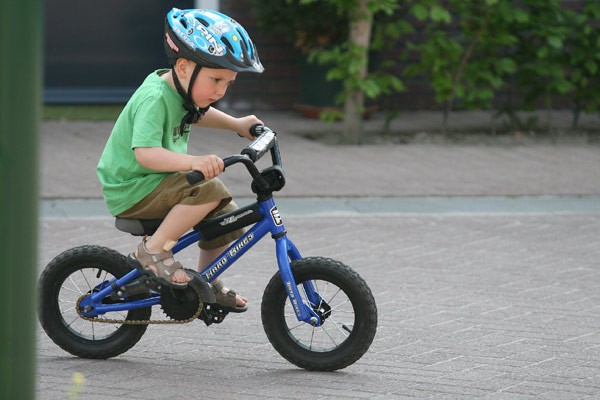
You may have heard the expression “It’s like riding a bike”, which eloquently illustrates the idea of muscle memory. Although, when I got on a bike while at grad school at UMass for the first time in over 10 years, I didn’t feel so balanced. I must have not laid down enough myelin.

The key to becoming a world-class athlete isn’t just to pick your parents right as is often said; it’s to develop highly myelinated high performance neuronal networks. This doesn’t mean that performing a movement incorrectly is undesirable. Quite the contrary. In fact, stumbling through practice is NECESSARY to find the right movement, which can be cemented with further practice. The idea isn’t to not make mistakes; it’s to not overlook mistakes. Mistakes are an important step in the skill development process. But what happens if an athlete, in practically any team sport, makes a mistake that results in a turnover? Instant negative feedback from the coach. A single failed attempt paired with negative feedback causes most athletes to abandon that strategy. Is it any wonder that athletic development experts are calling for more UNSTRUCTURED play amongst athletes at younger ages? These “pick-up” settings typically involve more movement, more “touches” with the ball/puck, and ultimately more opportunities to self-correct. In other words, they have more opportunities to identify effective neuronal networks and start laying down myelin.

Lesson 3: Unstructured play and uncoached small area games create outstanding environments for rapid skill development.

Take Home
At every level of sport, you hear athletes, parents, and coaches talking about how “talented” an athlete is, as if their abilities were developed passively. I’m becoming increasingly convinced that talent, or natural ability as we currently think of it, doesn’t exist. Or should I say, the neuronal network that creates the thought that talent may not exist is becoming increasingly myelinated. The trouble in accepting that talent doesn’t exist, is that we need to look at two athletes, the best and worst on any given team, and treat their potential for future excellence equally.

To your success,

Kevin Neeld

Please enter your first name and email below to sign up for my FREE Athletic Development and Hockey Training Newsletter!