Back on track this week with a wrap-up of this week’s (and the three preceding week’s since I’ve been slacking) activity in the world of hockey strength and conditioning. Over the last several weeks, I’ve added several articles on topics ranging from strength and conditioning internships to specific hockey training techniques to maximize performance and minimize injury risk. Check out what you’ve been missing at the links below.

  1. Strength and Conditioning Internships
  2. The Myth of Wrist Strength in Hockey
  3. Managing Structural and Functional Asymmetries: Part 1
  4. Managing Structural and Functional Asymmetries: Part 2
  5. Improving Athletic Performance Beyond Peak Strength: Part 1
  6. Improving Athletic Performance Beyond Peak Strength: Part 2
  7. Off-Season Hockey Training Program
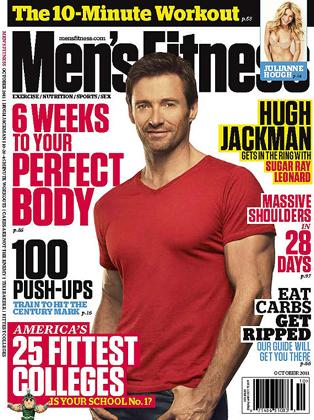
  8. Men’s Fitness: Hockey Training Feature
  9. What It Means To Be A “Boyle Guy”

We’ve also added a TON of great content over at Hockey Strength and Conditioning. I HIGHLY encourage you to read through all of these pieces as I think there is an awesome combination of quality information, great training programs, and unique exercises that will apply to players at multiple levels. We’ve also had a few terrific contributions from a few guys I hold in a very high regard in Anthony Donskov, Jim Snider, and Kyle Bangen. Check out the links below.

Articles

  1. Debit Card Strength and Conditioning: In-Season Account Withdrawls from Anthony Donskov
  2. Essential Components of a Strength Training Program from Darryl Nelson
  3. Pro’s vs. Joe’s from Jim Snider
  4. Triple Flexion Training Considerations in Hockey from Kyle Bangen

Programs

  1. Spring Training 4-Day Per Week from Darryl Nelson
  2. Summer 2012 GPP Phase 1 from Mike Potenza
  3. 2012 5-Day Off-Season Hockey Training Program: Phase 1 from me
  4. Off-Season 2012 Phase 2 Strength Training from Sean Skahan

Videos

  1. Side Lying 1-Leg Hip Extension from Sean Skahan
  2. 2 Arm DB Snatch from Darryl Nelson
  3. Phase 1 Sprinting Variations from me
  4. Hip Extension Holds from Mike Potenza

That’s a wrap for today. As always, if you aren’t a member yet, I encourage you to try out Hockey Strength and Conditioning for a week. It’ll only cost $1, and if it’s not the best buck you’ve ever spent, I’ll personally refund you!

To your success,

Kevin Neeld

Please enter your first name and email below to sign up for my FREE Athletic Development and Hockey Training Newsletter!

A couple months ago I had an article featured in Men’s Fitness on hockey training.

They recently added it to their website, so I wanted to share it with you. Check it out at the link below!

Click here to read >> Hockey Training for Power and Stability: Develop strength, stamina and stability with this hockey workout

To your success,

Kevin Neeld

P.S. If you want more information on designing effective off-ice hockey training programs, check out Ultimate Hockey Training!

Please enter your first name and email below to sign up for my FREE Athletic Development and Hockey Training Newsletter!

I hope you had a great week. This has been a really exciting week for me personally. If you follow me on Twitter and/or read this site regularly, you may have noticed that I frequently allude to the fact that there is a lot more to the concussion story than is being recognized. At the beginning of last week, I got the idea of putting together a presentation on the topic, which I had an opportunity to record a few days back. Other than my garbage mic making me sound like a pre-pubescent boy, it came out pretty well. Look for that early next week.

Yesterday I got an email from an old teammate of mine saying he was flipping through a Men’s Fitness while waiting for a haircut and saw a hockey training piece that I wrote. I didn’t even know it was printed! Pick up a copy of the April issue of Men’s Health (see pg 104).
Finally, early in the week I was asked to contribute to a chapter in the new Men’s Health Book of Abs. I’m sincerely humbled to have an opportunity to work on this project and am really looking forward to seeing the finished product. I’ll keep you in the loop as it nears completion.

Just as a final reminder, today is the LAST DAY to test run the Elite Training Mentorship for $1. As I’ve said over the last couple of weeks, to have an opportunity to learn from Eric Cressey, Mike Robertson, BJ Gaddour, and Dave Schmitz for a buck is a no-brainer. Eric and Mike are two guys I’ve regularly looked to for great training information over the last 5 years. I still bounce ideas off Eric on a regular basis. I’m really happy these guys are doing this. Any way their information can reach more people is a positive in my book. Check out this link for more information: Elite Training Mentorship

On to this week’s hockey training updates…

If you haven’t already, check out these posts from the last two weeks:

  1. Athletic Development Things You Should Read
  2. Elite Training Mentorship
  3. Metabolic Training (Free Video!)
  4. Dissecting Muscle Function: Force Production
  5. Dissecting Muscle Function: Influence

We’ve been busy at Hockey Strength and Conditioning over the last two weeks.

To kick things off, I added our final youth program of the year. The focus of this program changes somewhat drastically toward more mobility and regeneration work in the interest of recovery. The goal is to taper and generally unload the body so that the kids can hit the playoffs full steam ahead. Now is not the time to push off the ice; it’s more a time to showcase the hard work the players have been putting in over the season.

Get the program here >> 2-Day In-Season Training Program: Phase 5

Darryl Nelson added a video of what I would classify as a low load high velocity power exercise. These types of exercises have a lot of carryover to different components of hockey, but I generally frame it within the context of shooting. High speed hip rotation and core transfer are two keys to shooting power.

Watch the video here >> Medicine Ball Baseball Pitcher

Anthony Donskov wrote a terrific piece on the state of youth hockey. This is a message that I don’t think can be shouted too frequently. Things are NOT okay in youth sports, and youth hockey has been one of the front-runners in leading the craziness. I’m proud of USA Hockey for stepping up and taking serious action to help right the ship with their new ADM model. Ultimately, though, it’s up to us-coaches, parents, educators, etc. to adopt what they’ve put forth. Anthony’s article is filled with a lot of simple facts about the odds of a youth player reaching the pro ranks, and has guidelines for 60-minute practice that maximize development and fun. This is a MUST READ!

Read the article here >> Adult Values + Child Activities = Burnout

Mike Potenza added a video with two interesting exercises. Both strike me as great ways to train and/or test (or “audit”) multi-segmental stability. I’m looking forward to playing around with these over the next couple weeks and potentially mixing them in to future programs.

Watch the video here >> Leaning Tower

Sean Skahan wrapped things up with an All-Star Break Program. This is a great program for those in youth hockey to look at, not to simply steal it and use it as is, but because the program is built around body weight exercises. The only pieces of equipment this player had was a foam roller and stability ball. In all of the years I’ve worked training youth teams, I’ve only had any appreciable equipment for this past season. It’s important that these players to learn how to move properly and to get a training effect, both of which can be accomplished with relatively basic body weight exercises if they’re programmed and coached well. Sean’s program is a good template for that.

Get the program here >> All-Star Break Program

Don’t forget to log-in and check out the forum as well. Check out these discussions:

  1. Flexibility Help
  2. Post Game Snack Variety
  3. NHL Concussions
  4. United States Anti-Doping Agency
  5. Hockey Skill Warm-Up Drills
  6. Planning and Periodization for Playoffs

That’s a wrap for today. As always, if you aren’t a member yet, I encourage you to try out Hockey Strength and Conditioning for a week. It’ll only cost $1, and if it’s not the best buck you’ve ever spent, I’ll personally refund you!

To your success,

Kevin Neeld

P.S. I have lots of great stuff coming your way next week, so make sure you check back. In the mean time, test drive the Elite Training Mentorship and let me know what you think!

Please enter your first name and email below to sign up for my FREE Athletic Development and Hockey Training Newsletter!

Push-ups are one of the most popular exercises out there, especially in youth sports. When performed correctly, push-ups are a terrific exercise to promote core/shoulder stability, upper body strength, and a proper upper body pressing movement pattern. I was recently featured in Men’s Fitness for a segment on how to train to perform 100 push-ups consecutively.


As you can imagine, the first step in being able to perform 100 push-ups is being able to perform one, correctly. In reality, the push-up form I see most frequently is pretty far from optimal. This is the result of never being taught how to perform the movement correctly or having been taught incorrectly. In either case, the result is a continued development of an improper movement pattern, which will inevitably lead to a breakdown SOMEWHERE (front/top of the shoulder, back of the next, and lower back are the most likely culprits). Shortly after the Men’s Fitness article went live, I received an email from a reader that had to perform a push-up test for his work (police officer) and noted that his performance was limited by shoulder pain. My response to his email was:

If I understand your case correctly, it’s not uncommon. The reality is that most people have never been taught to do a push-up correctly, and MANY have been taught how to do them incorrectly. Assuming your shoulder pain is a result of a suboptimal movement pattern and not the result of another underlying issue (you should get that checked out by a doctor), you can improve your push-up ability immensely by following the guidelines I wrote about here: Shoulder Pain with Pressing Exercises

Rather than reinvent the wheel here with a new post on how to address shoulder pain with pressing exercises like push-ups, I’ll just direct you to a post I wrote a while back that covers the issue in-depth. Check it out here:

Click here >> Shoulder Pain with Pressing Exercises

One of the major take homes I try to reinforce with our athletes is that PROPER movement is more important (or at least equally as important) as strong, powerful, or quick movement. In general, athletes tend to overemphasize quantity and underemphasize quality, probably because it’s more easily observable and quantifiable. A perfect running stride resulting in a lost race doesn’t get much credit. On the other hand, a sloppy running stride that wins a race gets praise. Proper movement doesn’t only optimize long-term performance, it also SIGNIFICANTLY decreases the risk of non-contact injuries, which have become unacceptably overwhelming in youth sports. Optimization of all basic movement patterns (lower body push, lower body pull, upper body push, upper body pull, linear and transitional running mechanics, etc.) is a worth goal and should be the focus of early athletic development endeavors. This post will go into specific details on how to do this for upper body pushing patterns:

Click here >> Shoulder Pain with Pressing Exercises

To your success,

Kevin Neeld

P.S. My friend Mike Robertson has posted two great articles on the pros and cons of a very popular core exercise. The posts include thoughts from a couple of really bright guest contributors (including Stuart McGill). Check them out here: Should You Crunch: Part 1 , Should You Crunch: Part 2

Please enter your first name and email below to sign up for my FREE Athletic Development and Hockey Training Newsletter!