Today I have news that I’m extremely excited to share with you.

James LaValle, Mike Potenza, and I are doing a new seminar this Summer called Optimizing Adaptation and Performance.

The one-day seminar will be hosted at Mike Boyle Strength and Conditioning in Woburn, MA on Saturday July 14th, 2018. We just found out that the seminar has been approved for CEUs from the NSCA as well.

The seminar will dive into topics spanning the entire performance continuum, including:

  • Using blood markers and physiological goals to drive different nutrition and supplementation interventions to enhance adaptation, maximize performance, or facilitate recovery
  • Efficient ways to use assessment and monitoring data to improve individualization of training and recovery methods within a team environment
  • Effective program design strategies used to retain performance qualities and allow for recovery during times of increased competitive demand and stress

As a brief intro to the speakers…

James LaValle is one of the world’s leading experts in clinical pharmacology. In addition to consulting with collegiate and professional teams, Olympic athletes, and major pharmaceutical and nutrition companies like Bayer, CVS, Rite Aid, P&G, Helsin, and Thorne Research, he has authored 16 ebooks and 20 books including his most recently book, Your Blood Never Lies, and his best seller, Cracking the Metabolic Code. He was also selected to direct the Pro Football Hall of Fame state of the art performance and health rejuvenation facility at the Institute for a Hall of Fame Life in Canton, OH. James specializes in using blood markers to create an individualized plan to nutrition and supplementation. Despite an incredibly accomplished resume, he could very well be the best kept secret in sports performance.

Mike Potenza is entering his 13th year as the Director of Strength and Conditioning for the San Jose Sharks, which he joined after working at Wisconsin, Harvard and Colgate. He was also the Director of Performance for two United States Air Force Pararescue teams within the National Guard Bureau, overseeing performance testing, program design and implementation, establishing reporting metrics on injury trends, resource usage and team readiness, as well as directing the physical therapist and orthopedic manual therapist for the forces. In both settings, Mike is heavily involved with directing rehabilitation and reconditioning efforts to help bridge the gap between acute rehab and a full return to elite level performance/competition.

Click here for more information: Optimizing Adaptation and Performance

Needless to say, it’s going to be an awesome day. There is an incredible amount of education and experience behind the methods we’ll discuss at the seminar. Simply, the strategies you’ll learn work, and they’re incredibly powerful.

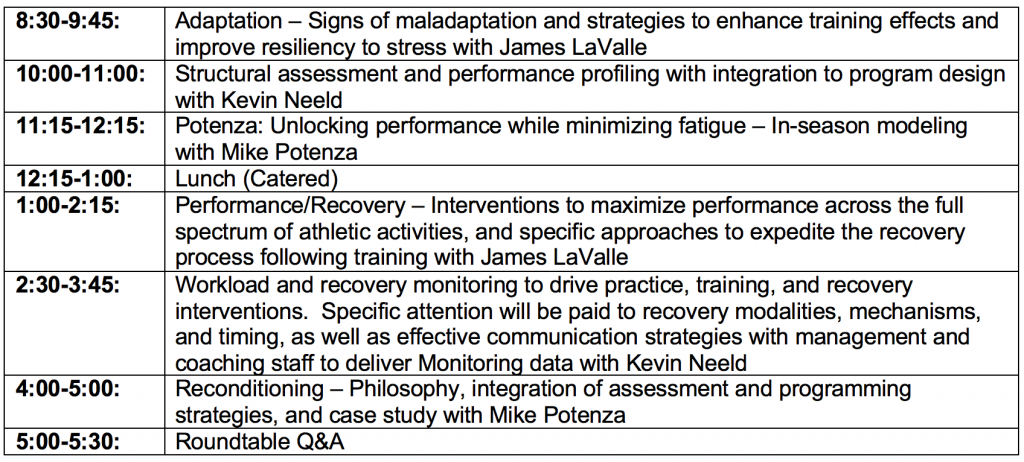
You can find a full itinerary below:

The overarching goal of the day is to provide you with a comprehensive model of athlete performance, including the assessment and analysis tools, as well as programming, recovery, nutrition and supplementation strategies to best serve the individual needs of today’s athlete.

I’m personally excited to hear James’ and Mikes’ presentations. With an in-house lunch, and a round table discussion to end the day, I also think a lot of the best exchanges will come through discussions with the audience.

In short, this will be a great opportunity to learn powerful strategies to help your athletes, get CEUs, and network with other sharp professionals within the field.

I hope to see you there! Feel free to email me with any questions or post them below.

Click here for more information: Optimizing Adaptation and Performance

To your success,

Kevin Neeld
HockeyTransformation.com
OptimizingMovement.com
UltimateHockeyTraining.com

Please enter your first name and email below to sign up for my FREE Athletic Development and Hockey Training Newsletter!

Get Ultimate Hockey Transformation Now!

Year-round age-specific hockey training programs complete with a comprehensive instructional video database!

Ultimate Hockey Transformation Pro Package-small

Get access to your game-changing program now >> Ultimate Hockey Transformation

“Kevin Neeld is one of the top 5-6 strength and conditioning coaches in the ice hockey world.”
– Mike Boyle, Head S&C Coach, US Women’s Olympic Team

“…if you want to be the best, Kevin is the one you have to train with”
– Brijesh Patel, Head S&C Coach, Quinnipiac University

Several months ago, Mike Potenza wrote a great article for HockeySC.com titled “What’s New in Regeneration Training?”

In the article, Mike outlined several interesting pieces of technology that can be used to facilitate or monitor recovery, one of which included “Earthing” products. Earthing, or “grounding”, is one of those naturalistic concepts that I think a lot of people will write off despite it being fairly intuitive. Quite simply, the earth has an electrical charge that has restorative properties when we come in contact with it. Thanks to rubber-soled shoes (think insulation), houses, cars, etc., in general, we spend drastically less time in direct contact with the Earth than our barefoot walking, hole in the ground sleeping predecessors. Other than certain house pets, we’re the only species on the planet that is removed from exposure to the Earth’s electrical charge.

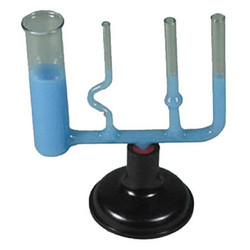
Think of how you felt the last time you walked through grass barefoot, dug your feet into the sand at the beach, or went for a quick dip in the ocean. In almost every case, you’d experience an increase in energy and sense of well-being. Naturally, being outside also means being exposed to the sun, which has its own benefits, but the feeling you get in these circumstances isn’t entirely from sunlight or from the fresh air. When we come in contact with the Earth, we are influenced by its abundance of free electrons (negatively charged ions) such that our bodies shift toward reaching an electrical equilibrium with the Earth, similar to how water might empty one tube and fill up another until they reached an equal height if a bridge was made between the two. In Earthing by Clint Ober, Dr. Stephen Sinatra MD, and Martin Zucker, the authors write “…the biological clock of the body needs to be continually calibrated by the pulse of the Earth that governs the circadian rhythms of all life on the planet.” This statement, as I’ll discuss shortly, is supported by some pretty fascinating research.

Some of the reported benefits of Earthing include:

  1. Decreased inflammation
  2. Reduced chronic pain
  3. Improved sleep quality
  4. Increased energy
  5. Lower stress and improved calmness
  6. Normalized biological rhythm
  7. Thins blood and improves blood pressure
  8. Relieves muscle tension and headaches
  9. Lessens hormonal and menstrual symptoms
  10. Speeds healing
  11. Reduces jet lag
  12. Protects the body against environmental electromagnetic fields
  13. Accelerates recovery

A quick scan of that list reveals that Earthing could have a positive impact on our health and performance through a variety of mechanisms. One of the first studies conducted on Earthing products involved tracking 60 people (38 women, 22 men) who had some form of sleeping problem. After 30 days of sleeping on an grounded bed pads, they found that:

  1. 85% went to sleep more quickly
  2. 93% reported sleeping better
  3. 82% experienced a significant reduction in muscle stiffness
  4. 74% experienced elimination or significant reduction of chronic back and joint pain
  5. 100% reported feeling more rested the next morning

Another study had 12 individuals with sleep problems, pain, and stress (as a brief aside, this essentially describes the overwhelming majority of the US population!) sleep on Earthing pads for 8 weeks. Their individual daily cortisol (commonly referred to as the “stress hormone”) levels were assessed at 4-hour intervals for 24 hours at the beginning of the study and again 6 weeks later. Cortisol is supposed to peak around 8am, decline until about noon, remain at a slightly elevated rate until around 4, and then tail off, reaching it’s lowest point around midnight. This natural fluctuation can be used as a marker of circadian rhythm. At the beginning of the study, there were HUGE amounts of variability among the individuals, with several having ridiculously high peaks at 8am, or random peaks in the middle of the night. Interestingly, even after this relatively brief exposure, all of the individuals’ 24-hour cortisol profiles aligned to converge toward what could be considered optimal, such that the variability between the individuals was essentially negligible. No more random spikes during the night or excessive spikes in the morning. 8 of the participants also had an increase in melatonin, another important hormone that helps regulate sleep and the circadian rhythm.

Most of us are familiar with the importance of eating foods rich in “antioxidants” to combat the free radicals throughout the body. Free radicals, in essence, are simply positively charged ions scavenging for a negatively charged ion to latch too. Earthing provides the body with the extra electrons to serve this very function. Also, studies using infrared imaging to assess tissue temperature have found that Earthing causes a significant reduction in “hot” areas thought to be associated with inflammation.

Having studied neuroscience in grad school, thinking of the human body as an electrical network isn’t that big of a stretch. After all, the nervous system communicates via electrical impulses and even things such as simple as an unspoken thought can be mapped by viewing the neurons that fire to produce it. What many people are unaware of (which can be tested by simply walking around with a voltmeter) is how significant of an influence living in an electronic world has on our bodies. We are CONSTANTLY being exposed to electromagnetic fields from wires in the wall, TVs, iphones, microwaves, etc. The neat thing about Earthing products is that in addition to providing all of the aforementioned benefits, it also shields us from these other electrical influences, which, as you can imagine, can have a disturbing effect on the electrical state and processes within our body.

For more information, check out Earthing.com

At this point, you might be wondering how the Earth’s natural electrical field has been turned into a product series. Basically, you can buy a mat (which you can put under your desk to rest your feet on and/or in front of your keyboard to rest your forearms on) a half-sheet to put on your bed, full sheets, sleeping bags, and mattresses that are lined with wires which can relay the electrical charge from a wire plugged into the ground (the circular hole beneath the two vertical plugs) of an electrical outlet. Of course, you could run a rod out your window and stick it directly in the Earth, but this isn’t as practical for most people.

On a personal note, I dropped $200 on the “Earthing Starter Kit” which included a mat and a half-sheet about 4 months ago and have been using it consistently since then. I noticed an immediate difference in how quickly I fell asleep and how I felt the next morning. After several months, I can say definitively that I sleep considerably better, I recover faster from stressors of all forms, and I’m more even-keeled in general. In fact, I had one day that felt out of the ordinary a couple months back; I was sorer than usual from training, didn’t have much energy, etc. I realized that night that I had forgotten to plug in the half-sheet I sleep with the night before and I discovered the next morning that the mat under my desk was unplugged as well. Honestly, I would have never guessed it would have that kind of impact, but it clearly did (and does).

Earthing has a significant impact on inflammation, neutralizes free radicals, shields from electromagnetic fields, and regulates our biological rhythms. All of these things allow athletes (and people in general) to handle stressors more effectively and ultimately to adapt and perform better. To me, Earthing products are one of the most affordable, practical, effective and underutilized recovery tools available today. I can say, without hesitation, that it was some of the best $200 I’ve ever spent!

To your success,

Kevin Neeld

P.S. If you want to maximize the transfer of your off-ice training to on-ice performance, you’ll want to follow a specific hockey training system designed to do just that.


Please enter your first name and email below to sign up for my FREE Athletic Development and Hockey Training Newsletter!

Heart rate tracking and heart rate variability (HRV) have received increasing levels of attention from the strength and conditioning community over the last several years. A little less than a year ago, after watching a video of a presentation Joel Jamieson gave on energy system development, I started digging deeper into the research on heart rate variability and its various applications. What I started to find was there were several lines of fascinating research in validating HRV measurements, determining what different measurements meant physiologically, and what this information may mean for the athlete.

As a preface, I am FAR from an expert in this area. I had an exceptionally superficial introduction to these concepts in an exercise physiology class as an undergrad, and a familiarity with the benefits of variability from a neurological standpoint from my graduate studies in exercise neuroscience, but for all intents and purposes, this is new stuff for me. I’ve been fortunate to have guys like Mike Potenza, Patrick Ward, Dave Tenney, Joel, Mike T Nelson and his friend James Heathers (who I know as a researcher from Australia) to help me connect the dots. That said, I defer to these folks on this subject matter and encourage you to look into their work if you’re interested in more information. That said, I want to outline some of the basics of HRV and my interpretations of the immediate application of these concepts.

Understanding Heart Rate Variability
Heart rate variability is essentially a measure of the time between successive R-R intervals in the QRS waves of an electrocardiogram (ECG).
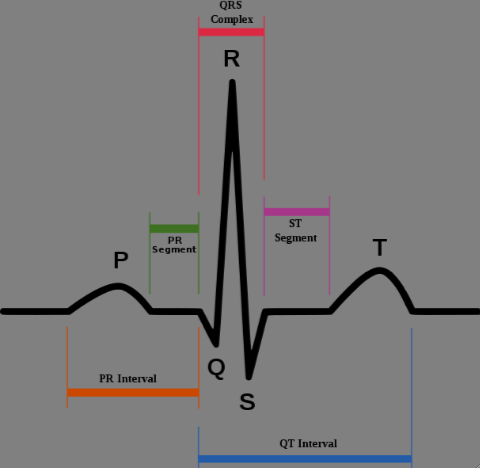
 

The various components of an ECG output…this is what you see next to the hospital beds that make the beeping noise.

While my understanding is that the “P-Q-R-S-T” denotation is somewhat arbitrary, each of these points and their associated influence on the waveform have physiological relevance. The “QRS-complex” represents ventricular depolarization, which essentially signifies the time at which the right and left ventricles contract and eject deoxygenated blood to the lungs and oxygenated blood to the rest of the body, respectively.

The variability in time between successive R-R intervals was initially recognized as an important measure due to associations between lower variability and various cardiavascular diseases/events. To be overly simplistic, within this frame more variability was indicative of a “healthier” more resilient cardiovascular system, whereas less variability indicated a greater degree of risk. One example of the potential benefits of having greater variability lies in the respiratory sinus arrhythmia (RSA). Put simply, RSA describes a phenomenon where under certain circumstances, an individual’s heart rate will increase during inhalation and slow during exhalation. The rationale is that the expedited blood flow during inhalation provides an opportunity for increased oxygen delivery to the depleted blood. The more variable heart beat, in this example, provides an opportunity for more efficient oxygenation, although there is some debate as to the power of this relationship as RSA tends to disappear during times of higher intensity activity, when it would seemingly be most important to maximize oxygenation of depleted blood.

Since this initial body of work linking low HRV with cardiovascular insufficiencies, HRV has been associated with a number of other ailments, including glucose regulation, hypothalamic-pituitary-adrenal axis function, and inflammation. HRV has also been dissected to a much greater degree such that HRV is now being measured in both the time and frequency domains, with various measures within each. Interestingly, researchers have attempted to use the frequency domain measures to differentiate physiological associations.

  1. Ultra-Low Frequency Band: <= 0.003 Hz (~10 cycles per hour)
  2. Very Low Frequency Band: 0.003-0.04 Hz (~2 cycles per minute)
  3. Low Frequency Band: 0.04-0.15 Hz (~5 cycles per minute)
  4. High Frequency Band: 0.15-0.40 Hz

Digging into some of the notes I took from a 2009 paper by JF Thayer titled “Heart Rate Variability: A Neurovisceral Integration Model”:

  1. ULF has a strong relationship with mortality and morbidity, and seems to lie in the functionality of the patient. ULF is related to a range of physical activity participation, not differences in autonomic control per se.
  2. VLF is linked to fluctuations in the renin-angiotensin system and to thermoregulation.
  3. LF changes are associated with baroreflex-mediated blood pressure change. Recalling the equation: Mean Arterial Pressure = Cardiac Output (HR x SV) x Total Peripheral Resistance, the major determinant of long-term changes in BP is blood volume, but the major determinant of short-term changes in BP is the ANS via the baroreflex. The most rapidly modulated component of blood pressure is HR, due to its vagal control, which therefore affects cardiac output.
  4. HF represents respiratory-modulated HR variations and represents an almost identical association with RSA.

An alternative, more simplistic interpretation of HRV data is that higher HRV measures (or measures of higher HRV frequencies depending on whether these are being analyzed using time or frequency domains) are associated with activity of the parasympathetic nervous system and lower HRV measures are associated with activity of the sympathetic nervous system.

As a quick recap, the nervous system is broken down into two primary categories: the central nervous system (CNS), which consists of the brain and spinal cord, and the peripheral system (PNS), which consists of the cranial and spinal nerves. The PNS can be further divided into two branches known as the somatic nervous system (SNS) and autonomic nervous system (ANS). For our purposes today, we’ll highlight the function of the ANS, which serves to regulate our viscera and glands. Importantly, almost all of the activity of the ANS resides outside the realm of conscious thought, meaning these processes are largely self-regulated. The ANS can further be dividing into the sympathetic and parasympathetic branches. In an attempt to avoid making the overly complex even more indigestible, I’ll describe these systems with terminology that most are familiar with:

  1. Sympathetic: Fight or flight
  2. Parasympathetic: Rest and digest

These two branches are constantly in flux to provide the appropriate environment for our bodies to be successful during times of stress and to recuperate appropriately. In general, stress (which can come from ANYTHING, real or interpreted) causes a shift toward a more sympathetic state, which in many cases is the desirable response. Problems tend to develop, however, when an individual loses the flexibility in the balance of these two systems and excessively taxes one or the other. My understanding is that the most common example of this, and probably the most relevant to you, is that overtraining causes an undesirable shift toward a more sympathetic state, which, over time, will increasingly limit the individual’s ability to further adapt. This shift, as I alluded to, can be caused by a myriad of factors well-beyond programmed training stressors. Things like sleep, environmental toxins, dietary intake, alcohol consumption, occupational and relationship stresses all need to be consider. I believe that significant changes in these areas (even if for the better in some cases) can also be interpreted by the body as a form of “stress”.

This idea is highlighted by Hans Selye’s General Adaptation Syndrome Model, which is founded in the idea that the body has both specific and general responses to stressors and that the general response is common to all stressors (although it may vary in amplitude).
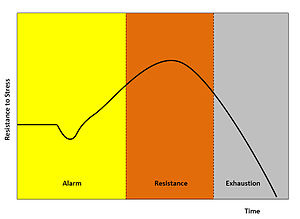
An illustration of Selye’s 3-stage GAS model.

The introduction of a stressor causes an alarm reaction, followed by a stage of resistance, and finally one of exhaustion. It’s important that we monitor for the impact of stressors, from training and non-training sources alike, to ensure optimal adaptation. Heart rate variability provides an opportunity to do just that.

While the preceding discussion is fascinating, there seem to be more muddy than clear waters in the HRV research. While it may be too early to pin down precise physiological explanations for specific HRV measurements AND provide information on appropriate changes to restore optimal function, a huge value in monitoring HRV can be found in simply looking at time domain measures and monitoring for shifts toward higher or lower levels as an indication of the balance between the sympathetic and parasympathetic nervous systems. This is, following the longest introduction in recorded history, the value in Joel Jamieson’s new BioforceHRV system.
Click here for more information >> BioforceHRV
Joel has devised a simple tool for your smart phone that allows you to quickly assess your HRV. Unlike other systems that only acquire information over the time course of a minute, Joel’s records for 2.5 minutes, which allows for adequate sampling of the various influences on HRV (see frequency analysis discussion above). BioforceHRV also waits for your system to stabilize before it starts recording. This is important, as any change in body position is followed by a variable time of transient change in heart rate, blood pressure, etc. Sampling during this time period would provide meaningless information, but it would be difficult to know when it’s safe to move forward, if Bioforce didn’t handle this automatically. Finally, one of the best features of the system is that it tracks your measurements over time and gives you a green, yellow/auburn, or red light, indicating your current ability to further adapt to additional stressors, or, in other words, your ability to get after it in the gym.

I truly believe that HRV assessment is the future of making training optimally specific to the individual; Joel’s new system is a simple, convenient, and affordable option to tap into that potential immediately. The book that accompanies the device will provide you with the information you need to interpret your own results, so you don’t need to be an HRV expert to use the system. Check out this link for more information: BioforceHRV and please post any questions or comments you may have below!

To your success,

Kevin Neeld

P.S. The future of strength and conditioning and sports performance? Check out this link for more information! BiofroceHRV

Please enter your first name and email below to sign up for my FREE Athletic Development and Hockey Training Newsletter!

I hope you’ve been well. The last few weeks have been a bit of a whirlwind…although I think I’ve said that for the last couple of months so I suppose things have been pretty typical for this time of year!

Over the last the two weeks I’ve added a few interesting hockey training posts, including a presentation I gave to ~185 14-year old players in Colorado Springs a couple weeks. If you haven’t already, check them out at the links below:

  1. Hockey Training Stuff You Should Read
  2. GAP Golf Fitness Q&A
  3. Hip Active Isolated Stretching for Hockey Players
  4. Hip and Thoracic Mobility Exercise for Hockey Players
  5. USA Hockey Regional Camp Recap
  6. USA Hockey Camp Q&A

We’ve also added some pretty good stuff over at Hockey Strength and Conditioning over the last couple of weeks, including a few articles from new contributors.

Articles

  1. Defenseman Specific Speed from Sean Skahan
  2. Reconditioning Phase: Step One in Off-Season Programming from Devan McConnell
  3. Youth Hockey Training Presentation from me
  4. Children’s Footwear from Dr. William Rossi
  5. Top 5 Quotes from Perform Better Summit, Chicago from Brian Sipotz

Programs

  1. 3-Day Off-Season Program from Darryl Nelson
  2. Pre-Camp Work Capacity Phase from Mike Potenza
  3. Youth Training Program: Tri-Planar Circuits from Mike Potenza

Videos

  1. Single-Leg Complex Training from Sean Skahan

That’s a wrap for today. As always, if you aren’t a member yet, I encourage you to try out Hockey Strength and Conditioning for a week. It’ll only cost $1, and if it’s not the best buck you’ve ever spent, I’ll personally refund you!

To your success,

Kevin Neeld

Please enter your first name and email below to sign up for my FREE Athletic Development and Hockey Training Newsletter!

Back on track this week with a wrap-up of this week’s (and the three preceding week’s since I’ve been slacking) activity in the world of hockey strength and conditioning. Over the last several weeks, I’ve added several articles on topics ranging from strength and conditioning internships to specific hockey training techniques to maximize performance and minimize injury risk. Check out what you’ve been missing at the links below.

  1. Strength and Conditioning Internships
  2. The Myth of Wrist Strength in Hockey
  3. Managing Structural and Functional Asymmetries: Part 1
  4. Managing Structural and Functional Asymmetries: Part 2
  5. Improving Athletic Performance Beyond Peak Strength: Part 1
  6. Improving Athletic Performance Beyond Peak Strength: Part 2
  7. Off-Season Hockey Training Program
  8. Men’s Fitness: Hockey Training Feature
  9. What It Means To Be A “Boyle Guy”

We’ve also added a TON of great content over at Hockey Strength and Conditioning. I HIGHLY encourage you to read through all of these pieces as I think there is an awesome combination of quality information, great training programs, and unique exercises that will apply to players at multiple levels. We’ve also had a few terrific contributions from a few guys I hold in a very high regard in Anthony Donskov, Jim Snider, and Kyle Bangen. Check out the links below.

Articles

  1. Debit Card Strength and Conditioning: In-Season Account Withdrawls from Anthony Donskov
  2. Essential Components of a Strength Training Program from Darryl Nelson
  3. Pro’s vs. Joe’s from Jim Snider
  4. Triple Flexion Training Considerations in Hockey from Kyle Bangen

Programs

  1. Spring Training 4-Day Per Week from Darryl Nelson
  2. Summer 2012 GPP Phase 1 from Mike Potenza
  3. 2012 5-Day Off-Season Hockey Training Program: Phase 1 from me
  4. Off-Season 2012 Phase 2 Strength Training from Sean Skahan

Videos

  1. Side Lying 1-Leg Hip Extension from Sean Skahan
  2. 2 Arm DB Snatch from Darryl Nelson
  3. Phase 1 Sprinting Variations from me
  4. Hip Extension Holds from Mike Potenza

That’s a wrap for today. As always, if you aren’t a member yet, I encourage you to try out Hockey Strength and Conditioning for a week. It’ll only cost $1, and if it’s not the best buck you’ve ever spent, I’ll personally refund you!

To your success,

Kevin Neeld

Please enter your first name and email below to sign up for my FREE Athletic Development and Hockey Training Newsletter!