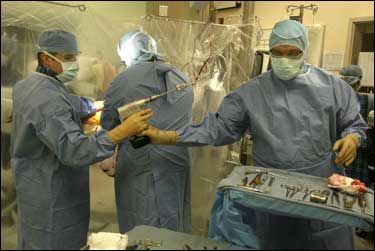
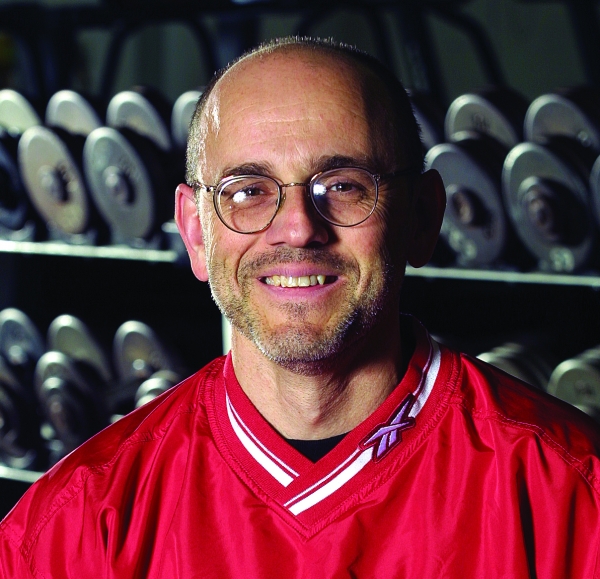
I hope you had a great week. We’re wrapping up another busy week at Endeavor. The hip assessments have spawned some interesting results that you’ll be interested to hear about in the future. Of the 20 guys I’ve tested, 1/4 have a structural abnormality that will absolutely need to be accounted for in their training, and the test is really easy to perform.

If you’re looking for an informative way to spend a few hours this weekend, we’ve posted a ton of stuff at Hockey Strength and Conditioning over the last few days. Check out what you’ve been missing!

Sean Skahan posted Phase 3 of his ACL rehab program. As Sean continues to post these progressions, it’s interesting to note that these don’t look like rehab prescriptions for a broken player. They look like a quality training program with some small pieces missing to account for the player’s injury. Hopefully this will continue to shed some light on the physical and mental efficacy of training around a player’s injury, and not just shutting the player down completely for the skeptics out there. Check out the program at the link below:

Click Here to Read >> ACL Rehab Phase 3 from Sean Skahan

My favorite Canadian David Lasnier had another terrific article posted on off-season hockey training. David has been on fire over the last month, as he’s had articles featured at StrengthCoach.com, SportsRehabExpert.com, and HockeyStrengthandConditioning.com (not bad for a guy who speaks English as a second language). All he needs now is to do a webinar for Anthony Renna’s LesWebinarsDeStrengthandConditioning.com and he’ll have officially “made it”! This article breaks down the complexities of off-season periodization into an easy to understand format that can be applied easily. This is the exact model we use to train our hockey players in the off-season at Endeavor Sports Performance.

Click Here for David’s Autograph>> Hockey Off-Season Periodization from David Lasnier

Mike Potenza posted an article outlining his philosophy on training throughout the playoffs. Whether you’re inclined to agree to disagree with his philosophy, I think he does a great job of pointing out that the NHL playoffs are far from short-lived. Those preaching to pack-in the training and basically do nothing at all may lose sight of the fact that, ideally, the team would be in the playoffs for about 3 months. Three-months of no training is sure to exacerbate hockey-related imbalances and detrain important physical capacities. Certain qualities (e.g. speed, conditioning) can be maintained well through on-ice work if it’s of sufficient intensity and duration. Other qualities will surely degrade (e.g. strength, power, structural balance). For some players, their confidence and overall durability are tied to certain physical qualities (e.g. strength), so it’s important not to overlook this when making decisions about late season and playoff training strategies.

Click Here to Read >> Playoff Training Model from Mike Potenza

Mike also added two videos on foam rolling and static stretching pairs, one for the upper body and one for the lower body (4 each). If you only have 5-10 minutes to get this work in, these series are good ones to follow.

Click Here to Watch >> Roller/Static Stretch Combos from Mike Potenza

Lastly, that Neeld guy slipped one past the guards and added an article on rotator cuff training for hockey players. This article highlights the most overlooked function of the rotator cuff and presents a few exercises to train it that you may not be expecting. In the interest of “prehab”, these exercises have extra value in that they aren’t isolative in training focus. In other words, they aren’t just “rotator cuff” exercises; they create a training effect for multi-directional core strength and stability, posture/movement pattern reinforcement and lower body strength (one of them).

Click Here to Read >> A New Look at Rotator Cuff Training

As always, the forums has been packed with some great discussions over the last couple days. When you sign into the site, be sure to check that out. Even in short threads, guys are posting videos and links to other resources that you won’t want to miss.  If you aren’t a member yet, shell out the $1 to test drive Hockey Strength and Conditioning for a week. If it’s not the best buck you’ve ever spent, I’ll personally refund you!

To your continued success,

Kevin Neeld

Please enter your first name and email below to sign up for my FREE Athletic Development and Hockey Training Newsletter!

This week has been crazy, both for me at Endeavor (we had about a couple dozen new hockey players start), and over at Hockey Strength and Conditioning. In the last week, we’ve added 6 new articles, programs, and videos, including a couple REALLY great ones from Mike Potenza and Sean Skahan.

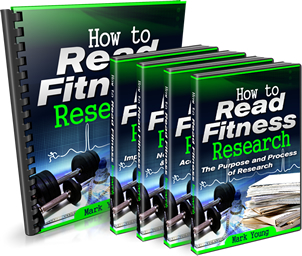
Before I get into that, I want to let you know about a new product from my friend Mark Young that some of you may be interested in. As you know, I’m big on using research to design my hockey training programs. Amongst other things, research can provide insight into injury rates and mechanisms, how to correct movement pattern impairments, and more effective program design strategies. Unfortunately, a lot of research is also crap and is almost invariably MISQUOTED by the media. In other words, a lot of the research findings we’re fed are, well, wrong. I had a chance to review Mark’s “How to Read Fitness Research” a few weeks ago and was impressed. He provides a framework to critically analyze research in light of your goals, and presents it without boring you to tears (something I can’t say of some of my old college professors!). This certainly isn’t for everyone, but if you’re a fitness professional, it’s worth looking into. And he’s offering a 40% discount that ends tonight at midnight, so you’ll have to act quick. Click the image/link below for more information.

Click here for more information >> How to Read Fitness Research

On to today’s post on Hockey Strength and Conditioning:

Scap Stability Exercises Part 2 from Mike Potenza
A follow-up from Mike with more videos of scapular stability exercises that hockey players should be doing to keep their shoulders healthy and performing optimally.

Off-Season Weight Gain: Eat that Elephant from me
It’s not what you think…actually maybe it’s exactly what you think (who doesn’t enjoy a delicious elephant steak every now and then?). You’ll have to read to find out. This article provides a birds-eye view of my approach to helping the dozens of players that come through our doors with lofty off-season weight gain goals stay on track and get results.

Youth In-Season Introductory Program from Sean Skahan
This is an addition to our new “Youth Hockey Training Program” feature to HockeySC.com. Sean lays out a great program for youth players and includes videos of all the exercises. The idea with these programs is to provide structure for the thousands of players at the youth level that want to start training, but don’t have access to a well-equipped gym or strength and conditioning coach. Following a program like this from a guy like Sean is certainly a much better approach that perusing the internet and downloading some bodybuilding program from a guy that probably doesn’t train anyone.

Identifying Strength Qualities for Your Training Program from Mike Potenza
This is a monster from Mike. The first time I ever saw Mike, he was presenting at a conference at Northeastern (I think it was the 1st Boston Hockey Summit) and discussing the system he uses for categorizing his athletes based on their training age. It was a brilliant, objective concept and shed some light on the complexities of his job at the NHL level…and some light on how poorly some players train at the youth levels. This articles outlines the qualities that hockey players need to focus on at different training ages and provides a common language for strength and conditioning coaches and hockey coaches. One of the best articles to date.

Grier Persevered to Carve Out Lengthy NHL Career from Mike Potenza
A feature story on Mike Grier that holds a lot of lessons for up and coming hockey players. Potenza, Sean Skahan, and Mike Boyle have all worked with Mike Grier during the off-season. Grier is a great example of what consistent, focused, hard work can get you.

Changes to the In-Season Program from Sean Skahan
This was an awesome article from Sean that highlights some of the difficulties that NHL Strength and Conditioning Coaches face when implementing in-season programs. Sean points out that there are times when he’s more of a “recovery coach” than a “strength coach.” This articles dives into how Sean has made a pretty significant change to the Ducks’ in-season training program this year based on their schedule. Good read.

Remember that the BSMPG is offering HockeySC.com members a $50 discount on admission. It’s cool of them to do it and well worth every penny. Download the coupon at the link below:

>> BSMPG Hockey Symposium Coupon <<

I hope to see you there!

That’s a wrap for today! If you aren’t a member yet, shell out the $1 to test drive Hockey Strength and Conditioning for a week. If it’s not the best buck you’ve ever spent, I’ll personally refund you!

To your continued success,

Kevin Neeld

Please enter your first name and email below to sign up for my FREE Athletic Development and Hockey Training Newsletter!

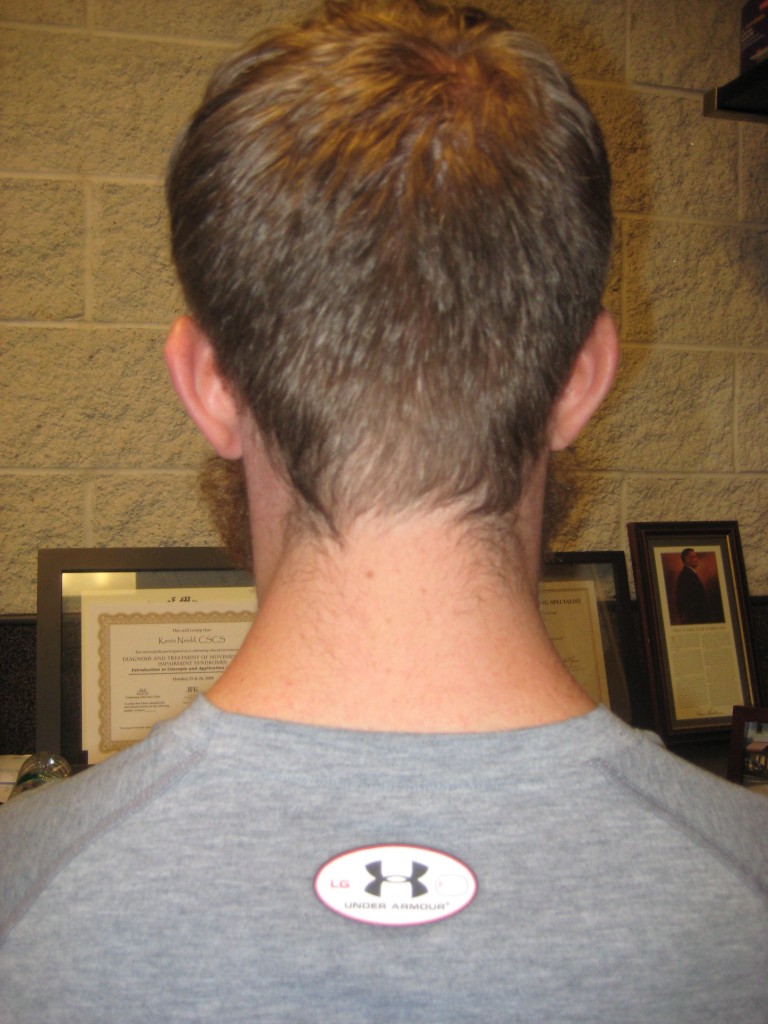
The NHL playoffs have officially started, which means one thing….the playoff beard is back! Last year a couple of the Endeavor guys and I decided on a no-shaving policy while our teams were still in the playoffs. The Flyers, who barely snuck into the playoffs, made it to game 6 of the finals, which lead to…

Chicks dig guys with thick playoff beards

Beards even look good from behind.

I wish I had a picture of Emily’s perpetual look of disappointment over the last 6 weeks of their playoff run. While she wasn’t exactly thrilled with the 2 inches of multi-colored fur covering my face (I think she was just jealous that she couldn’t participate), she came around when she saw how sweet my handle-bar mustache looked.

Sorry ladies. I’m taken.

Anyway, traditions need to start somewhere, and where better than my face. The Endeavor playoff beard contest is back. If you’re feeling daring and want to join the fun, fire over some pictures once it starts to look more ridiculous and less socially acceptable. We can do a post-playoff beard gallery.

On to this week’s hockey training content…

Mike Potenza added a video on a few exercises that are great for improving shoulder health on hockey players. The shoulder is a complex area, and ensuring it performs optimally requires understanding how the thoracic spine, scapula, clavical, and humerus bones and their surrounding musculature all interact to produce and control movement. Scapular muscle exercises are often overlooked in hockey training programs, but really need to be incorporated. Check out Mike’s Video:

Click here >> Scap Stability Exercises from Mike Potenza

On a similar note, Darryl Nelson added a video with a half dozen or so anterior core exercises. Some of these I’ve seen and used in the past with our players, others were interesting variations that I’ll likely use in the future. As I’ve said in the past, I really enjoy these videos because they’re great for idea generation. It’s helpful to have multiple strategies/exercises to achieve similar goals to keep things interesting for your athletes over the long haul. Darryl’s video had a few interesting core variations that you probably haven’t seen before.

Click here >> Anterior Core Variations from Darryl Nelson

Lastly, the 3rd annual Boston Sports Medicine and Performance Group Hockey Symposium is rapidly approaching. I went to the first two and they were awesome. Not only is it an incredible learning experience, but it’s also an outstanding networking opportunity. In previous years, there have been a number of NHL and D1 NCAA hockey strength and conditioning coaches in attendance, not to mention a number of coaches from private facilities like mine. I’ll definitely be in attendance again this year. The line-up looks better than ever. Simply, if you train hockey players or are involved in hockey sports medicine to any capacity, this is a “must-attend.”

The great news is that the BSMPG is offering HockeySC.com members a $50 discount on admission. It’s cool of them to do it and well worth every penny. Download the coupon at the link below:

>> BSMPG Hockey Symposium Coupon <<

I hope to see you there!

That’s a wrap for today! If you aren’t a member yet, shell out the $1 to test drive Hockey Strength and Conditioning for a week. If it’s not the best buck you’ve ever spent, I’ll personally refund you!

To your continued success,

Kevin Neeld

Please enter your first name and email below to sign up for my FREE Athletic Development and Hockey Training Newsletter!

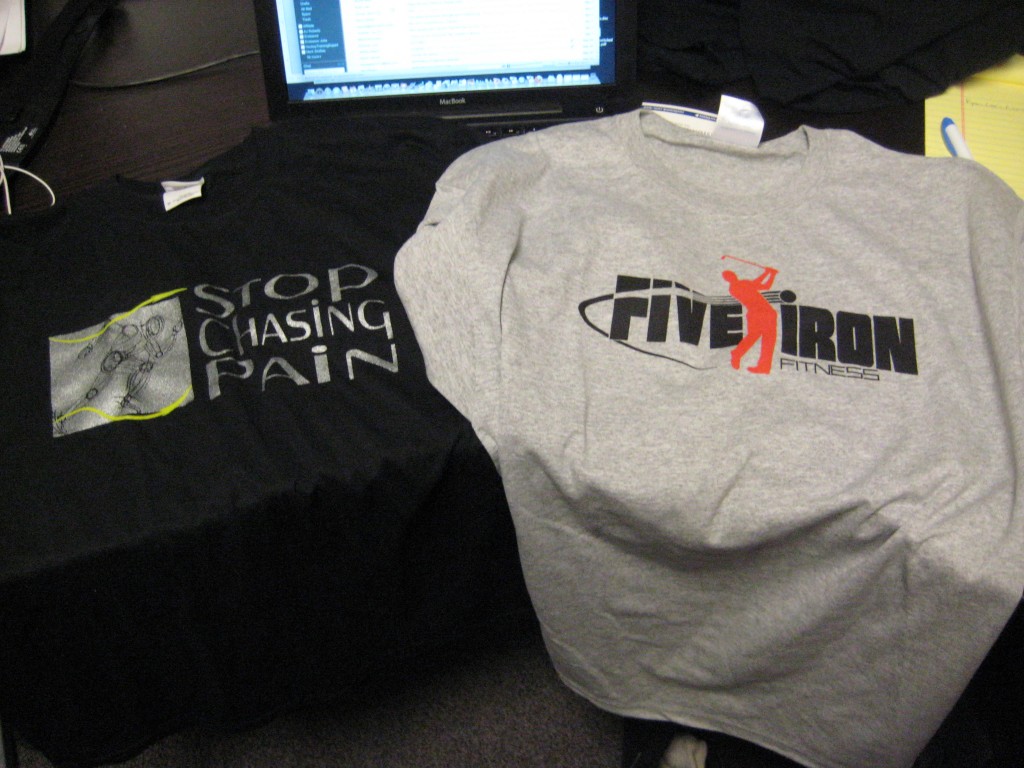
Last Friday David and I made a trip up to Ramsey, NJ and White Plains, NY to hang out with Perry Nickelston and Anthony Renna. Hanging out with those guys was awesome. I really click well with entrepreneurs and people that are passionate about what they do. This is true of people in any field/industry, but especially when it comes to sports medicine and athletic development.

And nothing lights my lamp more than getting free t-shirts

One of the things that came out of talking with both Perry and Anthony was the value of actual training experience. The internet has completely revolutionized the education process. Because of the ease of starting a blog, everyone can share current information about how they’re training their athletes/clients. I remember Mike Boyle saying several years ago that most books were outdated by the time you get them. This may be less true with anatomy texts, but with books on training philosophies and methods, the time necessary to finish writing, editing, and publishing a book will make at least a portion of the material obsolete by the time it hits the presses. In other words, many book authors won’t agree with what they wrote in the book by the time we read it. It’s interesting because books are, or were, thought of as the “holy grail” of educational resources. The internet has gone a long way in cutting down on the deleterious effects of long publishing processes and in providing the most current information possible. This is good.

Unfortunately, the internet also spawned a population of unscrupulous “marketers.” The good thing about the long book publishing process is that it filtered the content. It’s a lot harder to get a book on any topic published than it is to start a website about it. Over the last couple years, the amount of hockey training information online has exploded. Some of it is outstanding; some of it is downright dangerous. What most casual readers don’t realize is that some of the information they’re reading comes from:

  1. People that don’t train anyone
  2. People who built a website for the sole purpose of making money (note that these people also don’t train anyone)

A lot of people in the strength and conditioning industry get really bent out of shape at the idea of people writing about training if they don’t train. To be honest, if people are reading and summarizing current research, it doesn’t bother me that they don’t work with a large athlete base because they’re writing can often introduce studies that I’m not familiar with, which leads me to seeking them out to read them myself.

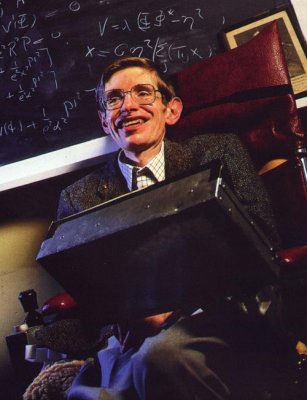
There are “theorists” in every field. I remember reading Stephen Hawking’s book “Black Holes and Baby Universes and Other Essays” several years ago and being amazed that he essentially outlined a mechanism for time travel. Of course, Hawking is known for being a profoundly intelligent mind in the field of THEORETICAL physics. Nobody actually thinks he’s traveling through time, nor would he ever represent himself as doing so.

One of the greatest minds in the history of the world

In contrast, many online crowds misrepresent themselves as working with vague, but insinuatingly large numbers of athletes. This misrepresentation is what I have a problem with. If you don’t train anyone, call yourself a theorist. If you only train one team, that you also coach, say that. If you’re training a few people, but helping out as an intern with other more advanced programs, say that. There’s no shame in developing as a professional and ramping up your business. I think most people avoid this because they’re either:

  1. Young and want to people to acknowledge their information as legitimate
  2. Selling something and want to be perceived as an expert

Obviously there are some similarities between these two, but in my view the latter is more repugnant than the former. Maybe I’m sympathetic because I started my website while I was still in grad school, but I look at writing online similar to anything else-it’s going to take time and practice to get good at it. Students that know they’re going to make a living training people wanting to start a site early in their careers just doesn’t bother me as much because their intentions are pure.

That said, I’d be interested to buy every hockey product online and then travel around the world to all of the author’s locations and see what they do on a day-to-day basis. I’d guess that many train people for less than 5 hours per week and that many have a background in playing hockey, but not in training players. This is BY FAR the biggest myth in all of hockey development:

Playing high level hockey does not qualify someone as a training expert!

Hell, playing high level hockey doesn’t even mean a player can TEACH the basics of hockey. All it means is that they were a good player. Not every good player is a good hockey coach; coaching takes special skill sets. Training is in a different universe altogether. There are BRILLIANT hockey strength and conditioning coaches that have never played a competitive game of hockey in their lives. This isn’t a knock on them at all. Having a profound knowledge of how the body functions doesn’t require playing the game, just understanding it.

Think of it like this-would you not trust a physical therapist because they’ve never played hockey? Would you not trust a hip surgeon JUST because they didn’t play?

WAIT! Before you saw off part of my femoral head…did you even play hockey??

Obviously not! These professionals make a living on their understanding of the body and perfecting their trade. Playing hockey will help strength and conditioning coaches understand the language and a bit more about the mentality of the players, but that’s it. It doesn’t in any way qualify someone without an educational background or coaching experience as an expert.

Hockey Playing Expert

Hockey Training Expert

When I see a new training product and the author’s biggest claim is that they played good hockey themselves, a red flag goes up.

Where you can find REAL hockey training experts

This is one of the reasons I have so much respect for my partners at HockeySC.com (Sean Skahan, Mike Potenza, and Darryl Nelson) and for my friend Maria Mountain; they ACTUALLY train real, live hockey players as their full time job, and the things they write about online, they actually do in real life! THESE are the people you should be getting your information from!

On a related note, I’ll conclude this long-winded rant by saying if you’re ever in the Philadelphia area and want to swing by Endeavor Sports Performance to see our facility and how we train our athletes, you’re more than welcome. I’ve always had an open door policy, and I think it’s good for people that have encountered some of my stuff on the internet to see that we’re actually implementing the same strategies I write about into our training systems, on a daily basis.

To your success,

Kevin Neeld

Please enter your first name and email below to sign up for my FREE Athletic Development and Hockey Training Newsletter!

Before I jump into today’s post, I have a couple announcements:

  • You can now download my hockey speed training manual “Breakaway Hockey Speed” for free if you sign up for my newsletter (look left).
  • I removed the membership requirement for checking out the videos at Ice Hockey Training so you can now watch them all for free. I did this because I’m not happy with how long it takes the videos to load on each page and I’ll probably be deleting those pages altogether in the next few weeks as we continue to build our video library over at Hockey Strength and Conditioning
  • Lastly, I have an exciting announcement coming early next week. If you’re a player (or parent) and really want to take your off-season training up a notch, you won’t want to miss it.

On to the good stuff…

It’s been a busy couple weeks at Hockey Strength and Conditioning

To start, congratulations to my friend Jeff Cubos who was recently added to a very prestigious “expert panel” at our site (one that I managed to sneak onto!). I’ve learned a lot from him over the last year and look forward to more great stuff from him in the future.

Sean Skahan, Mike Potenza, and Darryl Nelson have all added really great articles and programs. I especially like Potenza’s contribution to our new “Youth Off-Ice Training Program” section, which caters directly to coaches and parents that are running off-ice training for their kids with little-to-no equipment. You can check them all out at the links below:

Improving Shoulder Mobility from Sean Skahan (Article)

Teaching Circuit Phase 1 from Mike Potenza (Youth Off-Ice Training Program)

Training Around an Injured Arm from Mike Potenza (Training Program for Injured Player)

Beginner Off-Season Strength Training from Darryl Nelson (Training Program)

The reason I’m keeping the article descriptions so short today is because I want to highlight a recent forum “conversation” on off-season conditioning for hockey players. You hear me boast about how good forum conversations can be, but if you never see it for yourself, you may be skeptical. Due to length restrictions, I’ve included the posts from only one member. Fortunately, that member is Jim Reeves, who has an OUTSTANDING reputation for training and developing elite level players.

Jim drops some wisdom on us…

Round 1
I’m not sure I agree with the recommendations given. I look at physical principles as unique qualities to develop in specific ways. Strength coaches are mistaken if they feel they can blend one exercise into the goals of another. Power development is a unique quality, move body weight or weighted implements for speed in finite quantities. Conditioning is workload tolerance. Move your body weight in specific movements within time specific or performance specific guidelines.

The error occurs when your begin to blend power exercises into a conditioning routine. A recipe for disaster. Power is power, conditioning is conditioning. Don’t blend the two, you will get sub-par results in both aspects.

My suggestions would be two fold. On the one hand, you have three weeks to begin a more aggressive off-ice workout workload, but choose basic exercise planes and do not introduce lifts you would not do in-season. ie RFE Split Squats would be out, hip flexors too sensitive to loading in-season. Sounds boring, but it works and no-one gets injured/irritated.

Conditioning is the other element. Target two high intensity sessions per week off-ice in addition to the on-ice sessions they get in the next three weeks. If ice-time is limited, then their on-ice sessions are critical, something you may not have any control over. Bikes are probably best, slide board good in the first two weeks but may not be the best choice in the week before on-ice competition.

JR

Round 2
I always throw up a red flag when someone suggests an Olympic lift as a means of conditioning. The tendency for it to go wrong is too easy and happens too fast to closely monitor as a coach in most situations. These lifts are not meant for conditioning purposes, save them for training an athletes power. Square peg, round hole analogy applies here.

To add to my thoughts, I think that introducing treadmill sprints and hang cleans after a player has just finished their season may be too aggressive for this time of the year.

First, running I find is not very well received in the first couple of weeks of an off-season program, never mind with players who just stepped of the ice the day before. If they were on the ice 6-7 times per week as indicated, then I doubt they have had much in-season running work performed up till this point. Last thing you want to do is run the risk of irritating the hip flexors with only three weeks before the next major on-ice event.

Second, the one area of the body which is almost across the board restricted at the end of a season is a players wrist extension. To catch a clean repetition at high speeds with moderate loads will push this area of their body beyond what it will comfortably be able to handle, again introducing risk where it is not necessary.

Also, if I put a stop watch to any of my athlete’s clean reps, I doubt they will get more than two reps in the interval times suggested. I can think of many other safer “power” exercises which would allow for more repetitions in the given interval time, thus increasing the metabolic demand on the body, which is the intended goal of the session. Or, the athlete will load heavy in order to get some level of fatigue with so few repetitions. Again, introducing risk if they have not been performing hang cleans throughout the season right up till the beginning of this short time off the ice.

I would move toward conditioning modes which achieve the goals of the metabolic and energy demands you are looking for but in safer exercises for this time of the year. In late July after 8 to 10 weeks of an off-season program, substitute weighted jump squats or squat jumps into the suggested protocol and the players will find it is a good conditioning session. 10/10 on the treadmill may be a little slow for only 10 second intervals, maybe closer to 11.5-12mph for most 16+ athletes.

JR

Round 3
As I said above, I would stay away from running right now. Bike or condition on the ice. If twice a week is off-ice for you right now, then add one or two on-ice sessions as well. If you are looking to keep their strength, then strength train. TB Deadlift, Front squat, single leg squats all good options, add in 2-3 hip isolation ex’s and upper body lifts and you have a pretty good day right there. Add power exercises before strength work as you see fit, 2-3 per workout, basic movements like hurdle jumps, Single leg box hops, Med ball rotation and chop throws.

In all honesty I would look hard at mobility and flexibility issues at this point over focusing on power development. You will get more bang for the buck and players will perform better during this short term focus.

JR

Round 4
No, primarily the wrist. Maybe a little bit of pronation/supination loss observed but not much of anything lost at the elbow in my experience. Any loss of elbow range is in guys who focus on the “hunting workout”; all guns and traps!! (editors note: this is hilarious) We don’t get many of those around here.

As for running, I implement a progressive increase in the distances and the length of the shuttles as the initial weeks of our off-season program begins. More stops and starts initially to work on deceleration skills, but I think more importantly the short distances limit the ability to get into a full running stride. The length of the stride increases as the shuttle length increases. We bike a little at the beginning, then progress off the bike and into the slideboard and short shuttles, then lengthen out the shuttles before beginning any acceleration work.

Sled drags are started as a walking/marching speed for the first 8 to 10 weeks, and we do a lot of unloaded acceleration work after the 6th week of the program before looking at implementing resisted sprint work with any resistance.

JR

Round 5
No direct acceleration work for the first six weeks of the off-season. Deceleration is the focus. The distances are increased for both conditioning in the early part of the off-season and for when acceleration work is introduced after the 6 week mark.

JR

Round 6
Yes, we get some players starting at the end of March, I stretch that period out to 8 weeks, versus 6 weeks if they start mid-May. If they start with us at the beginning of July and haven’t been on the ice for quite some time, then they get a fast forward version of 2-3 weeks of deceleration then we start the acceleration work.

But there are always exceptions, for example last year I had one player still playing in the Stanley cup finals, so by the first week of July he was still only three weeks removed from being on the ice. The most important aspect I am trying to respect here is the inability of a player to perform high speed hip extension through a full ROM. I feel the need to eliminate muscular guarding, specific tissue restrictions and re-educate/re-train the muscular recruitment patterns around the hip joint. Shorter shuttles and reduced acceleration work accomplish that goal for me and give the athlete’s body the opportunity to adapt to the workouts before we ask them to move in that manner.

JR

I still strongly belief that the best way to become better at anything is to have good mentors. With this in mind, I look at a Hockey Strength and Conditioning membership (which is only $1!) as an investment in a mentorship with multiple coaches that work with and develop NHL players more so than a traditional “information site.” This situation would not have been possible 10 years ago, and it’s an incredible opportunity for people that train hockey players at any level to learn form the guys that have been doing it the longest, and the best.

Click Here for the best in Hockey Strength and Conditioning
To your continued success,

Kevin Neeld

P.S. Try HockeyStrengthandConditioning.com for 7 days for only $1! It’ll be the best dollar you’ve ever spent.

Please enter your first name and email below to sign up for my FREE Athletic Development and Hockey Training Newsletter!