Today, we’ll wrap up the “Best of 2012” series with the Top Resources/Product Reviews of 2012. If you’ve missed any of the previous articles in this series, you can check them out at the links below:

  1. Top Hockey Training and Development Posts of 2012
  2. Top Performance Training and Injury Prevention Posts of 2012
  3. Top Hockey Nutrition Posts of 2012
  4. Top Hockey Training Videos of 2012

Without futher adieu…

  1. Body By Boyle Online from Michael Boyle and MBSC
  2. Functional Strength Coach 4 (Also see: Functional Strength Coach 4 Videos) from Michael Boyle
  3. BioForce HRV from Joel Jamieson
  4. Zeo Sleep Manager
  5. Strength in Motion DVDs from Patrick Ward, Joel Jamieson, and Charlie Weingroff
  6. Triphasic Training from Cal Dietz
  7. Elite Training Mentorship from Eric Cressey, Mike Robertson, Dave Schmitz and BJ Gaddour
  8. Exercises for the Landmine from Shawn Windle
  9. Slideboard Training for Hockey and Kettlebell Lifting for Hockey from Sean Skahan
  10. Earthing Products
  11. Bioletics

That’s a wrap for the “Best of 2012” series. Thanks again for your continued support! http://www.kevinneeld.com/2012/recovery-week-monitoring-nutrient-and-hormone-status

To your success,

Kevin Neeld
UltimateHockeyTraining.com

Please enter your first name and email below to sign up for my FREE Athletic Development and Hockey Training Newsletter!

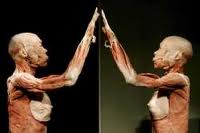
A couple weeks back I started a class called “Pathology” as part of my massage program. The first class we watched a DVD from National Geographic titled “Inside the Living Body,” and were asked to write a paper with the loose guidelines of “what did you think of the video and why do you think I made you watch it?”

As going through this massage program and learning from guys like Patrick Ward has really changed the way I think of the human organism, I utilized this opportunity to go on a fairly tangential rant about the integrated nature of the all the body’s systems. The paper was well-received, so I wanted to share it with you. Enjoy!

Inside the Living Body

Inside the Living Body is a National Geographic documentary exploring the interactions of the various human systems from birth through death. Naturally, as time progresses following birth, human systems develop as both a driving factor for growth and in response to internal and external stressors. The video eloquently illustrates how individual systems (e.g. the cardiovascular system) and their associated organs (e.g. the heart) function to support life at different stages throughout the lifespan, and alludes to how the function (or dysfunction) of one system will influence others. Understanding these concepts presents a unique opportunity to recognize the symptoms of and more effectively treat individuals with various levels of dysfunction.

The further I travel down the rabbit hole of human performance, the more I appreciate how interactive the various systems are. One cannot influence the “muscular system”, “cardiovascular system”, or “endocrine system” in isolation. In fact, a stimulus in any of these areas will likely also involve a concomitant stimulus to the rest of the systems, but will absolutely create indirect effects as a result of the primary system stress. For example, lifting weights is traditionally thought of as a stimulus to the muscular system. However, overcoming high levels of resistance stimulates the sympathetic nervous system, which directly influences the cardiovascular system through changes in heart rate and blood pressure, the respiratory system through changes in breathing rate, and the endocrine system via the release of hormones like norepinephrine. These are somewhat isolated examples pulled from the immediate cascade of events that result simply from getting under a heavy bar.  These examples are confounded by the present state of the individual’s systems, and compounded upon by the ensuing cascade of allostatic events designed to restore homeostasis.

The idea of an individual’s “state” influencing their ability to grow and adapt to various stimuli has implications for all of the body’s systems, but also highlights the important role nutrition plays in providing the appropriate building blocks for all involved reactions and structures. Unfortunately, nutrition is typically viewed strictly as a means of influencing body composition. The thinking, here, is that total caloric intake can be manipulated as a means of matching, or creating an excess or deficit relative to total energy expenditure in an effort to maintain, gain, or reduce weight, respectively. Recommendations have been further divided into specific intakes, either on an absolute or relative basis, of the three macronutrients: protein, carbohydrates, and dietary fat. Even within this model, which is only loosely recognized or understood on a wide scale in our country, intake of specific macronutrients (e.g. omega-3 fatty acids, amino, acids, etc.) and micronutrients (i.e. vitamins and minerals) is haphazard, and the effect of nutrient timing relative to circadian rhythms and physical activity is not fully appreciated. It is not until dietary habits are viewed for what they actually are, as provisions for the foundational building blocks of all structures within the body and energy production that nutrition practices can be truly understood, the crime of genetically modifying nature’s gifts can be fully recognized, and ultimately that our society can optimize our nutritional habits.

Appreciating and attempting to understand the totality of the influence of any individual stressor is inherently valuable, as it not only allows the clinician/practitioner to identify a client’s dysfunctions, but it provides a means of early recognition regarding deleterious lifestyle choices and sub-clinical symptoms that will inevitably snowball into more significant problems in the future. Naturally, a better understanding of the state of the client’s system will also allow for a more appropriate treatment approach. For example, an individual that presents with neck stiffness/pain while in a state of excessive sympathetic tone (e.g. as a result of work- and relationship-related stress) may be most appropriately treated using techniques that facilitate a shift toward a more parasympathetic state. In this case, aggressive manual or instrument-assisted soft-tissue work, locally or peripherally, could stimulate a fear-avoidance reaction and a further push into sympathetic dominance. Because of the integration of the nervous system and fascial networks, it’s possible that decreasing the individual’s threat response via an augmentation of parasympathetic tone would reduce or eliminate their pain.

Furthermore, understanding the integrations of the body’s systems allows the clinician to troubleshoot complicated cases. As an example, imagine an individual possessing great joint range of motion and appropriate strength across the joint with a history of chronic nagging muscle tears. Further investigation reveals that the client doesn’t drink any water. In this case, it’s possible that the client has shifted his muscles closer to injury threshold via dehydration. Clients understand that it’s easier to tear beef jerky than filet mignon, but they’re unlikely to make this connection themselves. Sometimes the key to optimal treatment lies in asking the right questions.

As the video dissects the complexities of optimal function, one can better recognize the multiple opportunities for dysfunction, which provides a platform for the massage therapist’s role in restoring function. This, in my opinion, is the primary value of the video, and, I imagine, the reason for you showing it to us. Exposing therapists to the most foundational processes of human life, as well as their evolution across the lifespan, provides a reference point to further inquire about the impact we can potentially have on the various systems when things go awry. By presenting this information in a video format, it provides the therapist with a visual representation of structures and processes that may be difficult to construct otherwise. Ultimately, Inside the Living Body sets the stage for a semester of delving into the therapist’s role in treating or treating around pathology.

To your success,

Kevin Neeld

P.S. Science applied to hockey training: Ultimate Hockey Training

Please enter your first name and email below to sign up for my FREE Athletic Development and Hockey Training Newsletter!

I haven’t spent as much time reading others’ websites as I typically do over the last 6 months as I’ve been chin-deep in massage school, a few good books, and working on a couple projects for Endeavor. That said, I’ve come across several awesome articles that I wanted to share with you that cover a range of topics from hockey training to parenting to manual therapy to soccer preparation (these articles have direct applications to hockey players too!). Most of these won’t take very long to read, so don’t be overwhelmed by the number of articles here. Lots of good stuff so grab a seat somewhere comfortable and dig in!

This will do.

  1. Shoulder Injuries in Hockey Players from David Lasnier
  2. Those Who Have Influenced Me from Sean Skahan
  3. Some Thoughts on Training the Lactate System from Patrick Ward (Read the comments section too!)
  4. My 13 Simple Rules for Hockey Parents Everywhere from John Buccigross
  5. Parenting Advice from a Former NFL Head Coach via Mike Boyle
  6. Lessons from Inside Out Coaching: The 20 Year Window from Mike Boyle
  7. Every Hockey Parent Should Read This via Mike Boyle
  8. Not Everyone Gets A Trophy from Anthony Donskov
  9. A Note to the High School Athlete, From: Your Strength Coach from Anthony Donskov
  10. Sprinting and Hockey Players from Jeff Cubos
  11. Discussing dynamic ligament stabilization, performance of orthopaedic tests, and proper palpation technique for osseous articulations from Andreo Spina
  12. Paradigm Shift: On changing the manual therapy zeitgeist from Andreo Spina
  13. McKenzie Method vs. SFMA from Charlie Weingroff
  14. An interview with Philadelphia Flyers trainer Jim McCrossin from Broad Street Hockey
  15. The Prevalence of Hip Abnormalities in Soccer Players from Matt Siniscalchi
  16. Basic Soccer Strength Program from Matt Siniscalchi
  17. Core Stability for Soccer Athletes from Matt Siniscalchi
  18. Fatigued? How to Modify Your Training Program To Keep Progressing from Matt Siniscalchi

To your success,

Kevin Neeld

Please enter your first name and email below to sign up for my FREE Athletic Development and Hockey Training Newsletter!

Heart rate tracking and heart rate variability (HRV) have received increasing levels of attention from the strength and conditioning community over the last several years. A little less than a year ago, after watching a video of a presentation Joel Jamieson gave on energy system development, I started digging deeper into the research on heart rate variability and its various applications. What I started to find was there were several lines of fascinating research in validating HRV measurements, determining what different measurements meant physiologically, and what this information may mean for the athlete.

As a preface, I am FAR from an expert in this area. I had an exceptionally superficial introduction to these concepts in an exercise physiology class as an undergrad, and a familiarity with the benefits of variability from a neurological standpoint from my graduate studies in exercise neuroscience, but for all intents and purposes, this is new stuff for me. I’ve been fortunate to have guys like Mike Potenza, Patrick Ward, Dave Tenney, Joel, Mike T Nelson and his friend James Heathers (who I know as a researcher from Australia) to help me connect the dots. That said, I defer to these folks on this subject matter and encourage you to look into their work if you’re interested in more information. That said, I want to outline some of the basics of HRV and my interpretations of the immediate application of these concepts.

Understanding Heart Rate Variability
Heart rate variability is essentially a measure of the time between successive R-R intervals in the QRS waves of an electrocardiogram (ECG).
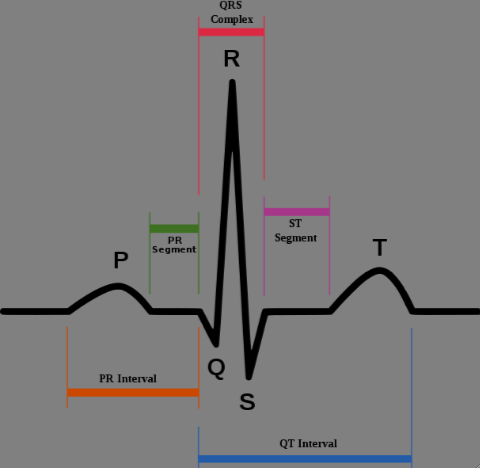
 

The various components of an ECG output…this is what you see next to the hospital beds that make the beeping noise.

While my understanding is that the “P-Q-R-S-T” denotation is somewhat arbitrary, each of these points and their associated influence on the waveform have physiological relevance. The “QRS-complex” represents ventricular depolarization, which essentially signifies the time at which the right and left ventricles contract and eject deoxygenated blood to the lungs and oxygenated blood to the rest of the body, respectively.

The variability in time between successive R-R intervals was initially recognized as an important measure due to associations between lower variability and various cardiavascular diseases/events. To be overly simplistic, within this frame more variability was indicative of a “healthier” more resilient cardiovascular system, whereas less variability indicated a greater degree of risk. One example of the potential benefits of having greater variability lies in the respiratory sinus arrhythmia (RSA). Put simply, RSA describes a phenomenon where under certain circumstances, an individual’s heart rate will increase during inhalation and slow during exhalation. The rationale is that the expedited blood flow during inhalation provides an opportunity for increased oxygen delivery to the depleted blood. The more variable heart beat, in this example, provides an opportunity for more efficient oxygenation, although there is some debate as to the power of this relationship as RSA tends to disappear during times of higher intensity activity, when it would seemingly be most important to maximize oxygenation of depleted blood.

Since this initial body of work linking low HRV with cardiovascular insufficiencies, HRV has been associated with a number of other ailments, including glucose regulation, hypothalamic-pituitary-adrenal axis function, and inflammation. HRV has also been dissected to a much greater degree such that HRV is now being measured in both the time and frequency domains, with various measures within each. Interestingly, researchers have attempted to use the frequency domain measures to differentiate physiological associations.

  1. Ultra-Low Frequency Band: <= 0.003 Hz (~10 cycles per hour)
  2. Very Low Frequency Band: 0.003-0.04 Hz (~2 cycles per minute)
  3. Low Frequency Band: 0.04-0.15 Hz (~5 cycles per minute)
  4. High Frequency Band: 0.15-0.40 Hz

Digging into some of the notes I took from a 2009 paper by JF Thayer titled “Heart Rate Variability: A Neurovisceral Integration Model”:

  1. ULF has a strong relationship with mortality and morbidity, and seems to lie in the functionality of the patient. ULF is related to a range of physical activity participation, not differences in autonomic control per se.
  2. VLF is linked to fluctuations in the renin-angiotensin system and to thermoregulation.
  3. LF changes are associated with baroreflex-mediated blood pressure change. Recalling the equation: Mean Arterial Pressure = Cardiac Output (HR x SV) x Total Peripheral Resistance, the major determinant of long-term changes in BP is blood volume, but the major determinant of short-term changes in BP is the ANS via the baroreflex. The most rapidly modulated component of blood pressure is HR, due to its vagal control, which therefore affects cardiac output.
  4. HF represents respiratory-modulated HR variations and represents an almost identical association with RSA.

An alternative, more simplistic interpretation of HRV data is that higher HRV measures (or measures of higher HRV frequencies depending on whether these are being analyzed using time or frequency domains) are associated with activity of the parasympathetic nervous system and lower HRV measures are associated with activity of the sympathetic nervous system.

As a quick recap, the nervous system is broken down into two primary categories: the central nervous system (CNS), which consists of the brain and spinal cord, and the peripheral system (PNS), which consists of the cranial and spinal nerves. The PNS can be further divided into two branches known as the somatic nervous system (SNS) and autonomic nervous system (ANS). For our purposes today, we’ll highlight the function of the ANS, which serves to regulate our viscera and glands. Importantly, almost all of the activity of the ANS resides outside the realm of conscious thought, meaning these processes are largely self-regulated. The ANS can further be dividing into the sympathetic and parasympathetic branches. In an attempt to avoid making the overly complex even more indigestible, I’ll describe these systems with terminology that most are familiar with:

  1. Sympathetic: Fight or flight
  2. Parasympathetic: Rest and digest

These two branches are constantly in flux to provide the appropriate environment for our bodies to be successful during times of stress and to recuperate appropriately. In general, stress (which can come from ANYTHING, real or interpreted) causes a shift toward a more sympathetic state, which in many cases is the desirable response. Problems tend to develop, however, when an individual loses the flexibility in the balance of these two systems and excessively taxes one or the other. My understanding is that the most common example of this, and probably the most relevant to you, is that overtraining causes an undesirable shift toward a more sympathetic state, which, over time, will increasingly limit the individual’s ability to further adapt. This shift, as I alluded to, can be caused by a myriad of factors well-beyond programmed training stressors. Things like sleep, environmental toxins, dietary intake, alcohol consumption, occupational and relationship stresses all need to be consider. I believe that significant changes in these areas (even if for the better in some cases) can also be interpreted by the body as a form of “stress”.

This idea is highlighted by Hans Selye’s General Adaptation Syndrome Model, which is founded in the idea that the body has both specific and general responses to stressors and that the general response is common to all stressors (although it may vary in amplitude).
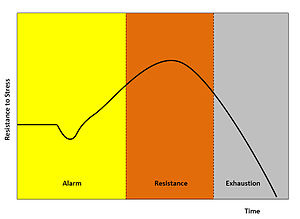
An illustration of Selye’s 3-stage GAS model.

The introduction of a stressor causes an alarm reaction, followed by a stage of resistance, and finally one of exhaustion. It’s important that we monitor for the impact of stressors, from training and non-training sources alike, to ensure optimal adaptation. Heart rate variability provides an opportunity to do just that.

While the preceding discussion is fascinating, there seem to be more muddy than clear waters in the HRV research. While it may be too early to pin down precise physiological explanations for specific HRV measurements AND provide information on appropriate changes to restore optimal function, a huge value in monitoring HRV can be found in simply looking at time domain measures and monitoring for shifts toward higher or lower levels as an indication of the balance between the sympathetic and parasympathetic nervous systems. This is, following the longest introduction in recorded history, the value in Joel Jamieson’s new BioforceHRV system.
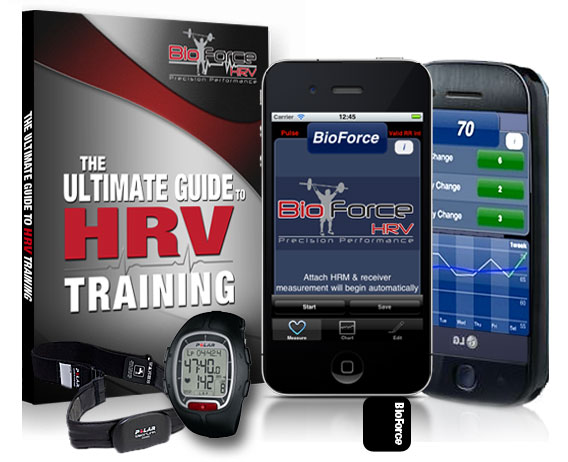
Click here for more information >> BioforceHRV
Joel has devised a simple tool for your smart phone that allows you to quickly assess your HRV. Unlike other systems that only acquire information over the time course of a minute, Joel’s records for 2.5 minutes, which allows for adequate sampling of the various influences on HRV (see frequency analysis discussion above). BioforceHRV also waits for your system to stabilize before it starts recording. This is important, as any change in body position is followed by a variable time of transient change in heart rate, blood pressure, etc. Sampling during this time period would provide meaningless information, but it would be difficult to know when it’s safe to move forward, if Bioforce didn’t handle this automatically. Finally, one of the best features of the system is that it tracks your measurements over time and gives you a green, yellow/auburn, or red light, indicating your current ability to further adapt to additional stressors, or, in other words, your ability to get after it in the gym.

I truly believe that HRV assessment is the future of making training optimally specific to the individual; Joel’s new system is a simple, convenient, and affordable option to tap into that potential immediately. The book that accompanies the device will provide you with the information you need to interpret your own results, so you don’t need to be an HRV expert to use the system. Check out this link for more information: BioforceHRV and please post any questions or comments you may have below!

To your success,

Kevin Neeld

P.S. The future of strength and conditioning and sports performance? Check out this link for more information! BiofroceHRV

Please enter your first name and email below to sign up for my FREE Athletic Development and Hockey Training Newsletter!

As I mentioned on Friday, this was the first weekend in the last three months that I wasn’t traveling or hosting guests. It was great to relax and unwind a bit. Emily and I shot down to Hockessin Athletic Club in Hockessin, DE to get massages and spend some time in the pool/sauna yesterday. A great way to recover and regenerate from a turbulent few months and prepare for more excitement ahead. As a quick aside, if you’re even remotely close to Hockessin (e.g. within 2 hours), you owe it to yourself to make a trip out to the health club. It’s my go-to spot to get a massage (I’ve had 6 different therapists and they’ve all been tremendous), and the facility itself is remarkable.

Having some downtime also allowed me to catch up on a little reading, some of which I wanted to share with you today. These are a handful of great articles from some of the brightest people I know. I’m fortunate to have opportunities to learn from these coaches, and we’re all fortunate that they take the time out of their busy schedules to share information with us! I also threw in an article on Mike Kadar of the Pittsburgh Penguins from NHL.com because I thought it was a great story!

  1. 5 Years of Cressey Performance: Success Isn’t Just Measured in Revenue from Eric Cressey
  2. As Little as Necessary from Jeff Cubos
  3. Early Rehab for Lumbo-Pelvic-Hip Injuries from Jeff Cubos
  4. Tweaking Physiology from Patrick Ward
  5. Tweaking Physiology Part 2: Divide and Conquer from Patrick Ward
  6. The Epidemic of Concussions from David Lasnier
  7. Expanding on the 1-Leg Squat from David Lasnier
  8. Assessment Using Single-Leg Deadlift Pattern from Matt Siniscalchi
  9. Thoughts on How to Organize Soccer Practices from Matt Siniscalchi
  10. Useful Pressing Progressions for Soccer Athletes from Matt Siniscalchi
  11. Not Overloading Athletes: Other Factors to Consider from Matt Siniscalchi
  12. Malkin Bringing Trainer Back to Moscow from NHL.com
  13. John Gaudreau Interview at Flames Prospect Camp (You may have to dig for this one)

I also wanted to let you know about two other great opportunities. Patrick Ward recently opened up spots for “online training” with him. If you’re interested in taking your performance to a new level, I highly recommend looking into this. You can read more information here: Online Training with Patrick Ward

Finally, Ranfone Training Systems in Hamden, CT is hosting a 2-day course with Charlie Weingroff in November. As you may recall (see: Training = Rehab Rehab = Training), I think very highly of Charlie. He’s a jack of all trades and a master of…well, all trades. And he’s constantly learning to become even better. If you’re a fitness or rehab professionals, I highly suggest signing up for this seminar: Charlie Weingroff at Ranfone Training Systems.

Last, but certainly not least, I wanted to extend a congratulations to the hockey players I’ve been fortunate to have an opportunity to work with that attended NHL prospect camps this year in Buddy Robinson (Vancouver Canucks), Chase Hatcher (Philadelphia Flyers), Nick Sorkin (Philadelphia Flyers) and John Gaudreau (Calgary Flames). Keep working hard!

Buddy either scored here, or plowed his 6’5″ 220lb frame straight through the net. Either way, I’m proud of you man!

That’s a wrap for today. Hopefully you’ll have an opportunity to sift through all of these articles. There is a ton of great info that applies to hockey players specifically and athletes in general.

To your success,

Kevin Neeld

Please enter your first name and email below to sign up for my FREE Athletic Development and Hockey Training Newsletter!