A few weeks ago, after returning from USA Hockey’s ADM Symposium I ordered a half dozen books, many of which were recommended by the presenters. After wrapping up On Combat: The Psychology and Physiology of Deady Conflict in War and in Peace by Lt. Col Dave Grossman and Loren W. Christensen (a really interesting insight into “warrior preparation”), I opened The Talent Code: Greatness Isn’t Born, It’s Grown by Daniel Coyle. I knew I would have a hard time putting The Talent Code down, as Bounce by Matt Syed, which is written on a similar topic, is one of my favorite books of all time.

As you may have noticed, I’m on a bit of a long-term athletic development kick recently. That USA Hockey Symposium really “lit my lamp”.  The symposium was largely responsible for sparking these posts, which I encourage you to read if you haven’t already:

  1. The State of Youth Hockey
  2. Hockey Development Resistance
  3. The Truth About Practice: The 10,000 Hour Rule
  4. Hockey Development Recommendations

There are clearly areas for improvement in our long-term hockey development programs, and I think USA Hockey is on the right track with their guidelines and recommendations. As I anticipated, components of their ADM are being criticized largely by people that haven’t taken the time to fully understand the intentions, guidelines, and progressions of the system. It’s a shame that the people with the loudest voices have a tendency to be the least well-informed.

Getting back to my reading endeavors, I thought Bounce was interesting because it systematically challenged the idea of “natural talent”. While this doesn’t quite do the book service, I think Bounce was a creative way of explaining the 10,000 Hour Rule, and how seemingly “natural” talents can always, regardless of the chosen field, be explained via dedicated practice. As Michaelangelo said,

“If people knew how hard I worked to get my mastery, it wouldn’t seem so wonderful at all.”

What we consider, or should I say what we don’t consider practice may be the reason that people miss this. This topic could be a post in itself (it is. see The Truth About Practice above), I’ll point out that WATCHING higher level performance is one of the most overlooked and incredibly powerful forms of practice. Many of the “young geniuses” accumulated SUBSTANTIAL practice hours watching/listening to their parents or some other mentor at a young age.
Lesson 1: Quality mentors accelerate excellence.
The Talent Code uses similar examples of unexpected excellence, such as the international dominance of Russian female tennis players (from ONE club!), Curacao little league teams, and even the true story of the Renaissance artists to illustrate the same point. These stories are truly miraculous when you consider how few resources many of these outstanding achievers had. Natural talents? Hardly.

Simply, in every case, peak performers have put forth a RIDICULOUS amount of focused, progressive effort to achieve their excellence. They don’t just go through the motions; they attempt, refine, and attempt again until they get it right. Daniel Coyle does a great job of explaining the physiology behind how this eventually leads to automacity (consistent performance without conscious thought).

The secret lies in myelin. Myelin forms a sheath around the axon of neurons. Think of the neuron’s axon as a wire, and myelin as the casing around it. Myelin serves to “insulate” the axon, creating a smoother, faster signal. Because all active human movement (and thought for that matter) results from the coordinated firing of vast neuronal networks, myelin has a profound effect on our everyday lives.
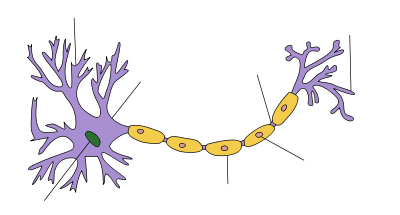
Cartoon Neuron. Myelin in yellow.

Think about it. EVERYTHING you think or do involves the firing of a vast network of neurons. When you drink Generation UCAN after your practice, a specific network of neurons fires. When you celebrate after a great game, a specific network of neurons fires. When you get mad because you don’t like a coaching decision, a specific network of neurons fires. As a network fires more and more, more myelin is laid down to insulate the connecting axons (the cord connecting one neuron to another). In other words, that pathway is reinforced and becomes more efficient. As I’ve mentioned, this has tremendous physical AND psychological implications. Essentially, this explains “muscle memory”, why highly practiced skills can be replicated with decent proficiency even after a long hiatus. This also explains why it becomes increasingly easy to skip going to the gym to train.

Lesson 2: Every decision or indecision, action or inaction results in a physiological response that makes you more likely to do it the same way again in the future.
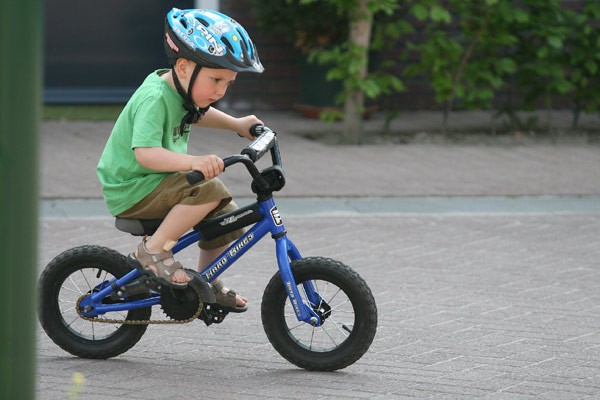
You may have heard the expression “It’s like riding a bike”, which eloquently illustrates the idea of muscle memory. Although, when I got on a bike while at grad school at UMass for the first time in over 10 years, I didn’t feel so balanced. I must have not laid down enough myelin.

The key to becoming a world-class athlete isn’t just to pick your parents right as is often said; it’s to develop highly myelinated high performance neuronal networks. This doesn’t mean that performing a movement incorrectly is undesirable. Quite the contrary. In fact, stumbling through practice is NECESSARY to find the right movement, which can be cemented with further practice. The idea isn’t to not make mistakes; it’s to not overlook mistakes. Mistakes are an important step in the skill development process. But what happens if an athlete, in practically any team sport, makes a mistake that results in a turnover? Instant negative feedback from the coach. A single failed attempt paired with negative feedback causes most athletes to abandon that strategy. Is it any wonder that athletic development experts are calling for more UNSTRUCTURED play amongst athletes at younger ages? These “pick-up” settings typically involve more movement, more “touches” with the ball/puck, and ultimately more opportunities to self-correct. In other words, they have more opportunities to identify effective neuronal networks and start laying down myelin.

Lesson 3: Unstructured play and uncoached small area games create outstanding environments for rapid skill development.

Take Home
At every level of sport, you hear athletes, parents, and coaches talking about how “talented” an athlete is, as if their abilities were developed passively. I’m becoming increasingly convinced that talent, or natural ability as we currently think of it, doesn’t exist. Or should I say, the neuronal network that creates the thought that talent may not exist is becoming increasingly myelinated. The trouble in accepting that talent doesn’t exist, is that we need to look at two athletes, the best and worst on any given team, and treat their potential for future excellence equally.

To your success,

Kevin Neeld

Please enter your first name and email below to sign up for my FREE Athletic Development and Hockey Training Newsletter!


David and I made the trek out to Chicago (just a quick 14-hour road trip) for Perform Better today. This is the first full Perform Better Summit I’ve ever been to, so I’m really looking forward to hearing all the speakers. It’ll also be great to catch up with people like Mike Boyle, Darryl Nelson, Maria Mountain, Kyle Bangen, Josh Bonhotal, and Charlie Weingroff (among others). If you’re in the area, shoot me a quick note and we can meet up for a beer protein shake.

I hope you’ve appreciated the value in this week’s posts. Hip assessments are really of paramount importance for hockey players. This week we had a new player start with us from Northwood Prep that I had never met before. Within 15 minutes of meeting him I was able to establish that he had CAM impingement in his right hip (and likely a more mild case in his left hip), instruct him on what “full” range of motion was for him, what feelings to avoid, how to move, and a focused soft-tissue/long duration stretching/breathing program for him to ensure that his CAM impingement doesn’t progress to a same-side sports hernia like they frequently do. Catching this early is huge. This player is now in a better position to avoid surgery secondary to a sports hernia and/or labral tear, and has an understanding of his mechanics that will help delay the development of osteorarthritis in that hip (which almost always follows CAM impingement). If handled correctly, this means improved performance levels and a longer, healthier career.

Unfortunately, the majority of the older players we see have some sort of anatomical “abnormality” that warrants consideration in their training programs. This week’s posts shed light on some of the anatomical asymmetries that predispose athletes to certain, somewhat predictable injuries. If you missed them, I encourage you to check them out here:

  1. The Myth of Symmetry
  2. Hockey Hip Assessment

We added a bunch of new content over at Hockey Strength and Conditioning this week.

Darryl Nelson added a video from USA Hockey’s American Development Model (ADM) conference a while back of him running a younger group of athletes through some off-ice training exercises that are more fun than regimented training in nature. The cool thing about the way Darryl runs this is that the kids probably don’t interpret it as a chore. It feels like playing to them, which is something a lot of kids miss out on the way that sports society has drifted over the last decade. For the youth programs that are looking to add an off-ice training component to their U-12 teams, this is a great place to start.

Check out the video here >> Off-Ice Games from Darryl Nelson

I posted the 2nd Phase of our 4-Day Off-Season Training Program at Endeavor Sports Performance. Many of our players will be entering this phase next week. This phase ramps up the amount of speed training work considerably, especially that geared toward improving transitional speed. We also increase the emphasis on conditioning. The resistance training aspect of the program is designed to improve maximal strength levels before we transition into more of a power-driven phase leading into pre-season camps.

Check out the program here >> 4-Day Off-Season Training Program: Phase 2 from me

Mike Potenza added a 4-day off-season training program with an emphasis on speed strength. This was cool to look through because there were a few things I was completely unfamiliar with, which will inevitably stimulate some good forum discussions in the near future. Mike writes his programs a little differently than I do in that he uses 3-week cycles instead of 4 and the speed, core, and conditioning work are pulled out. He has separate progressions for those things, so they aren’t included on his training sheets. Great learning opportunity for other hockey strength and conditioning coaches out there.

Check out the program here >> Speed Strength Phase of Training from Mike Potenza

Lastly, Cristi Landrigan, who is one of the most dedicated parents I’ve ever met, recently forwarded me a link to a great audio interview with Detroit Red Wings Head Coach Mike Babcock, which I added to our site. I think it’s a great opportunity for everyone in the hockey community to hear from the head coach of one of the top hockey organizations in the world and get an idea of his mentality. Despite all of his success, he’s still constantly looking for ways to improve as an individual and as a team. I think everyone would benefit from adopting that “never satisfied” mentality.

Listen to the interview here >> Mike Babcock Interview

As a parting message, I’ve talked with a handful of players that compete at the semi-pro level recently that strongly recommended that we make a stronger effort to let players at that level know about our site. Their feeling was that many players at those levels have trained in an organized hockey training setting before, but don’t have anyone to provide quality programs for them to use. Because we constantly post 4-day off-season programs and 2-day in-season programs throughout the year, a membership to our site would be a great option for players that would benefit from professional strength and conditioning instruction, but don’t have the resources (money, time, qualified professional) to hire someone locally. If you know of anyone currently playing at the OHL, ECHL, IHL, CHL, AHL, or any of the professional leagues overseas that you think would benefit from following a professionally designed hockey training program and from having forum access to high caliber coaches, please forward this along to them.

And if YOU aren’t a member yet, fork out the $1 to test drive Hockey Strength and Conditioning for a week. If it’s not the best buck you’ve ever spent , I’ll have David Lasnier personally refund you!


To your continued success,

Kevin Neeld

Please enter your first name and email below to sign up for my FREE Athletic Development and Hockey Training Newsletter!
Monday’s post dove into some of the common misconceptions about elite hockey development (and athletic development in general for that matter), with cameo appearances from a young Tom Brady and Sidney Crosby. In case you missed it, you can check it out here: Random Hockey Development Thoughts

Writing that post made me think about a couple other things that I probably should have told you a long time ago.

Endeavor Internships

First, and probably most time-relevant, we’re currently accepting applications for interns at Endeavor Sports Performance this summer. A few people have hopped on the forums at Hockey Strength and Conditioning (which is an awesome use of the very talented/experience audience on the site) and inquired about good hockey training internships. We have 3-4 spots available. Last year we drew interest from people ranging from local universities to Canada to Australia.

Our past interns have gotten a lot out of their experience with us. On top of being surrounded by passionate people that continually want to learn and get better (both coaches and athletes), our off-season hockey group includes a wide variety of skill (on- and off the ice). I know it’s a lot “sexier” to work with NCAA D1 and professional athletes and that’s what most interns are looking for. In truth, these experiences are great for networking (and general exposure), but probably not as good for coaching. Athletes at these levels tend to move extremely well and don’t require a lot of coaching, just some simple cuing.

In contrast, younger athletes need A LOT of help (turns out sitting on your ass for 22 hours a day isn’t great for building athleticism), and it’s the practice you get coaching these athletes that really helps you understand how to use efficient coaching techniques, change your language based on the athlete, and ultimately to become a better coach. Because we have players ranging from Tier II youth PeeWee programs to those in pursuit of permanent NHL roster-spots, you get the best of both worlds.

In addition to experience, the other two main reasons to pursue internships are to network and potentially pursue employment. Since I’ve joined Endeavor, we’ve had 6 interns. We hired 4, one went on to pursue a different career path, and another had a job lined up for immediately after his internship and is now going back to school in pursuit of his DPT. If you’re interested, go to the link below to read more information and to download the application. You can email the finished ones to me or fax them to Endeavor at (856) 269-4153.

>> Endeavor Sports Performance Internships <<

Endeavor Sports Performance Website

I’ve alluded to this in the past, but I do a lot of writing for the Endeavor site. Because we work with athletes in all sports, the writing tends to discuss sports other than hockey (although I do write about hockey too), general athleticism, and research related to performance enhancement. If you don’t work with hockey players and/or just want more of the good stuff, I highly encourage you to go over to Endeavor’s site and check out the blog:

>> Endeavor Sports Performance Blog <<

And follow us on youtube:

>> Endeavor Sports Performance YouTube Page <<

You’ll get all sorts of great stuff…like how to eat fruit, functionally:

…Never give a Canadian a camera

A few noteworthy posts to get you started:

The Truth About ACL Injury Prevention

High Quality Breakfast for Teenage Athletes

Long-Term Athletic Development: Training Youth Athletes

Strength and Conditioning Programs for Youth Athletes

Why Every Athlete Should Get Hurt…Once

USA Hockey’s ADM (American Development Model)

The more I learn about what USA Hockey is doing with their new ADM the more I support it. Since I started playing, it seems like the American development model has simply been wrong. We play way too many games, we practice too little, and most practices don’t make good use of the ice to enhance skills. There is a reason why, in general, the NHL’s most skilled players are consistently from overseas. From what I understand, Canada is similarly “backwards” in their systems, but hockey is so much more popular there that more talent seems to rise through the ranks, possibly despite the overall development structure.

This certainly isn’t to undermine the jobs that the thousands of coaches in both countries are doing, only to say that we need a better development framework so that new coaches have better plans and philosophies to draw from and so we can be more consistent in our teachings across the country. Naturally, I’m also of the opinion that off-ice training is a necessity, not a luxury, at least not for players that are serious about pursuing elite levels. USA Hockey has done an outstanding job of “righting the ship” so to speak. If you aren’t familiar with the ADM, you can read up on it here:

>> USA Hockey’s ADM <<

If you’re coaching, I urge you to look into this and do your best to begin implementing these concepts immediately. On an international level, it seems that the US has found some success because of their heart, not because they have comparable talent to their Canadia, Russian, Finnish, and Swedish competitors. I think, if coaches and parents buy into what USA Hockey is providing in the ADM, we’ll start to see the U.S. dominate internationally because of improved skill sets. Of course, if everyone takes the “what we’re doing now is fine” approach, we’ll simply continue to tread water.

It’s up to us to make a change! I’m in. Are you?

To your success,

Kevin Neeld

Please enter your first name and email below to sign up for my FREE Athletic Development and Hockey Training Newsletter!

2011 is going to be a big year, not just for me personally, but also for the entire hockey community. As hockey continues to rapidly increase in popularity around the world, so too will the attention paid to QUALITY development systems. With that in mind, here are my top 3 hockey development predictions for the new year.

3) The rapid death of “select camps”
Select tournaments and camps have undergone an incredible growth over the last 10 years. From a business standpoint, the people that run these camps can make a killing by having hundreds of kids attending their tryouts, selecting the team they knew they’d take anyway, and overcharging those players. It works the same way for hosting select tournaments (hence why so many of these “elite only” tournaments have more than doubled their team base over the last several years).

In reality, these camps IMPAIR development more than they expose talent. Because most of these camps take place in the off-season, players put too much focus on on-ice work in the forms of games and practices, and not nearly enough focus on off-ice training and on-ice SKILL work (e.g. skating technique and specific puck handling skills).

Fresh off their 14th hockey camp and 11th hockey showcase, these players are energized for the start of the new season…

The truth is that most players get more than enough exposure during their season. Instead of attending these camps, a player could make drastically more progress by training hard to make a better team the following year. Ultimately, the better the team you’re on, the more exposure you’ll get. There are a few exceptions to this rule (exceptional players in remote areas such as the southeastern United States may need to play in ONE or TWO of these camps/tournaments to get enough exposure to move away from their home and play for a better organization, once they reach an appropriate age to do so), but this likely doesn’t apply to over 75% of the players that attend the camps in the first place.

2) Greater focus on skill work
Skill works seems to have found it’s way out of most youth organizations. This is the result of both an overemphasis on winning AND a rapid increase in the number of youth programs without a parallel increase in the number of qualified coaches. Regarding the former, winning is an important part of the game, but unless a coach’s job depends on it (and even then, alternative means should be considered), winning should not be pursued at the expense of skill work and individual development. Regarding the latter point, this is certainly not to bad mouth the hundreds of fathers and former players that have stepped up to fill the coaching void. It’s only to point out that it takes a special ability to be able to recognize, teach, and reinforce proper skill development progressions, and the number of people that can do that are quite limited. This is why, much to the surprise of hockey parents, I’ve recommended that some of the players I interact with take skating lessons with skating coaches with a primarily figure skating background. The truth is that these coaches tend to have a better understanding of the importance of edge work and single-leg stability. This isn’t to say that all figure skating coaches fit this description, but those with a history of working with hockey players tend to be excellent.

With the rule changes made several years back, hockey is more of a speed and skill game than ever before. Hockey development programs and organizations need to adapt if they want to produce elite level players. In the states, USA Hockey is on the right track with their new ADM initiative; it’s up to us now to learn about it and constantly reinforce it with the players we have access to.

Skill demonstration for Flyer’s fans (the last one is amazing)


1) Increased emphasis on training using a program
As more players train, the improved results of players that follow a well-written program will become increasingly apparent. As it is, we’ve had players at Endeavor that tell us they’ve made more progress in as little as a couple weeks training with us than they have in several months training on their own. In somewhat less extreme cases, most of the players we train in the off-season hit the ice in September and say they’ve never felt better in their lives. Think about that.

Our training certainly isn’t EASY, but the idea that a player can revolutionize his performance by following a well-written training program is quite SIMPLE. Get the program, get the results; it doesn’t get any more simple than that. The largest barrier to this, naturally, is that not everyone can get access to quality training programs. Well, I should say the largest PERCEIVED barrier is that everyone doesn’t know they can get access to quality training programs. For this reason, I think membership sites that provide this information will really take off in the new year. For strength and conditioning coaches that work with hockey players (in a high school, college, junior, professional, or private setting), you’d have to be crazy not to have a membership to HockeyStrengthandConditioning.com at this point. Not only are several programs from different coaches provided on a monthly basis, but you have access to many of the top coaches in the world to ask them questions about your own programs and situations. It’s the single best resource for you.

Click here to get access now >> Hockey Strength and Conditioning

For those involved in hockey training, but that don’t have the expertise or desire to write their own programs, Body By Boyle Online is an extraordinary option for you. There is a ton of content on there, which is nice for the intellectually curious, but more suited to your needs, there are constantly updated done-for-you training programs with videos of all the exercises. All of the content at both sites is available for an incredibly nominal monthly investment, considering the overwhelming impact this information can have on a player’s development!

Click here to get access now >> Body By Boyle Online

That’s a wrap for today. If you think I missed something, please comment below!

To your success,

Kevin Neeld

P.S. If you haven’t yet, go sign up for the 2011 Sports Rehab to Sports Performance Teleseminar. It’s ABSOLUTELY free, and the speakers are world-class. Sign-up now so you don’t miss any of the presentations; they start next week!

Please enter your first name and email below to sign up for my FREE Athletic Development and Hockey Training Newsletter!