With the official release of Optimizing Movement, I want to address several questions I’ve gotten both over the last week and over the last few years pertaining to the importance of maximizing movement quality and capacity. If you have a question not covered here, please post it in the comments section below!
Optimizing Movement DVD Package

Click here for more information and to watch the trailer! >> Optimizing Movement

What does “optimal movement” really mean?

Over the last several years I’ve referenced a growing body of research studies on a wide variety of populations that indicate that both athletic and non-athletic populations alike have an array of structural deviations and sub-clinical pathologies. Some are in pain; some are not. In other words, some may have issues that come to you as a red flag; others may not be aware of it at all (yet). Likewise, the Postural Restoration Institute has done an outstanding job of highlighting some of the structural and functional asymmetries that are present in all humans and how these may predispose different populations to specific injuries. Naturally, people also adapt to the stresses they DO or DON’T place upon themselves. These are small examples, but the big picture is that people are born with different structures and their structures adapt/change differently over time. Optimal movement starts by understanding the individual’s structural capacity. From here, the goal is to discover if the individual has limitations or imbalances WITHIN their maximum capacity, and then further prioritize which order to address these limitations depending on what the demands of the individual’s sport/activity are. Simply, the word “optimal” means allowing an individual to express their full movement capacity based on their structure.

How does optimal movement affect sports performance?

This is a bit of a loaded question and one that could be the subject of a book series. In short, there are three major buckets in which movement capacity can influence sports performance:

  1. Economy
  2. Skill Performance
  3. Injury Risk

When a joint doesn’t possess sufficient range of motion or isn’t positioned optimally at any given time, another joint (frequently an adjacent one) will need to pick up the slack in terms of both providing the necessary motion to allow a certain movement, and in helping to produce or reduce/absorb the force that the other joint could not. As you can imagine, while this system allows the execution of some version of the intended movement, it certainly isn’t a very efficient system. Movement efficiency can influence both local (at a specific muscle or structure) and global (the entire system) conditioning/endurance, and may therefore impact how an athlete performs both at the end of a competition, AND at the end of the season.

Movement capacity can heavily influence skill performance. As a simple example, when a hockey player takes a slapshot, the movement necessitates internal rotation on the front hip, in this case the left. If the player doesn’t have sufficient left hip internal rotation (EXTREMELY COMMON!), they won’t have as large of an arc to produce force, they’ll lose some of their ability to use their glute to decelerate the movement, and they’ll need to compensate by both moving excessively at a neighboring joint (in this case probably more of a lateral bend and rotation of the spine/rib cage), and by excessively loading additional musculature to decelerate the movement. Tying this in to the third point, this environment can lead to breakdowns in a number of fairly predictable places: lumbar disc or spinal fractures, oblique strains and lower abdominal tears (e.g. sports hernias), anterior superior hip labral tears (the lack of IR on the lead leg will cause compensatory movement within the joint). This is a hockey example, but this can be paralleled to any high velocity rotational sport, such as baseball and golf, among others.
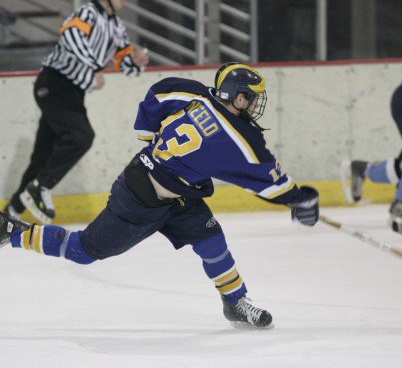
Slapshot

I just assume this went bar down?

While I presented these as three distinct issues, I don’t feel they can really be separated. I can’t imagine a situation where an athlete has a mobility limitation that impairs their skill expression and increases their injury risk, but improves their economy/conditioning. To me, it always comes back to the Athletic Performance Pyramid idea; the larger the foundation, the higher the peak.
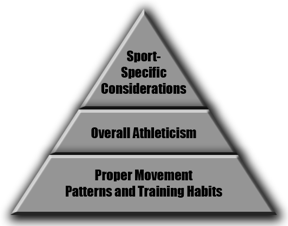
Athletic Development Pyramid

Optimizing Movement is all about building a larger foundation, so the athlete can fulfill his/her TRUE athletic potential.

What if I don’t have time for assessments?

If you don’t have time, I’d suggest making time. Always think “how”, and not “if”. That said, I understand that some folks are in really tough situations and don’t have the flexibility to even determine where their time is spent with a team or client. In this case, I’d suggest looking for a new job! But in all seriousness, I get it. If you are an astute observer of movement, you can pick up on a lot just by watching your athletes/clients move. As I discuss in the DVD, a corrective approach isn’t just about corrective exercise. When you learn what to look for and have a system set up to address limitations when you see them, you can take a huge step in the right direction without including formal assessments. This is a major topic of Optimizing Movement and one that I think will resonate with just about everyone in the training and rehabilitation professions.

Is Optimizing Movement an ACTUAL DVD or just streamed online?

Optimizing Movement is a 2-DVD set. After you order, the DVDs will be shipped directly to the address you specify. In addition to the U.S. and Canada, the DVDs can be shipped to Australia, Asia, Europe, the United Kingdom, and Ireland. If you’re in an area where shipping isn’t currently available and would like to buy the DVDs, just drop me a note below and we’ll work it out. If you’re in a sunny area, I may even deliver them myself.

What if I don’t like it?

I can’t imagine that will happen. I sent an advance copy to a D1 Hockey S&C Coach, and he emailed me back with “Just finished the first DVD. Hands down the best DVD I’ve ever watched.” The information has been very well received and I know you’ll love it too! That said, I understand there may be a person or two out there that are offended I’m wearing a Flyers hat the whole DVD and will want to return it. The DVDs are backed by a 60-day 100% no risk, no questions asked money back guarantee. Simply return the DVDs and you’ll be issued a full refund.

Click here for more information >> Optimizing Movement

That’s a wrap! As I mentioned above, if you have a question that wasn’t addressed above, please post it in the comments section below!

To your success,

Kevin Neeld
OptimizingMovement.com
UltimateHockeyTraining.com

Please enter your first name and email below to sign up for my FREE Athletic Development and Hockey Training Newsletter!
In February, I had an opportunity to do a one-day presentation with Joel Jamieson at Dynamic Strength and Conditioning in Nashua, NH. Shortly after announcing I would be there, I got an influx of emails from people that wouldn’t be able to make it (weird that people wouldn’t want to travel to New Hampshire in the middle of Winter?), but were hoping my presentations would be recorded. I’m excited to announce that the 2-DVD set of the three presentations I gave are FINALLY here!

Optimizing Movement DVD Package

Click here for more information and to watch the trailer! >> Optimizing Movement

As I alluded to in my article “Groundbreaking Research on Hockey Hip Injuries” from a couple days ago (which also discusses how prevalent these issues are in other sports and populations), the athletic population that is entering our facilities these days are increasingly “sub-clinical”, presenting with a number of structural and functional limitations that will heavily influence their movement, athletic capacities, and ultimately their performance in sport. The assumptions that exercise technique standards should be the same for all athletes and that athletes are symmetrical in their joint structure and range of motion aren’t just misguided, they’re potentially very dangerous. As a result of these things, the sports performance coach or clinician that has a toolbox of specific assessments, a system of effective corrective approaches, and a keen eye for how specific limitations influence movement expression/exercise technique, will be able to design more individual-specific training programs and use more individual-specific coaching/teaching cues. Simply, this approach leads to better results, and helps develop high performing, extremely durable athletes, which is always the goal.

This is exactly why I put this presentation together, to outline my philosophy, assessment system, and corrective approach to training athletes. The DVDs are divided into three sections:

  1. Optimizing Movement: Creating a Foundational Platform for Peak Performance
  2. Integrating Assessments into Sports Performance Programs
  3. Managing Movement: Corrective Exercise and Program Adaptations

Optimizing Movement systematically addresses the whys and hows of assessing individual athlete needs and designing programs accordingly. The feedback from personal trainers, strength and conditioning coaches, and rehabilitation professionals alike has been outstanding so far. Click the link below for more information and to grab your copy today!

Click here for more information >> Optimizing Movement

To your success,

Kevin Neeld
OptimizingMovement.com
UltimateHockeyTraining.com

P.S. No time for assessments? Optimizing Movement presents alternative approaches on how to individualize programs that can be used in ANY training situation! Click here to learn how >> Optimizing Movement

Please enter your first name and email below to sign up for my FREE Athletic Development and Hockey Training Newsletter!
In an effort to better understand the mechanisms that contribute to injury and to design better programs to make our players more durable on the ice, I’ve read a ton of research on hip injuries, such as hip flexor/adductor tears, sports hernias, osteitis pubis, femoroacetabular impingement (FAI), and labral tears over the last several years. While I recognize that every injury is multi-factorial, I always frame injuries within the context of “what can we do to minimize risk, if not prevent them?”

It’s become clear along this journey that hip injuries tend to coincide with one another and the issue is almost always much more complex than simply “overuse” or “we found a labral tear, which needs to be repaired.” This latter point was highlighted by a 2011 study from Silvis et al. that demonstrated that 77% of the 39 NCAA D1 and pro hockey players had abnormal hip/groin MRI findings that were indicative of pathology, despite being entirely asymptomatic (Read the abstract here: High prevalence of pelvic and hip magnetic resonance imaging findings in asymptomatic collegiate and professional hockey players). This is a hockey-specific example, but there are others looking at different joints and in different populations that support the idea that something appearing broken may not always lead to pain and may not always need to be repaired.

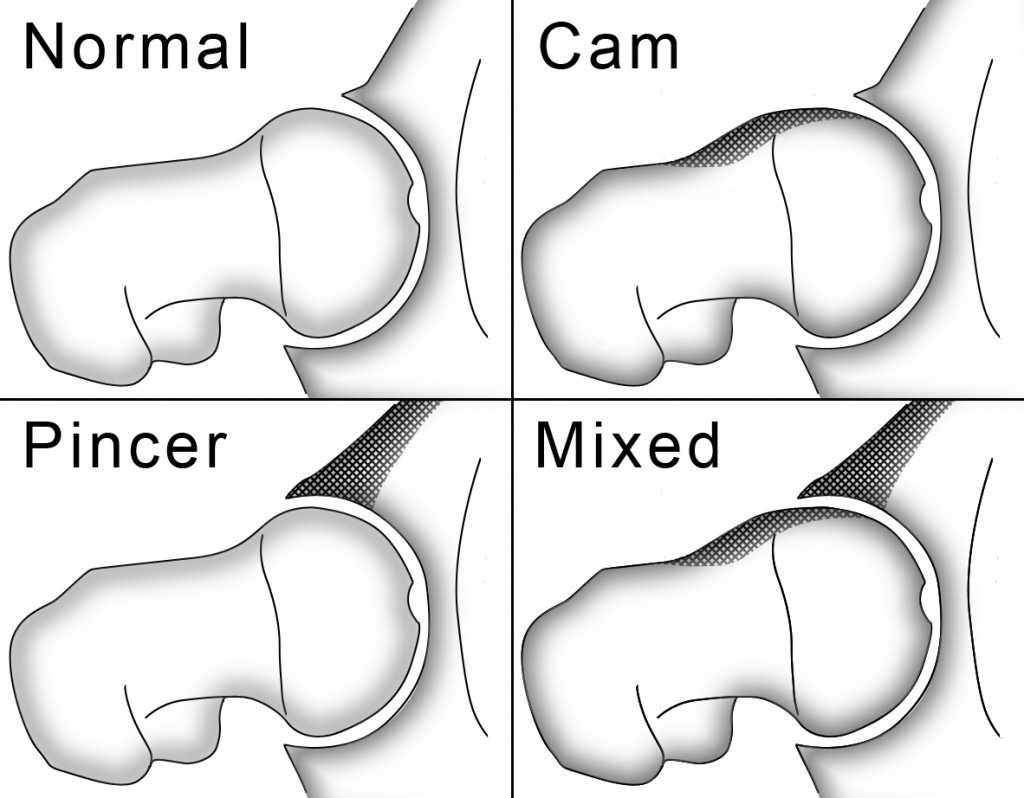
When I first started to read about how FAI (a bony overgrowth of either the femoral head/neck offset and/or the acetabular hood; image below) limited hip flexion ROM, I began including some assessments in our intake to help screen for those limitations and, over time, developed a better eye for seeing suspicious compensations throughout various exercises. Despite there not being clear research evidence in support of FAI being developmental (there was a thought that it was congenital and/or developed from a slipped capital epiphysis, both of which are explanations I believe hold merit in a minority of cases), I never really had any doubt that the majority of these cases are progressive, likely resulting from poor femoral head tracking and too much time or volume spent at or near end-range hip flexion. This is important, because if things are progressive there is an opportunity to intervene. Given that this bony overgrowth is associated with increased anterior-superior labral wear/tearing and eventual osteoarthritis (see Streit et al, 2013, among others), the need be proactive in minimizing risk is important from both a short- and long-term perspective.

Hockey Training-Femoroacetabular Impingement

A demonstration of the bony overgrowth illustrative of FAI

In the last few months, several interesting articles have been published that continue to shed light on this issue. First, Larson et al. (2013) published data on NFL prospects in college and found that 90% of the 125 athletes they looked at and 87% of the hips (an alarming statistic!) had findings consistent with FAI. Of these players, those with symptoms tended to have a greater prevalence of CAM or Mixed FAI and osteitis pubis, but the only independent predictor of groin pain was how progressive the bony overgrowth was (the “alpha angle”). This is interesting for a few different reasons. As I mentioned in the past (See: An Updated Look at Femoroacetabular Impingement), hockey players aren’t the only population affected by this hip “abnormality”. This is the first study I’ve seen (admittedly, I’m not looking for other sports) that has used an athletic population not typically put in the most “at risk for hip injury” bucket. As a backdrop, it suggests that as the bony overgrowth gets worse, the athlete is more likely to be symptomatic.

This latter fact is not surprising given a 2012 study from Birmingham et al. that concluded:

“Dynamic femoroacetabular impingement as caused by the presence of a cam lesion causes internal rotation motion at the pubic symphysis. Repetitive loading of the symphysis by cam impingement is thought to lead to increased symphyseal motion, which is one possible precursor to athletic pubalgia.”

As a follow up, increased motion at the pubic symphysis is also a risk factor for osteitis pubis (inflammation in the area), which is another cause of groin pain.

So what does this have to do with hockey players? I’ll get there!

A study published last month from Philippon et al. provided solid evidence that FAI is in fact developmental/progressive, at least in the hockey population. In short, they imaged the hips of 61 youth hockey players from 10-18 years old, and found that:

  1. In PeeWees (10-12 y/o), 37% had FAI and 48% had labral tears
  2. In Bantams (13-15 y/o), 63% had FAI and 63% had labral tears
  3. In Midgets (16-19 y/o), 93% had FAI and 93% had labral tears

While there will inevitably need to be follow up studies done, this provides some interesting information as to how these structures develop, and really highlights how important it is for hockey coaches, strength and conditioning coaches, and sports medicine professionals to be aware of their existence. In short, a player may not be skating lower because he/she physically does not possess the structure to achieve a deeper stance (remember this is a BONY block; it can’t be stretched), and he/she may not be able to squat/lunge/deadlift like textbooks suggest they should be able to for the same reason.

While slightly tangential to the previous conversation, a 2013 study from Jakoi et al. found that NHL players were less productive in the 2 years following sports hernia surgery than they were prior to the surgery. This was especially true for the “veteran” group (7 or more years in the league) as they played significantly less games per season (from 70.5 to 49.0), scored less goals per season (17.1 to 7.8), had less assists (25.4 to 13.1), and weren’t able to play as much time per game (from 18.6 to 15.2 minutes). While the declines in games played, goals and assists weren’t significant for the younger group (6 or less years in the league) there was still a decline despite playing more minutes per game (from 16.4 up to 18.4). When you factor in the total minutes played per season (games played x minutes per night), the younger group had almost equivalent minutes pre- and post- surgery (1077.48 vs. 1074.56), but still averaged less goals and assists following the surgery. This certainly isn’t to dismiss the potential benefits, and in some cases the necessity of the surgery, but instead should be taken as another argument for the importance of recognizing risk factors and intervening early.

There is a theme to this discussion. While it may not be possible to PREVENT 100% of injuries, it is important to do whatever is possible to screen/assess for risk factors, provide corrective strategies when appropriate, and coach around limitations that do exist so as to not exacerbate the problem. Given the data on how prevalent structural abnormalities are in athletes in a variety of sports, as well as the short- AND long-term implications of these injuries, taking the appropriate steps to improve an athlete’s durability may not just change your season (the two goal decrease in production could be the difference between making the playoffs or not, winning the championship or not), it may change his/her life.

Over the last several years, I’ve gotten a lot of questions about how I assess our players, what I’m finding, and how this influences my programming. In my new DVD Optimizing Movement, I cover these very topics in detail. For the first time ever, I discuss the exact assessment protocol I use (including videos of the assessments), how we integrate corrective strategies into group settings (and how you can too), how we alter exercise selection based on assessment findings, and the 4 things that underlie correctly performing almost every exercise. The DVD has gotten outstanding feedback from everyone ranging from personal trainers, to sports med professions in professional sports, to collegiate strength and conditioning coaches, to private physical therapists. Check it out at the link below!

Optimizing Movement DVD Package

Click here for more information and to watch the trailer! >> Optimizing Movement

To your success,

Kevin Neeld
UltimateHockeyTraining.com

References:

  1. Silvis, et al. (2011). High Prevalence of pelvic and hip magnetic resonance imaging findings in asymptomatic collegiate and professional hockey players. American Journal of Sports Medicine, 39(4), 715-721.
  2. Streit, et al. (2013). The shape of the proximal femur influences acetabular wear patterns over time. Clinical Orthopaedics and Related Research, 471(2), 478-485.
  3. Larson, et al. (2013). Increasing alpha angle is predictive of athletic-related “hip” and “groin” pain in collegiate national football league prospects. Arthroscopy, 29(3), 405-410.
  4. Birmingham, et al. (2012). The effect of dynamic femoroacetabular impingement on pubic symphysis motion: a cadaveric study. American Journal of Sports Medicine, 40(5), 1113-1118.
  5. Philippon, et al. (2013). Prevalence of increased alpha angles as a measure of cam-type femoroacetabular impingement in youth ice hockey players. American Journal of Sports Medicine, 41(6), 1357-1362.
  6. Jakoi, et al. (2013). Sports hernia in National Hockey League players: does surgery affect performance? American Journal of Sports Medicine, 41(1), 107-110.

Please enter your first name and email below to sign up for my FREE Athletic Development and Hockey Training Newsletter!
I RARELY recommend “follow along” training products. In fact, the only one I can think of that I ever supported was Eric Cressey’s “Show and Go”, and that was only after our staff used the program for several months ourselves and saw how well-designed it was. While I can appreciate why people flock to done-for-you training programs, in general I think almost all of them, by their very nature, undermine the uniqueness of the individual using them. In other words, there is no semblance of individualization in the program, which is especially important in terms of recognizing the individual’s training history, training goals, and movement tendencies.

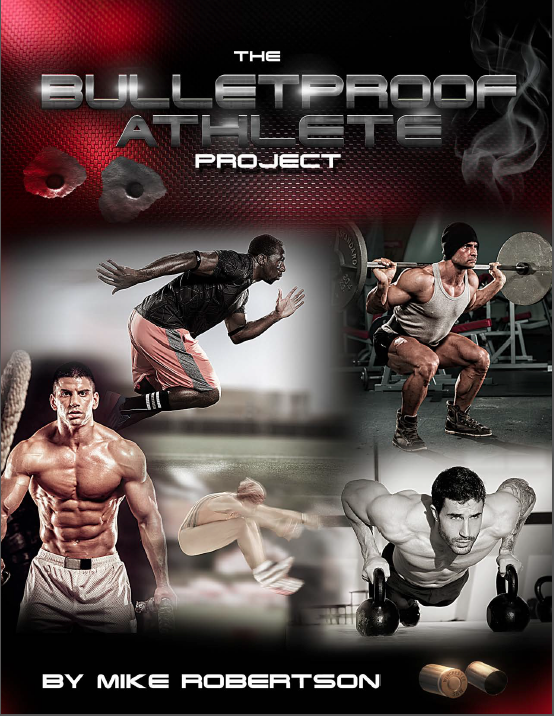
It’s for these reasons, as you read a few days ago, that I am so impressed with Mike Robertson’s “The Bulletproof Athlete Project” (BAP). On the surface it’s just another done-for-you program (although designed by a hell of a coach!), but when you get a copy in your hands you see immediately that it’s much more than that. Below are my Top 5 favorite things about BAP, and the reasons why I know you’ll not only love it, but you’ll get great results using it.

 Mike Robertson's Bulletproof Athlete Project

Check it out now >>> The Bulletproof Athlete Project

1) It’s actually THREE programs! It’s sold as one package, but BAP actually includes three programs: The Fat Burner, The Weekend Warrior, and The Monster. Which program you want to follow, as Mike describes inside, depends on your training goals, the time you have available for each training session, and the frequency you want to train. To me, this is a huge step in helping you stick with the program. If a program has too much, people tend to cherry pick what they like doing, which is rarely what they need. Using the program that is most appropriate for your needs and situation is the best way to ensure you get the results you’re after.

2) Complex topics made simple. Mike is a brilliant guy and diligent about keeping up with his continuing education. He’s been an outstanding resource for me for the last 7 years and I continue to learn from him today as he continues to evolve his knowledge. That said, in many cases, the more someone knows, the harder it is for them to relay that information in terms that normal people can understand. There are some pretty advanced concepts integrated into BAP, but everything is explained clearly, succinctly, and simply, in terms that are almost impossible not to understand. You’ll know exactly why you’re doing everything in the program, which is important in making sure that you do it all! I haven’t talked to Mike about this, but the entire layout of the program seems like it was designed by a “behavior change” expert, which is a topic that comprised a significant portion of my undergraduate studies at the University of Delaware. Part of making complex things simple is making adopting positive behaviors as easy as possible. Lowering the barrier to entry is key; Mike rolls out new behaviors/focuses in a strategic manner that makes it difficult to not adopt! Which leads me to…

3) Integrated nutrition advice. Nutrition can literally make or break a training program, especially if body composition changes are desired (e.g. gaining muscle or losing fat), and/or if the training frequency is high. I remember two Summers ago we had a hockey player that was going to be a freshman at a D1 school, and another that was returning for his sophomore year at another D1 school. Though they trained on the same program, the player that was going to be a freshman put on 15-20 pounds and was absolutely shredded at the end of the Summer. In somewhat of a contrast, the second player was ~10 lbs overweight at 205lbs and was ~12% body fat at the beginning of the off-season; he was told by his team that he needed to work on his body comp if he wanted the play the next year. He finished the Summer ~12lbs lighter and at 7% body fat using the SAME program as the first player. While the players had different corrective work, all the main training stimuli were the same. The only difference was the approach we took with their nutrition. Powerful stuff! BAP slow drips nutrition habits throughout the program, which both keeps things interesting AND helps you achieve better results with the program.

4) An emphasis on recovery. Recovery is the key to adaptation. The training, which is also an important piece of the puzzle, is simply the stimulus to adapt. Recovery efforts are both instrumental in ensuring your body has the time and resources it needs to adapt, but also ensures that you’re able to KEEP training at a high level. One difficult training session that buries you for the week won’t get you nearly as far as 3-4 (or more) training sessions that strategically balance stressors. Recovery comes in many forms some of which may fall under different names (e.g. nutrition), but BAP incorporates a variety of strategies that helps keep you physically and psychologically fresh.

5) Exercise videos and coaching cues! This is HUGE in my mind. The biggest problem with done-for-you programs is there’s no coaching involved, and almost everyone, at one point or another, will need a reminder on how to perform an exercise the right way. BAP includes videos of all the exercises and a “Comments” section for every exercise in the entire program, so you get access to the simple, effective coaching cues that Mike uses with the athletes at his facility. It’s the closest thing to having a great coach with you as you can possibly get without actually hiring someone, and it’s a lot cheaper!

This is really just the tip of the iceberg, as there is a lot to be appreciated with Mike’s The Bulletproof Athlete Project. Do yourself a favor and check it out for yourself!

Mike Robertson's Bulletproof Athlete Project-2

Check it out now >>> The Bulletproof Athlete Project

To your success,

Kevin Neeld
UltimateHockeyTraining.com

P.S. Don’t forget that BAP is on sale for $50 off for this week only. Grab a copy now before the sale ends! The Bulletproof Athlete Project

Please enter your first name and email below to sign up for my FREE Athletic Development and Hockey Training Newsletter!
Mike Robertson recently released his “Bulletproof Athlete Project“, an outstanding training program series that suits the needs of current and former athletes alike. Mike has been a great resource for me over the years, so I wanted to take this opportunity to get him on the site to do an interview. If you had an opportunity to watch the three free videos Mike released last week, you know he knows his stuff. The interview below provides a lot of great insight into developing effective training programs. Enjoy!

KN: Mike, first and foremost, thank you for taking the time out of your busy schedule to share some of your insight and experience with us. I think most of the people reading this are familiar with your work, but for those that aren’t, can you give us a quick glimpse of your training philosophy as a whole, and how you approach training your clients at IFAST?

MR: Wow, Kev, way to start me off with an easy question!

In all seriousness, I think my core belief is that movement is our foundation. Proper mobility, stability, and the ability to perform basic movement patterns like squats, lunges, hip hinges and push-ups are critical to our development.

I’m probably not too far off from Gray Cook in that regard – you need a basic movement foundation before you move forward.

From there, I think it’s all about putting the pieces of the puzzle together. So you move well, now what?

Do you need to get stronger?

More powerful?

Do you need to develop the appropriate energy systems?

That’s where things get fun. But it all comes down to that foundation on which to build.

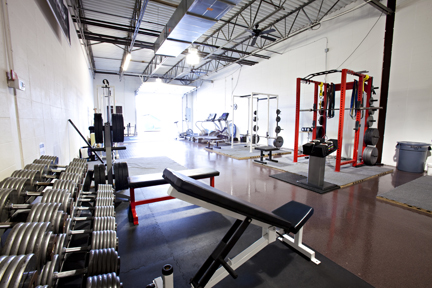
Indianapolis Fitness and Sports Training

Indianapolis Fitness and Sports Training

KN: A thorough assessment really helps with both tracking a client’s results, as well as individualizing their programs. Can you talk about the importance of program individualization, both from “corrective” and goal standpoints?

MR: Absolutely!

The assessment is the cornerstone of our process. Without an assessment, I really don’t know how you write a program because you’re just guessing as to how a client moves, feels, etc.

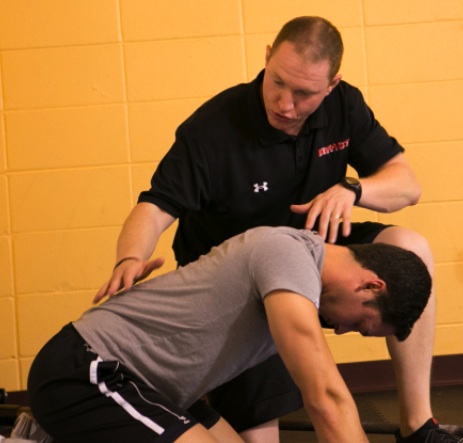
Mike Robertson

So we use the assessment as a two-part process:

  1. To find out more about the client/athlete, including their specific training goals, and
  2. To determine what their weaknesses and/or limitations are, so that we can address that in their programming. In reality, this is what truly “corrective” exercise really is – determining and eradicating weaknesses/limitations, whatever they may be.

From there, it’s pretty simple – you develop a program that merges what you know they need, with what they want to get out of training.

KN: A lot of people tend to focus on the “stimulus” components of the training process and largely overlook the “recovery” components. How do you approach coaching recovery with your clients, and what are some things you think the majority of people are missing?

MR: I think just opening up the “recovery” conversation is a huge step forward in the athlete-coach relationship.

We start off with simple questions initially:

  1. How are you feeling today?
  2. How did you feel after the last workout?
  3. How’d you sleep last night?

In the beginning, it’s all about opening up the door to that conversation, and getting them thinking about recovery.

After you’ve started to lay that foundation, then you can get deeper into it, given the client is on board.

This could be tools such as tracking heart rate variability or resting heart rate. It could be something that you as a coach do, like a quick 2-3 questionnaire prior to their training on how motivated they are to train, how much they slept, quality of sleep, etc.

The bottom line is, this is the next step in the process. We’ve talked ad nauseum about training and nutrition, but recovery is the third pillar and we need to put more of a focus on it, especially in today’s society.

KN: You recently released your “The Bulletproof Athlete Project”, and I was fortunate to grab a copy of it right away. After reviewing it, I’ve been really impressed with how well you’ve been able to integrate all of the things you just discussed (individualizing correctives, effective programming for folks with different training goals, simple but extremely effective recovery strategies, etc.) into one cohesive package. For those that haven’t seen it, can you give a sneak peak into how it’s laid out, and how may benefit from it?

Mike Robertson's Bulletproof Athlete Project

Click here to save $50 this week only! >> Bulletproof Athlete Project

MR: Thanks Kevin. I think it’s pretty awesome, too, but I’m a little biased!

Here are a few goals I had when I created the product:

  1. To use a program that could be modified based on needs, goals, time available to train, etc.
  2. To focus not only on training, but nutrition and recovery,
  3. To develop a training foundation that users could build from going forward, and
  4. To develop a training program that was fun.

Now let’s go through each of those individually.

I laid out the first program, and quickly realized it wasn’t perfect (and definitely not for everyone). So what I did from that point was use that as a skeleton, and then created a shorter version for busy clients/athletes, and a longer version for people who had the time and energy to get full-on beastmode.

My next goal was to merge training, nutrition and recovery. Let’s be honest, training programs are a dime a dozen these days. But I can’t think of one single program out there that gives you a program, and teaches you how to eat more nutritiously and helps you improve recovery to boot.

Another key to the program was giving people a training foundation they can build from going forward. If you’re anything like me, you probably just jumped right into training with no real movement foundation. Couple that with little or no coaching, and it’s no wonder we have so many beat up clients in our gyms.

This program will break you down to build you up. It will give you the movement foundation you need to be successful going forward.

Last but not least, I hate my own training when it’s boring or monotonous. I grew up an athlete, playing every sport known to man. So when I go in the gym and train like an athlete, it’s just a heckuva lot more fun than any other type of training I can imagine.

So there was a ton of thought that went into all this, and I think it shows as BPA is a really creative and unique product.

KN: Mike, thanks again for taking the time to do this. I’ve learned a lot from you over the years, so it’s always great to get your perspective! Where can people learn more about you, IFAST, and The Bulletproof Athlete Project?

MR: Thanks a ton for having me Kevin. I’ve learned a thing or two from you as well, so don’t act so damn humble!

You can find out more about myself at RobertsonTrainingSystems.com, and more about IFAST at IFASTonline.com.

And if you’d like to learn more about the Bulletproof Athlete Project, please check it out ASAP as it’s on sale for $50 off this week only!

Mike Robertson's Bulletproof Athlete Project

Click here to save $50 this week only! >> Bulletproof Athlete Project

To your success,

Kevin Neeld
UltimateHockeyTraining.com

Please enter your first name and email below to sign up for my FREE Athletic Development and Hockey Training Newsletter!