Interval training has been a hot topic for the last several years, especially as the infamous “Tabata” protocol has reached the masses. The reality is that, just like every other piece of the training process, your conditioning should be specific to your needs. As a general statement, we’ve probably gone too far in the direction of “just do high intensity intervals”, overlooking the other methods that are more effective in certain situations.
“I don’t want to train insane. I want to train smart.” – Joel Jamieson
In this FINAL video, Mike asks Eric Oetter to dissect all the basics of conditioning. As always, it’s not just about working hard, it’s about working smart. Eric will show you how in this video, which includes:
The lies you’ve been told about long, slow duration exercise – and why it’s actually very beneficial.
Why high-intensity energy system training should only be done at certain times of the year.
How smart energy system training can improve your sleep, help you relax, and feel more awesome each and every day.
If you watched the previous two videos in this series, you’ve picked up some amazing information on how to develop mobility, strength, and power. This may be the best of them all. In any game, and maybe more importantly, in any season, the athletes and teams that are able to perform at a high level consistently are the ones that are the most successful. A strategic plan to conditioning is the key to consistent high-level performance. Check out the video at the link below; you’ll be happy you did!
P.S. – This is your last chance to get all of Mike’s FREE videos. Click here to start improving your mobility, strength and conditioning NOW >>> 3 FREE Videos to Becoming a Bulletproof Athlete!
Please enter your first name and email below to sign up for my FREE Athletic Development and Hockey Training Newsletter!
The Truth About Strength and Power Training
There’s no denying the importance of developing strength and power for optimal sports performance. In fact, strength and power really create the foundation for speed, which is one of the key qualities that determines whether an athlete will be successful at any given level. Unfortunately, most training programs leave a lot to be desired and may be missing a few key ingredients that are preventing you from making the progress you’re after.
Fortunately, Mike Robertson is back with another webinar to fill you in on some of the training secrets to help you develop the strength and power that will distinguish you in your sport!
How fighting your body to get stronger is actually making you weaker and more prone to injury.
Why a poor training foundation has robbed you of strength and power – along with ways to fix it quickly!
Exercise progressions and regressions to make sure you’re using the right exercises for you.
Why everyone should be training power – whether you’re 18 or 85.
This guy knows a thing or two about strength training!
In addition to hundreds of high school and college athletes in a wide range of sports, Mike has successfully trained powerlifters and Olympians, the two extremes of strength and power. If you want to take your strength and power to new levels, this is a must-watch video! As with his video on mobility, this one is 100% FREE, but will only be around for a couple days. Don’t miss it!
Please enter your first name and email below to sign up for my FREE Athletic Development and Hockey Training Newsletter!
Mobility Training for Improved Performance
Last week I got an email that Mike Robertson, co-owner of Indianapolis Fitness and Sports Training (IFAST) with Bill Hartman and one of my go-to resources for new training information for the last 7 years, was releasing three free videos in anticipation of the release of his new program “The Bulletproof Athlete Project” (more on that to come soon). I’m a junkie for new information and when it’s 100% FREE, it’s that much better. Mike is an expert in mobility training, which is an important piece of EVERY training program we write for athletes and non-athletes alike.
The three BEST methods for improving mobility from head to toe.
A definition of what mobility really is (as well as what it isn’t!)
Why mobility and stability are critical components of smart training, and why you need both do dominate in the gym or on the field.
How improving mobility can help you get rid of aches and pains in your knees, back and shoulders.
And most importantly how mobility training can help take your performance to the next level – whether that’s running fast, jumping high, or lifting heavy things for fun, Mike can help you out.
Unfortunately this video will only be up for the next couple of days.This is an amazing opportunity to learn from one of the world’s best for absolutely FREE. Take advantage of it! Check out the video at the link below!
Please enter your first name and email below to sign up for my FREE Athletic Development and Hockey Training Newsletter!
The Best Core Exercise Ever?
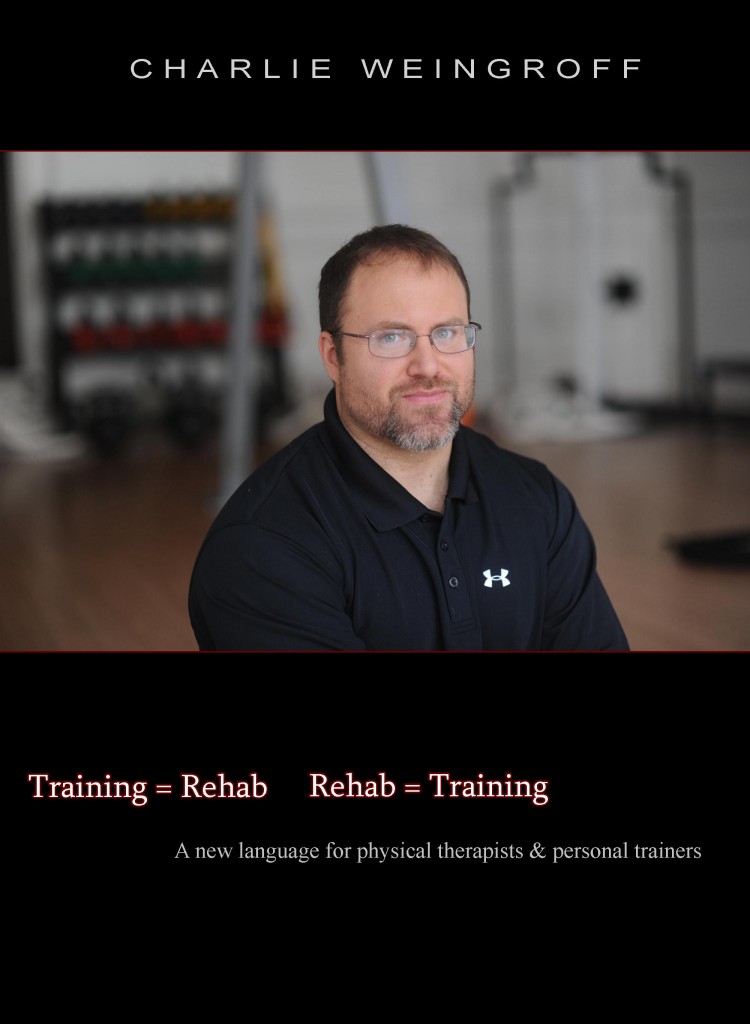
Over the last few years I’ve been fortunate to have had opportunities to attend a couple courses from the Prague School of Rehabilitation on “DNS” or Dynamic Neuromuscular Stabilization. If you’re not familiar, DNS uses developmental kinesiology (how the motor cortex of babies develops and how this is expressed in the development of their movement patterns) as a model for viewing human movement. While much of the application of these principles, in my opinion, is better relegated for rehabilitation purposes (and often with special populations), there are many key concepts that are important in the strength and conditioning/athletic development process. Charlie Weingroff has done an outstanding job in describing how many DNS concepts apply to the S&C professionals in his DVDs Training = Rehab, Rehab = Training. You can check out a couple previous posts reviewing the DVDs here:
Among the many applicable concepts, DNS breaks down patterns into ipsilateral/turning or contralateral/crawling distinctions, which can essentially be used as buckets to describe every movement, and discusses muscle roles as being “phasic” (think movement) or “tonic” (think support or postural), depending on the task at hand. Utilizing these concepts, I modified a couple common exercises and developed a highly integrated core exercise. As a quick disclaimer, it’s possible (read: likely) that someone else has already done this exercise, so I’m in no way taking credit for its “invention”, but it was a new idea for me!
Eric Tangradi performing the Short Side Plank w/ Kettlebell Screwdriver
There is a lot going on with this exercise, but a few of the highlights:
Utilizes a modified mid-position from the ipsilateral turning position described by DNS (and demonstrated by every healthy baby)
Tonic scap stability work through the bottom shoulder and phasic scap/rotator cuff work through the top shoulder
Lateral hip and core (e.g. lateral subsystem as described by Thomas Myers, among others) work on the bottom side
A component of thoracic rotation, which can often become restricted and performance-limiting in hockey players
Give that baby a kettlebell
This exercise can also be performed with the top knee off the ground, which would add a greater element of external rotation at that hip, but potentially limit the thoracic rotation component. In Ultimate Hockey Training, I provide exercise progressions and lateral substitutions for a number of different subsections of “core training”, including Lateral Hip, Lateral Core, Scap Musculature, and the Rotator Cuff. I like this exercise because it integrates all of these aspects of core training into one exercise, which can save time, but ultimately is a more functional option.
If you’re ready to progress on from traditional side planks and ready for a challenge, give this one a shot. As always, if you have any questions feel free to post them below!
P.S. If you like this exercise, I posted two of my other new favorite core exercises over at Hockey Strength and Conditioning to accompany the dozens of innovative exercise videos that have already been posted there! Not to mention all the articles, programs, and hockey-specific forum threads!
Please enter your first name and email below to sign up for my FREE Athletic Development and Hockey Training Newsletter!
Developing Explosive Power
Emily and I just got back from an awesome road trip out west, where we spent Canada Day in Vancouver, drove down to Seattle, out to Cannon Beach, and then over to Portland. I left my laptop charger at home, which was a blessing in disguise! It was great to get away for 8 days and recharge a bit.
Right before we left, I wrote a post digging into the “Bilateral Deficit” idea a bit, and explaining some of the discrepancies we see between unilateral and bilateral lifts and how they may or may not be explained through a neural lens. This has a lot of application into how we design programs on a daily basis, so if you missed it be sure to check it out here: Understanding the Bilateral Deficit
One of the training goals a lot of players have for their off-season training is to improve their explosive power and speed. I hear words like “quicker first step” a lot. As I’ve mentioned in the past, there is A LOT of considerations in how to improve an on-ice ability such as acceleration, speed, or shooting power. From an off-ice perspective, understanding the underlying energy systems and physical qualities (e.g. strength, mobility, stability, etc.) that enable a player to develop or express a certain skill is important. We’re at a point in our off-season programs where many players have completed a couple of phases of strength work and are transitioning more into power training at various points on the high load/low velocity (think heavy hang cleans) to low load/high velocity spectrum (think med ball throws).
One method that can be effective in maintaining or continuing to improve maximum strength while also developing power is known as “contrast” training, where a heavy strength exercise is paired with a movement-specific power exercise. There are several examples of this, including:
Squat -> Vertical Jump
Deadlift -> Broad Jump
Bench Press -> Explosive Push-Up or Med Ball Chest Pass
Another application of this concept is known as “French Contrast Training”, which is a method I first learned about from University of Minnesota Strength & Conditioning Coach Cal Dietz. With this method, you pair 4 exercises, all performed continuously, followed by a 3-5 minute break. The exercises should be performed in this order:
Compound Exercise: 1-3 reps at 80-90% load
Plyometric: 3-5 reps
Weighted Explosive Exercise: 3-5 reps
Accelerated/Unloaded Plyometric: 4-6 reps
We’re currently using a few variations of this method in some of our players’ programs:
Lower Body French Contrast Circuit
DB Reverse Lunge (Day 1), DB RFE Split Squat (Day 2): 2-3/side
Lateral Bound (Continuous): 3/side
Vertimax Jump (Continuous): 5x
Unloaded Squat Jump: 5x
A video from a couple Summers ago of hometown hero Johnny Gaudreau doing Unloaded Squat Jumps
Apparently this exercise also gives you silky mitts!
And just for the USA Hockey fans out there…
Upper Body French Contrast Circuit
Bench Press: 2-3
Explosive Push-Up: 5x
DB Push Press: 5x
Unloaded Explosive Push-Up: 5x
Unloaded Explosive Push-Ups being demonstrated by future Maine Black Bear Andrew Tegeler
This is only one piece of the power development puzzle, but the players that have started this type of training have enjoyed the focus on being explosive and the variety in exercise selection. While I would never recommend doing something stupid in the interest of appeasing your clientele, finding effective exercises/methods that the athletes also enjoy is ideal. In this case, the unloaded exercises are a blast for the players, and they also help improve power and contraction velocity, all good stuff if the goal is to improve quickness, speed, shooting power, etc.
In a couple days, I’m going to post a video of one of my new favorite integrative core exercises, so be sure to check back soon!
P.S. The Ultimate Hockey Training Database will be updated soon with even MORE videos. If you’re interested in getting access to over 800+ videos of hockey training exercises, check out Ultimate Hockey Training for more information on becoming an Insider.
Please enter your first name and email below to sign up for my FREE Athletic Development and Hockey Training Newsletter!