Last week I read a great article from Mike Boyle that I wanted to share with you. While the article is largely oriented to how he became one of the best coaches in strength and conditioning, the theme of this article could be applied to any endeavor (e.g. becoming a great strength coach, becoming a great hockey player, becoming a great employee/manager/boss, etc.)

Check it out:

“It must be New Years resolutions and goal setting time because recently I have received more than a few Facebook messages asking how I got started. Rather than half-ass a quick post I thought I would take a moment to tell a story that might inspire a few of you. I have been lifting weights since around 1973 or 74. Like many my age I started with the York 110 pound set with the wall chart in the basement. My father was a teacher-coach and Hall of Fame football player in college and I was going to be just like him.

To cut to the chase my football career was ended by two serious problems that afflict far too many athletes. Lack of size and lack of talent were two things I just couldn’t overcome. What I did learn was that I had some fast twitch muscle fiber and liked lifting. Lifting kept me sane after giving up football and I pursued athletic training in college. In true Outliers fashion I was lucky enough to have a dorm director named Mike Woicek my first two years of college Mike, for those who don’t know, is the current New England Patriots strength and conditioning coach and the man with the most Super Bowl rings in the history of the NFL. What luck. Another guy at Springfield College at that time was Rusty Jones, current Chicago Bears strength and conditioning coach. Very early on I had great mentors and role models.

I left Springfield College after five years with a Masters degree and took a job at Boston University as an assistant athletic trainer. In the back of my mind, I knew I wanted to be a strength coach. It was 1982 and I was about 185 lbs, soaking wet. I didn’t look like a strength coach and still don’t. After six months of athletic training I took the plunge. I quit my full time, paid job as an athletic trainer and became the volunteer strength coach.  I gave up a salary and benefits for a volunteer job and started my journey. Very few schools even had full-time strength and conditioning coaches at the time. I tended bar 4-5 nights a week to pay the bills and threw myself into the job.

I was a former football player and a competitive powerlifter but I became a “hockey expert” at the urging of the hockey coaches at BU. For those unfamiliar BU is to college hockey what Notre Dame or USC is to college football. I figured hockey out and also figured out that there was no one training professional hockey players in Boston. I had found my niche. I met a hockey agent and talked him into sending me a few minor league clients. I told him no NHL guys. I needed desperate guys that would listen to a “football guy” tell them how to make it to the NHL.  I also started training some high school hockey players because, in truth, I needed the money. That may have been the smartest thing I ever did.

To make a long story shorter, some of my new minor league clients did make the NHL and the Boston Bruins offered me a part time job as their strength and conditioning coach. With a little money from BU and some from the Bruins, I gave up the bar business and was now a full time strength and conditioning coach with two jobs. I worked from 8:30 AM to 11:30 AM with the Bruins and then drove to BU and opened up the weight room at 12. I coached every day at BU from 12-7 with some 6 AM football stuff thrown in during the winter before Bruins practice. I would then either go to a BU game or go back to the old Boston Garden at 7 PM and train the injured players or those who didn’t dress. After the game I would try to coerce a few players to work out. I’d get home about 11 PM. Not a bad day for an eight month season.

At the roughly the same time I began my speaking career by accepting the invitation to speak at everything but the opening of an envelope. Most of my “speaking engagements” were to middle school hockey players in groups of 10-12. Obviously an audience that foreshadowed things to come. Chris Poirier and Perform Better gave me a break when they began their Perform Better clinics. I was one of the first speakers and like any good job, I never left.

I did this for 10 seasons and at the same time found time to leave my full time job at BU and open Mike Boyle Strength and Conditioning. We were one of the first for-profit centers opened in the country. As Alwyn and Jason so aptly described in their article The Business, I was rapidly becoming an overnight success one twelve hour day at a time.

The rest is simple. I just kept doing what I was doing. I worked in my business. I put in my 10,000 hours. I coached athletes and I coached coaches. I think the big key is that I took chances and was willing to work long hours. It was not easy. Except for my brief athletic training job at BU ( six months) I did not have a full time job with health insurance until I was thirty years old. I read this quote in a book the other day.

“Most people give up right before the big break comes”

Don’t let that person be you. Keep moving forward. Remember, the big break might be around the corner.”

To your success,

Kevin Neeld

P.S. Mike Boyle’s best project ever? http://tiny.cc/fkr0h

Please enter your first name and email below to sign up for my FREE Athletic Development and Hockey Training Newsletter!

As you know, improving an athlete’s core stability can go a long way in both preventing injury and improving performance. While it’s necessary to first teach and reinforce this skill set under rested conditions, ultimately the athlete must be able to generate this stability under fatigued conditions. About a year ago, I started integrating basic core stabilization exercises (e.g. front plank) with interval training.

For example, one of our athletes may have 8 x 20s (work)/40s (rest) shuttle runs, and after the 1st, 3rd, 5th, and 7th shuttle run I’d have them perform a 20s front plank. The idea is to ensure that the athlete can maintain proper alignment and stability despite the looming fatigue. Having them perform the core exercise after every other interval ensures that we aren’t negating true rest periods between work efforts.

Fatigue: 1. Core Stability: 0.

During one of our coaches meetings at Endeavor last week, my co-worker Karl brought this article to my attention: Core stabilization exercises enhance lactate clearance following high-intensity exercise

Interestingly, the article found that performing a core stabilization exercise following a maximal effort 30s anaerobic bout (Wingate test) significantly reduced blood lactate levels. The authors stated that this was likely due to an increased in blood flow and/or an uptake of the lactate by the abdominal muscles. This raises the question as to whether performing these core stabilization exercises in between intervals as we’ve done at Endeavor will have a similar effect.

In my opinion, determining whether or not a strategy like this would be effect in between intervals (or bouts of intervals) is more meaningful than determining whether it lowers blood lactate following activity. It’s well established that over 95% of blood lactate is cleared from the blood within a few hours of activity. To an extent, this knowledge undermines all of the “lactic acid” clearing practices so common in sports today. I say “to an extent” because it’s possible that other metabolic byproducts are NOT cleared at such a rate, and lactate clearing strategies may be effective in dissipating those byproducts. In other words, the strategies work; lactate is just the wrong physiological marker to observe.

With that said, finding a way to clear metabolic waste on a shorter time scale may allow our athletes to train harder during their sessions. If nothing else, this may provide another argument for pairing exercises (even in the form of intervals and core training) to get more bang for your buck out of your rest intervals. Just some food for thought to get the week started!

On a completely unrelated note, I spent a lot of time over the last few days going through Sean Skahan‘s website, and came across a post that I really liked on how to find time for all your continuing education needs (and still have a life). It’s a great read if you, like me, struggle to find time for everything you want to do. You can check it out here: Where Do You Find the Time?

To your success,

Kevin Neeld

Please enter your first name and email below to sign up for my FREE Athletic Development and Hockey Training Newsletter!

Before we jump into what’s been going on at Hockey Strength and Conditioning, I just wanted to remind you to check out my last post for some great gift ideas for the hockey enthusiasts in your life: Hockey Development Present Ideas

Sean Skahan got things rolling this week with a sample program he used to help a player come back from a low back injury. As I’ve mentioned in the past, I’m always interested in the way other successful coaches write programs because it provides incredible insight into their overall training philosophies. Sean did a good job of providing a few “qualifiers” to his program in the text. In the internet age where people are critiquing programs without a clue of the context in which they’re delivered, I think the extra information is beneficial in that it gives you a bit of background information on what led up to it. You can check out his article here:

Click Here >> Lower Back Reconditioning Phase 5 from Sean Skahan

I also added an article/video combo. A trend that I’m commonly seeing in our baseball and hockey players at Endeavor is that many players have a difficult time retracting and depressing their scapulae (shoulder blades) during pulling movements. Even more disconcerting is when these athletes fail to maintain this scapular position during pressing movements. The video in the article is an excerpt from one of our Endeavor staff meetings where I walk our staff through what the possible causes of this are and what can be to alleviate it. The article adds some valuable information as to the implications of this movement dysfunction and how to “prescribe” and monitor a stretching protocol. Check it out at the link below:

Click Here >> Preventing Shoulder Injuries II: Pec Minor Assessment and Stretching from me

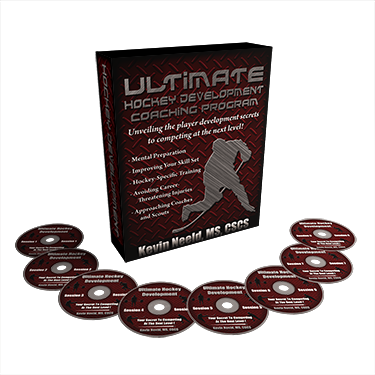
On Wednesday I mentioned that I’d hook you up with a copy of my Ultimate Hockey Development Coaching Program if you signed up for a 1-year membership to Hockey Strength and Conditioning. In keeping with the holiday spirit, I’ll extend that offer through the new year. A membership to Hockey Strength and Conditioning is an incredible value in itself, but I always like getting free stuff (I assume you do too?).

You can listen to the 14 Coaching Calls with some of the hockey development industry’s top experts on your drive in and out of work or while you shovel! Just send me an email after you’ve registered with your name and login id and I’ll shoot you over a download link after I confirm.

Click the link below for more information about Hockey Strength and Conditioning! See you on the inside!

To your continued success,

Kevin Neeld

P.S. Remember, it’s only $1 to try for the first week. You will never find more hockey training content anywhere for $1…trust me (I’ve looked!).

Please enter your first name and email below to sign up for my FREE hockey training newsletter!

I remember the anxious anticipation I used to feel leading up to Christmas when I was younger. The holidays have come to take on a different meaning as I’ve gotten older, but then, it was all about getting new hockey stuff. Whether it was new gloves, new pants, a new jersey, or new rollerblades, I almost always strictly wanted something that would help make me a better player or replace old gear that I had bought myself. Somewhere I have a picture of me as a little porker, fully clothed, wearing my new hockey pants and flexing (a hockey strength and conditioning coach in the making); if I can dig it up I’ll throw it up on here.

Santa’s shooting technique is eerily resemblant of Mark Messier’s

One of the things I love so much about the hockey community is how passionate everyone involved is. I’ve found that, as much or more than any other sport, hockey players, parents, and coaches are always looking for ways to get better. This, in combination with the rapid growth of the sport over the last decade, has done wonders in improving the quality of the game at all levels.

With the Holiday Season upon us, you may be in a rush to finish up your shopping for the hockey enthusiasts in your life. With that in mind, here are a couple recommendations:

For the Players:

Because my focus has been primarily on the training side of things over the last few years, I don’t talk very much about skill development. Many are surprised to know that this is actually where a lot of my background originated-running on-ice power skating and puckhandling clinics. One of the most overlooked aspects of hockey training is how much improvement a player can make in his/her hands from spending some time handling a puck or ball and taking a few hundred QUALITY shots everyday. The key is to find the right equipment to do so. I’ve been really impressed with what HockeyShot has to offer. Go to the link below and check out the “Top 12 Must-Haves” under the Hot Gifts tab on the left. A good net and shooting board allow you to bring the feel of a rink anywhere you want. I also recommend picking up one of the stickhandling balls in the Stocking Stuffers section.

Click Here >> HockeyShot: Your #1 Source for Hockey Training Aids!

The thing that most consistently limits a player’s performance is how they fuel themselves. From talking to hundreds of players over the last several years, hockey players aren’t able to consistently identify any “good” foods except for chicken. Essentially, the idea of pre-, during-, and post-training/competition meals are completely lost on them. Generation UCAN has a simple, and extremely effective solution to this problem. Their SuperStarch drinks are perfect for pre- and during- training, practices, and games, and their SuperStarch/Protein drinks are prefer for afterward. I highly recommend picking up a case of each. They have a special deal right now offering 25% off all their products, but only through the link below.

Click Here >> Generation UCAN Sports Drinks

For Parents and Coaches

There are countless products out there that may appeal to you, many of which I’ve talked about in the past. Having said that, I still think the #1 thing every parent and coach should do is watch Mike Boyle’s presentation from USA Hockey’s ADM conference. It won’t cost you a dime, and will have a profound impact on what you do with your sons/daughters/players. The general feedback I’ve gotten from parents that have watched it so far is “I can’t believe how wrong of an approach I’ve taken.” This presentation address things ranging from whether or not players need to play in “prospect camps” (which many parents push their kids to play in for fear of not getting “noticed”) to what players should be doing from a training standpoint to give themselves the best chance of success (not what most coaches have their youth teams doing). You can watch the entire presentation for free here:

>> The Truth About Developing Elite Level Hockey Players <<

Strength Coaches, Trainers, and Sports Medicine Professionals

One thing I’ve noticed over the last year is that it’s easy to get busy and let continuing education stuff slip under the radar. Many strength and conditioning coaches work in excess of 10 hour days on a regular basis. In an effort to keep up with current trends in hockey training, it’s important that continuing education isn’t ignored. In an effort to maintain some semblance of a social life, it’s important that you only look to the best resources for this information. In this regard, HockeyStrengthandConditioning.com is the top resource for hockey training information on the internet. The diversity of the contributors allows for great information on new exercises and training progressions, injury prevention and rehabilitation techniques, coaching cues, nutrition and supplementation, and more. Even better, the contributors aren’t “internet gurus”; they all have real-world experience developing hockey players (many at the NCAA D1, Major Junior, Olympic, and Professional Levels)! A year-membership makes a perfect gift!

Click Here >> Hockey Strength and Conditioning


As an added bonus (and incentive), if you sign up for a 1-year membership by tonight at midnight (12/15), I’ll throw in my Ultimate Hockey Development Coaching Program as a free gift. You can listen to the 14 Coaching Calls with some of the hockey development industry’s top experts on your drive in and out of work or while you shovel! Just send me an email after you’ve registered with your name and login id and I’ll shoot you over a download link after I confirm.

That’s a wrap for today. If you have any questions about the things I’ve mentioned here, feel free to post a comment below and I’ll get back to you.

To your success,

Kevin Neeld

P.S. Forward this along to your friends, family, teammates, and coaches…and hurry, shopping time is running out!

Please enter your first name and email below to sign up for my FREE Athletic Development and Hockey Training Newsletter!

I’m exceptionally fortunate to have access to a wide variety of training equipment at Endeavor. Our facility is basically like training facility playground. With few exceptions, anything that resides in the Perform Better catalog that I think will allow us to get better results with our athletes, we have. One piece of equipment that I didn’t have much experience with before coming to Endeavor is the Vertimax platform.


Because ice hockey is primarily a horizontal-based sport, my initial thought was that I wouldn’t have much utility for the two Vertimax platforms that Endeavor was equipped with. I was wrong. We use the Vertimax a lot with our hockey players. I put together a short video on how we integrate the Vertimax into our hockey training programs for the Vertimax company. You can check it out below:

To your success,

Kevin Neeld

Please enter your first name and email below to sign up for my FREE Athletic Development and Hockey Training Newsletter!