Today’s Thursday Throwback is one of my most popular posts ever. This post gained traction quickly as it discusses the largest underlying factor in why so many athletes and lifters alike get shoulder pain while benching and doing other pressing exercises.

Since this post was first published over 3 years ago, I’ve continued to emphasize the importance of having some sort of screen to pre-qualify yourself (or your athletes) for specific exercises, and the necessity of having a system to make program changes if a specific exercise is not a good fit for an athlete. This is the system I use at Endeavor: Optimizing Movement

Enjoy the post and if you know anyone that has experienced shoulder pain while benching or doing push-ups, please share this with them!

Shoulder Pain with Pressing Exercises

Last week I got an email from my step sister saying that she’s been getting shoulder pain during bench pressing and dumbbell raising exercises. I had a similar conversation with a hockey parent a week before about one of his son’s teammates. In both cases, it’d be impossible for me to say with 100% confidence that I know exactly why they’re in pain and what they can do to fix it. As you know, non-traumatic pain tends to be multi-factorial and necessitates considerations to static and dynamic postures. In other words, how we hold ourselves throughout the day and how we move plays a large role in soft-tissue overload.

With that said, I’d bet my car (an estimated value of $137), that in both of these cases, the bench press is performed with a similar fault – the elbows are out too wide. Let’s walk through this:
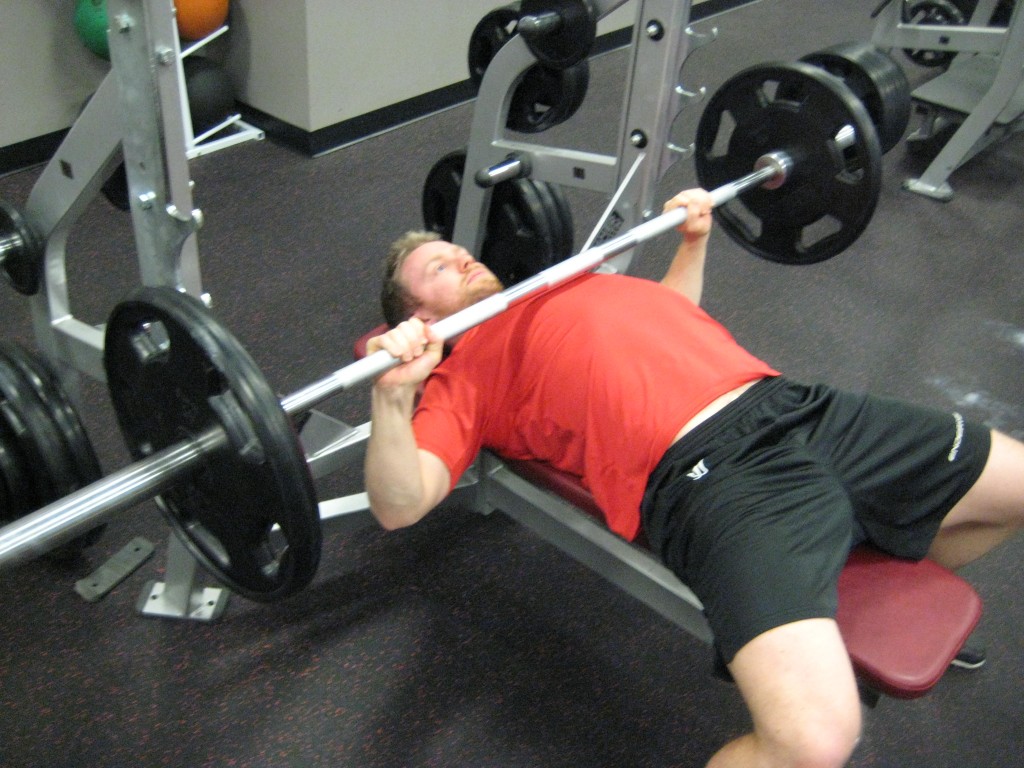
It’s somewhat hard to tell from this picture, but my elbows are approaching 90 degrees off my side. In other words, my upper arm and the side of my rib cage form about a 90 degree angle. This puts a tremendous amount of stress on the anterior shoulder capsule at the bottom of the lift. It also increases the risk of having the glenohumeral head impinging on the structures superior to it.
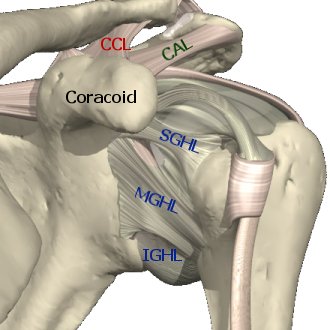
Ligaments of the shoulder

The picture above illustrates the ligaments of the shoulder. As you approach the bottom of a bench press with your elbows flared out, it tends to put excessive stretch on the IGHL and MGHL ligaments displayed above and increases the chances of impinging the ligaments and tendons between the acromion and glenohumeral head (long head of biceps brachii tendon and subacromial bursa are two notables).

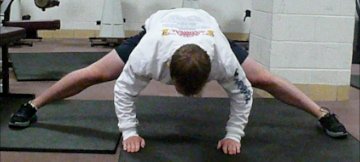
The same is true for push-ups, although there tend to be some other differences between bench pressing and doing push-ups. For instance, push-ups allow free movement of the scapulae, allowing the shoulder a bit more freedom than during bench pressing, which may delay the onset of pain from resulting from the elbows being out too wide. Of course, because your body isn’t supported by a bench during a push-up, it also means more freedom of movement for other joints; as a result, it’s common to see people with sagging hips, excessively arching backs and protruding chins (or what I call “bird neck syndrome” or BNS).
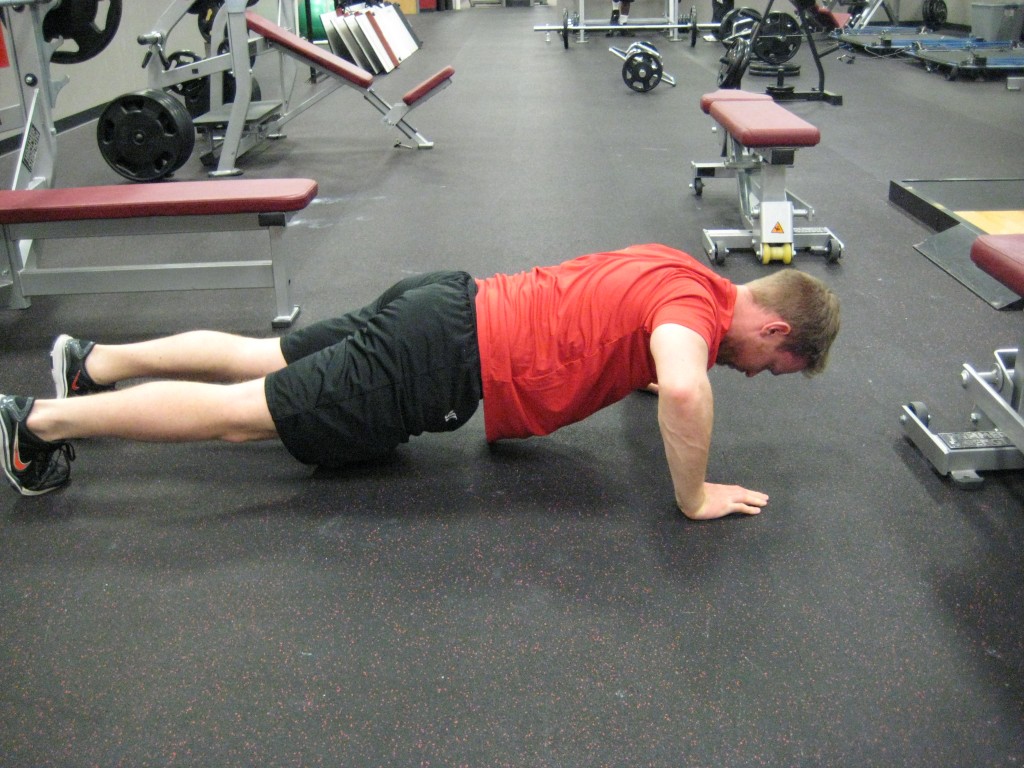
Brutal Push-Up…but decent display of BNS

In both exercises, the goal is to keep the elbows within 45 degrees off the side of the body and to retract the scapulae (squeeze the shoulder blades back and down) as you go down. Because the scapulae aren’t free to move during a bench press, it’s important to set up on the bench with your scapulae in the correct position, packed back and down, and to keep them there throughout the movement.
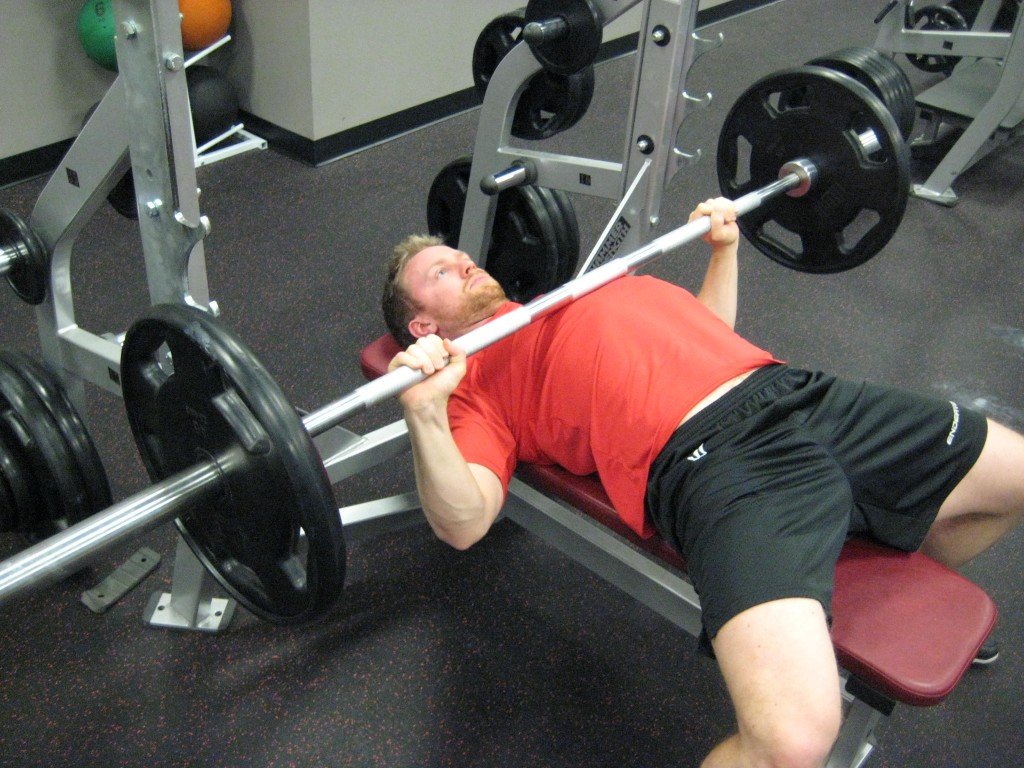
Bench Press with correct positioning

With push-ups, the shoulder blades aren’t wedged between your rib cage and the bench so they can move freely. When going down in a push-up, think of pulling your chest down to the floor and pulling your shoulder blades back and down along the way.
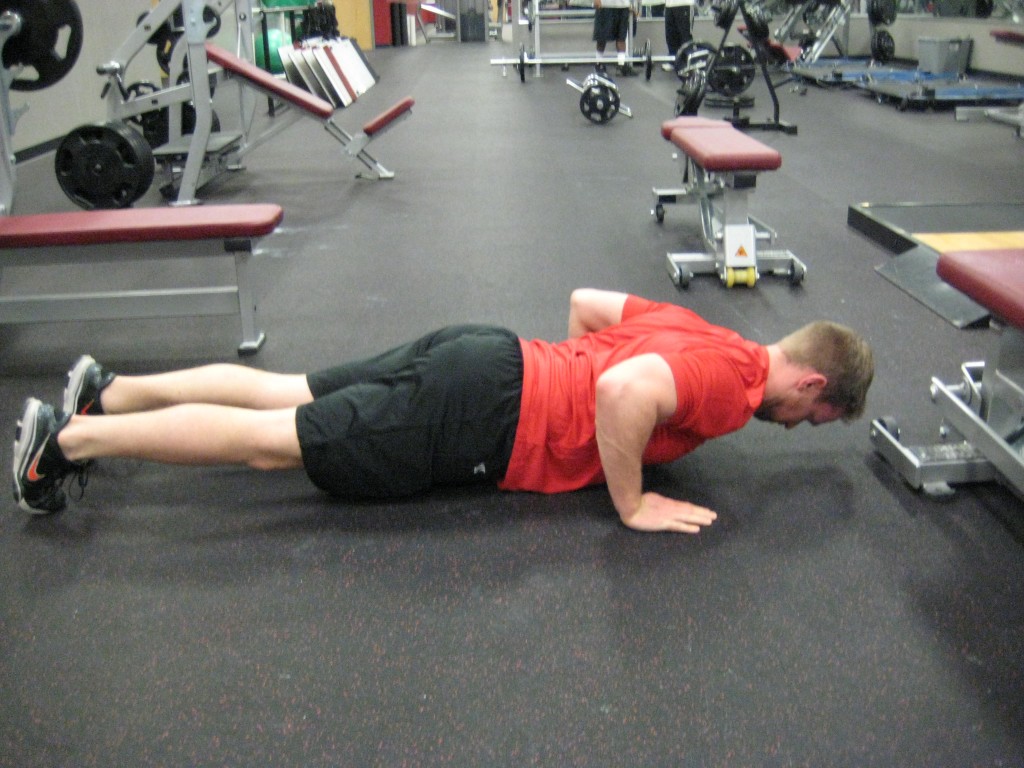
Push-Up with proper technique. Notice how the hands are beneath the shoulders, the elbows are within 45 degrees of the sides of the body and the chin is tucked back.

If you already have shoulder pain, it may be best to back off the pressing exercises for a week or two and focus more on rowing exercises, emphasizing pulling the shoulder blades back and down as you pull the weight toward your chest. If it’s not that bad, the floor press is a great exercise to reteach a proper pressing pattern while limiting the stress on the shoulder because of the decrease in range of motion.
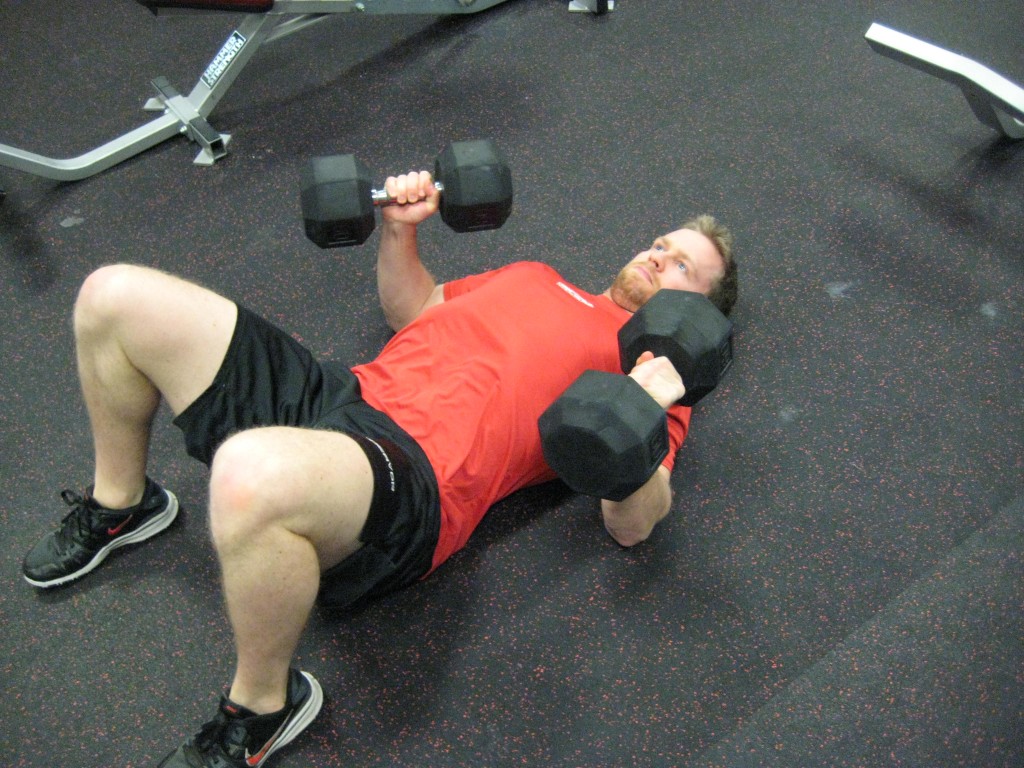
Dumbbell Floor Press

With regards to push-ups, I think most of the problem comes from people assuming they can do push-ups on the ground right away. This stems back to an interesting paradox in youth training, where there is still the perception that lifting weights is dangerous but people are free to do as many push-ups as they want. In reality, I’ve come across very few athletes 14 and under that can do a single push-up the correct way on the floor. As with any exercise, it’s important to progress the loading as the individual develops the strength to perform it correctly. In this case, the overwhelming majority of people need to start performing push-ups on an inclined surface and focus on proper body positioning and proper movement (e.g. moving as a unit connected from ears to ankles, descending so that the lower chest is the first region to touch the ground or raised implement and keeping the elbows within 45 degrees of the side). As people progress in strength, you simply lower the implement closer and closer to the ground.

At Endeavor, we use the safety bars in our squat racks to accomplish this. This way it’s easy for us to objectively assess progress as each level is numbered. As the athlete gets stronger, they approach higher and higher numbers as the bar lowers closer to the ground.
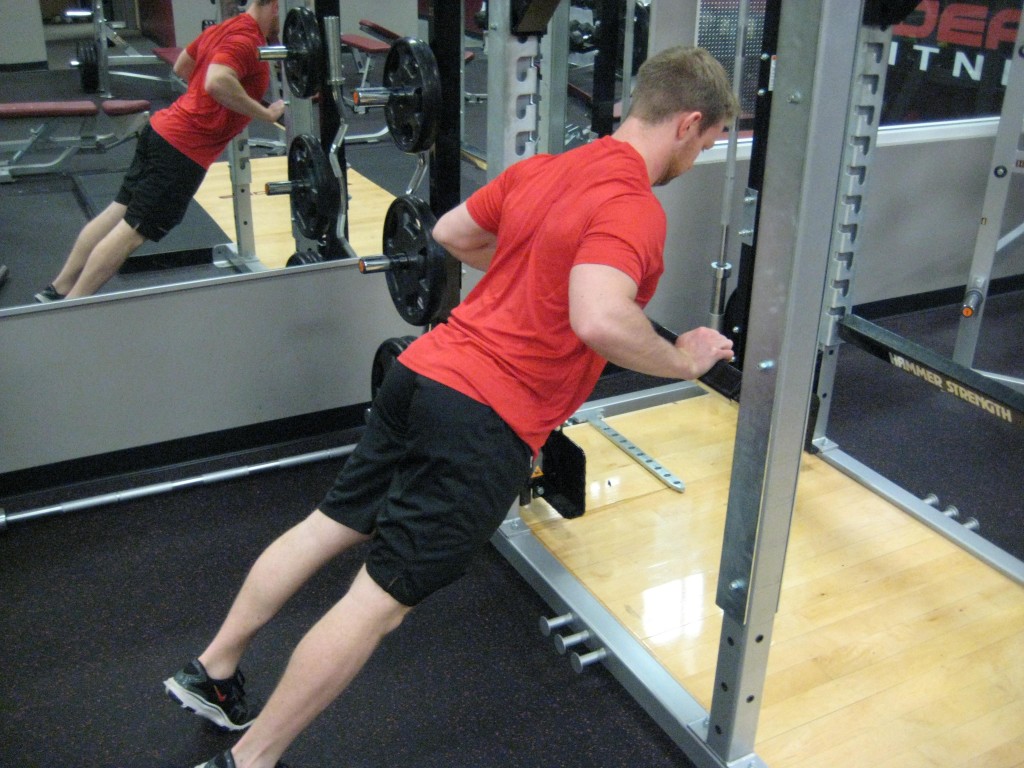
 

Incline Push-Up


In a team off-ice training setting (especially with younger teams), this can be tough. In these situations, I’m more apt to use our jump boxes, which are set at heights of 24, 18, and 12 inches. Using these, I can start everyone at the top box and progress them lower on an individual basis as they demonstrate sufficient strength. If someone mastered the 18″ box, but isn’t quite ready for the 12″, you can just lengthen the negative or “going down” phase of every rep to make it a bit tougher.

Pressing movements are an essential part of any person’s training program. Unfortunately, they’re also one of the most common causes of upper body pain. Making the simple corrections discussed above will help make you stronger than ever, while keeping you pain free!

To your success,

Kevin Neeld
OptimizingMovement.com
UltimateHockeyTraining.com
HockeyTransformation.com

Please enter your first name and email below to sign up for my FREE Performance Training Newsletter!

Get Optimizing Movement Now!

“…one of the best DVDs I’ve ever watched”
“A must for anyone interested in coaching and performance!”

Optimizing Movement DVD Package

Click here for more information >> Optimizing Movement

Using heart rate and heart rate variability to both track and govern physiological responses to training is a hot topic right now. While heart rate monitors have been around for a while, advances in software & technology have made their use much more accessible in recent years, especially in team settings.

As with anything new, I think a lot of people (myself included) are still navigating their way through how they want to use the technology and data to drive decisions about their training.

This is one of the reasons why I’m so excited to share today’s article from Devan McConnell with you. Devan is the Head Sports Performance Coach at UMass Lowell, who works primarily with the men’s hockey team there. I first met Devan in San Jose when I was out helping Mike Potenza with a Sharks’ camp, while Devan was still working at Stanford (and also helping with the camp). Since then, we’ve become good friends, largely bonding over our affinity for pizza and It’s Always Sunny in Philadelphia (preferably mixed together).

IMG_2312

I got Devan’s new son Finnegan a baby Greenman costume. He’ll grow into it.

Aside from being a friend, Devan has also been a great resource for me over the last few years as he’s not only constantly working to improve himself, but he works in a different setting than I do so he has a different perspective on things. In today’s guest article, he shares how he’s been using his team heart rate system, what information it provides him and the coaching staff, and how this can be used to modify the development process.

Lots of great stuff here. Enjoy!

Tracking Heart Rate in a Team Setting from Devan McConnell

I have been fortunate to have the opportunity to utilize several pieces of technology with the hockey team at UMass Lowell over the last year or so. The information gathered from our Heart Rate System has become invaluable to how we train off the ice as well as on the ice.

First, a little background. We use the FirstBeat Team Heart Rate System, which allows us to track every player’s real time heart rate response during training, practice, and games. Not only are we able to see in real time how an athlete’s cardiovascular system is responding to work, the system gives us several data points after the fact that allow us to evaluate things like training load, time spent at different intensities, response to stress on the nervous system, energy expenditure, as well as several other parameters.

UMass Lowell Hockey

The data we are able to collect plays a large roll in the decision making process of our program, both on a day to day basis as well as the longer term, developmental process.

On a day to day basis, I am able to adjust recovery protocols based on the type of stress from a training session or practice, evaluate how much work a player had to put forth relative to their line mates or D partners (assessing efficiency), and provide feedback to the player on how well they are recovering between shifts and offer suggestions for improvement.

I am also able to provide our coaching staff with immediate feedback about the level of intensity of certain drills or practice as a whole, which has become an important aspect of overall player development, as our coaching staff has embraced the empirical data and are able to design practice plans based on training intensities.

Individualizing Interval Training

In addition, we are able to use the FirstBeat System in our off-ice training program by using the real time information to dictate work and rest periods during our Energy System Development work. Depending on what we are trying to achieve from a physiological perspective, we will have players rest until they recover to a certain percentage of their max heart rate, thereby ensuring the proper work:rest ratio for their individual needs. This way we are ensuring that we are doing the right amount of work, not simply the most work possible.

From a long-term development perspective, the heart rate system and the data that we gather from it, along with other metrics we collect on a daily and monthly basis, allow us to constantly refine and adjust our development plan. For instance, we have seen a case where the HR data suggests that a player is woefully out of shape, however the Heart Rate Variability test and Subjective Recovery Questionnaire paint a picture of a highly overstressed, sympathetic dominant individual. Upon further inspection, this particular player was undergoing a traumatic life event, which was incredibly stressful. We were able to alter his training and recovery plan, and his HR data returned back to more normal levels.

Differences in Position

One of the other areas that the team heart rate system has been beneficial is in our understanding of the workloads by different positions within the same practice or game. We have noticed that the workload and type of cardiovascular stress that is placed on most goaltenders during practice is much different than that of a game. Game time data shows that goalies have short bouts of explosive work, followed by relatively long bouts of rest. However in practice, the opposite is usually true.

Goaltenders often have to perform for several minutes straight as the take on an entire team’s worth of shots, before they get a short break. By better understanding the actual physiological demands being placed on them during practice, we can adjust their off-ice training plan to account for the realities of practice and the needs of the game.

UMass Lowell has produced some great goaltenders (Picture from USCHO.com)

Unfit…or tired?

Another area where the HR data, in conjunction with our recovery information, has been helpful is in better understanding the interplay between fatigue and fitness. Without objective data, it is easy to accuse a player of being slow or unfit, when in reality the issue may be a lack of proper recovery. Our data has helped to differentiate when someone is truly not in shape, or rather when they are overly fatigued from an inappropriate workload. In the second case, more work won’t improve the situation…this athlete needs rest. This is a common mistake in the training and coaching world, as the easiest answer is to do more…but this is often not the correct answer.

While I have been fortunate to have these technological tools at my disposal over the past year or so, it is important to understand the role of data in sports performance. As “Big Data” becomes more and more prevalent in sports, the experienced eye of a good coach will remain the most important tool in a coach’s toolbox. Data can help lend context to what we are seeing, but it shouldn’t be completely relied on to make decisions.

-Devan McConnell

Devan McConnell, Head Performance Coach at UMass Lowell, is in charge of the day to day physical development of the ice hockey team. From strength and power development, movement skills, nutrition, recovery and regeneration, as well we physiological monitoring and analytics, he oversees all aspects of physical development for the RiverHawks program. He can be reached via email or on Twitter at @DMcConnell29

To your success,

Kevin Neeld
HockeyTransformation.com
OptimizingMovement.com
UltimateHockeyTraining.com

Please enter your first name and email below to sign up for my FREE Athletic Development and Hockey Training Newsletter!

Get Ultimate Hockey Transformation Now!

Year-round age-specific hockey training programs complete with a comprehensive instructional video database!

Ultimate Hockey Transformation Pro Package-small

Get access to your game-changing program now >> Ultimate Hockey Transformation

“Kevin Neeld is one of the top 5-6 strength and conditioning coaches in the ice hockey world.”
– Mike Boyle, Head S&C Coach, US Women’s Olympic Team

“…if you want to be the best, Kevin is the one you have to train with”
– Brijesh Patel, Head S&C Coach, Quinnipiac University

Speed is one of the most coveted qualities in every sport, but especially hockey. As a result, it’s the most common training goal I hear from athletes, parents, and coaches, both at Endeavor and when I get questions through email.

A couple weeks ago I had a dad drive his 13 year old son down to Endeavor for an assessment. It was great working with the kid because, despite being so young, he was really interested in improving and dialed into the importance of not just training, but training properly.

Endeavor Banner

The main reason they decided to make the trip is because the player was a step slow for the level he was at. Again, this is something I hear A LOT, so I think providing some of the more common limitations to speed in these situations is helpful.

After going through our assessment process, we discovered:

  1. He was a giant for his age (around 5’6″ and 157)
  2. He had a 1/2″ of ankle dorsiflexion on his left side, -1/2″ on his right
  3. His single-leg stability was poor, not allowing him to perform a 1-leg SLDL (unloaded) or split squat with proper alignment
  4.   He did one chin-up, but couldn’t do one push-up with proper torso control (e.g. not letting the lower back overarch and hips sag on the way up)

In summary, we have a player that was far above average in terms of his size, had exceptionally limited ankle dorsiflexion, poor single-leg stability, and generally wasn’t strong.

Growth Spurts Compromise Coordination

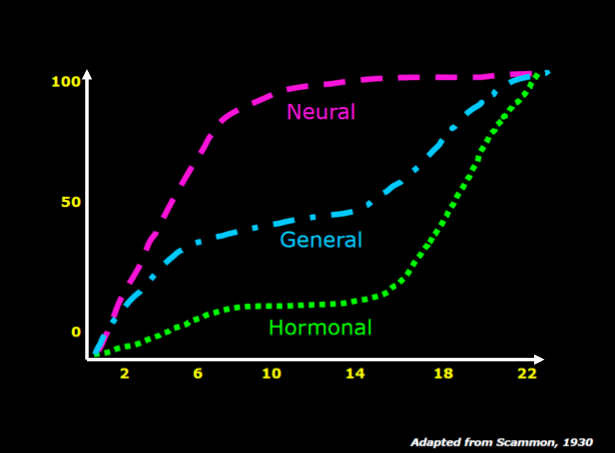
To break things down a little more, it’s extremely common for kids that go through growth spurts to have coordination issues. It’d be like you standing on stilts and trying to go through your normal daily behavior. It takes the nervous system some time to repattern around new levers and a higher center of support.

Hockey Development-Physiological Factors

There is considerable variation at the timing of the development of different systems in the body

Ankle Mobility Matters

The standard for ankle dorsiflexion range of motion in the test we use is 4″ bilaterally. He had 1/2″ on one side and negative motion on the other.

Not having ankle mobility is a big deal.

It will prevent him from being able to get into a good acceleration position as he won’t be able to position his knees appropriately in front of his foot to get a strong push back. It will also cause his foot to collapse in anytime he tries to get into these positions that he doesn’t have the range for.

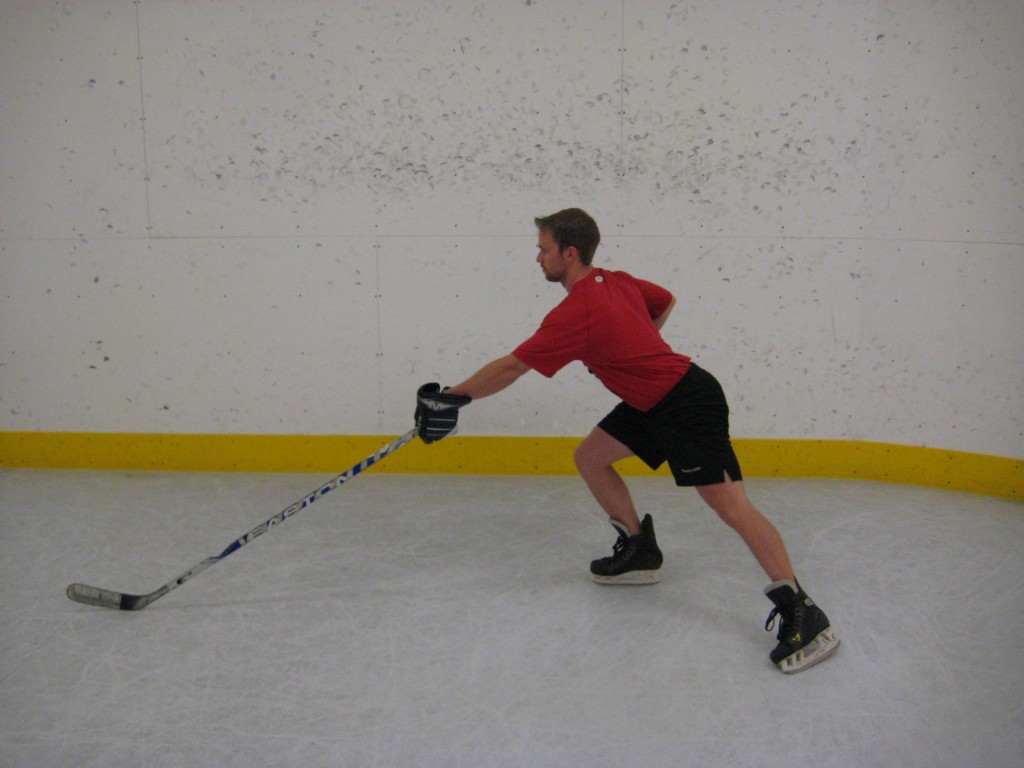
Optimal Skating Stance

Despite being in a skate boot, the ankle needs to move well to get into good skating positions.

When the foot collapses in, the knee tends to collapse in with it. This not only leads to compromised stability on the stance leg while skating, but it also causes players to ride their inside edge more, effectively increasing the friction between their skate blade and the ice, slowing them down a little on each stride.

Lastly, ankle dorsiflexion is tied to hip extension so limitations in ankle mobility are likely to be mirrored by limitations in hip mobility. An easy way to understand this concept is to think of your ankle and hip position as you’re walking. When you transfer your weight over your foot, your ankle needs to go through dorsiflexion (shin transfers forward over your foot) as your hip extends. A lack of dorsiflexion will cause your heel to peel up early, which prevents the hip from going through extension. Given how important hip range of motion is to the skating stride, it’s essential that we don’t neglect some of these secondary drivers of hip mobility limitations.

Strength Is the Foundation For Speed

It’s extremely rare that I see athletes that have above average strength and reasonable body composition and are still slow. There’s a reason for this. Movement is driven by ground reaction forces.  In this case, the force a player is above to drive through the ice is what propels them forward. If you can’t produce a lot of force, you can’t produce it quickly…meaning you can’t be fast.

Limitations to Improved Speed

Anytime someone comes to train with me, I try to think of their training goal in terms of what is limiting them from achieving that goal, and then what do I have the best ability to influence. For example, a player that comes to me with the same goal, but is mobile, stable, powerful, and strong may be best served by seeking out a skating coach. A player that has all the tools, but suffers from consistency issues may need help outside of training or on-ice settings (e.g. with diet or sleep behaviors).

In this case, the player has very notable (and common) limitations in areas that will directly impair his speed. If he can clean up his ankle mobility, get on a quality full body strength training program, and work on his single-leg stabilization strategies, he’ll be able to get into better skating positions on the ice, apply more force into the ice with each stride, and maintain a more stable stance leg to decrease the friction with the ice and get more out of each push from the stride leg.

Understandably, most players think they need to do more sprints if they want to get faster. This strategy works, but only to a small extent. In this case, the player would basically be maxing out his speed potential with limited ankle mobility, compromised single-leg stability, and poor force producing ability. In contrast, if he addresses these limitations first, he’ll not only be faster, he’ll have more room for improvement moving forward.

Wrap Up

Wrapped in all of this discussion is an underlying message to parents of youth players that you need to be patient. Puberty is a wild ride, and having worked with players at a variety of ages across many years, I can say, confidently, that the kids that excel early aren’t always the ones that are still ahead of the pack a few years later. Be patient and continue to emphasize good practice/training habits and having fun!

To your success,

Kevin Neeld
HockeyTransformation.com
OptimizingMovement.com
UltimateHockeyTraining.com

P.S. If you’re interested in off-ice speed training exercises for hockey players, check out Breakaway Hockey Speed, which now comes with a full downloadable exercise database!

Enter your first name and email below to get your FREE copy of 5 Strategies to Improve First Step Quickness

Get Ultimate Hockey Transformation Now!

Year-round age-specific hockey training programs complete with a comprehensive instructional video database!

Ultimate Hockey Transformation Pro Package-small

Get access to your game-changing program now >> Ultimate Hockey Transformation

“Kevin Neeld is one of the top 5-6 strength and conditioning coaches in the ice hockey world.”
– Mike Boyle, Head S&C Coach, US Women’s Olympic Team

“…if you want to be the best, Kevin is the one you have to train with”
– Brijesh Patel, Head S&C Coach, Quinnipiac University

Today’s Thursday Throwback is an appropriate follow-up to last week’s post on the relationship between flexibility and muscle injury risk. If you missed that, you can check it out here: Does Flexibility INCREASE your risk of injury?

This is another short, but important read, as it touches on an idea that I think every youth athlete I’ve ever worked with has been taught incorrectly. Enjoy the post, and please pass it along to any friends or family you think would benefit from reading it!

Should You Stretch After You Pull A Muscle?

Think about the times in your life that you’ve “tweaked” a muscle or slightly strained/pulled it.

What was the FIRST thing you did on your own or were told to do?

If you’re like most people, you immediately stretched the muscle.

straight-leg-adductor-stretch-bilateral

This isn’t always the answer

The very first thing I tell my athletes if they tweak a muscle is NOT to stretch it!

A muscle strain can range from a slight over-stretch to a complete tear. Assuming the muscle isn’t COMPLETELY torn, it’s likely that there is some micro-damage to the muscle and that the muscle feels tight because it’s guarding against further injury.

This means that most people are attempting to stretch an over-stretched muscle AGAINST the muscles’ contraction.

Not only is this not an effective way to speed up your healing, but it’s probably making your injury worse!

Think about your muscle as a rubber band. Now imagine cutting a small slit in the rubber band with a razorblade.

If you stretch that rubber band now, what’s going to happen?

The small slit is going to expand, getting longer and wider.

Does making a slight tear in your muscle longer and wider seem like a smart recovery strategy?

If you tweak a muscle, DO NOT stretch it. You can ice it if you want (although I’m not convinced that ice does anything either). If you’re going to stretch anything, stretch the muscles that OPPOSE the injured muscle.

Many muscles are overworked or strained because of a relative stiffness imbalance with their antagonists, so stretching the opposing muscle can help bring you back into balance.

To your success,

Kevin Neeld
OptimizingMovement.com
UltimateHockeyTraining.com

Please enter your first name and email below to sign up for my FREE Performance Training Newsletter!

Get Optimizing Movement Now!

“…one of the best DVDs I’ve ever watched”
“A must for anyone interested in coaching and performance!”

Optimizing Movement DVD Package

Click here for more information >> Optimizing Movement

Today’s “Thursday Throwback” is a quick one from 2009. This continues to be a trend we see in our assessments today and I think, while basic, highlights that you can go wrong on both ends of the flexibility continuum. Those that are too immobile at one joint are likely to move excessively at another. Those that are too mobile at one joint may be more likely to suffer from injuries as a result of a lack of stability and/or constant attempt to manage the instability (e.g. muscle injuries). This is why optimizing movement is such an important concept!

Optimizing Movement DVD Package


Enjoy the post below:

Does Flexibility INCREASE your risk of injury?

A couple weeks ago I did an audio interview with Joe Heiler for SportsRehabExpert.com, one of the most underrated membership sites on the web. I’m really humbled that he asked me to contribute.

If you’ve never been there, check it out. Joe’s a really bright guy and has compiled a lot of great information from other smart, successful coaches and therapists.

SportsRehabExpert.com

One of the things that came up during the interview was what we can do to prevent “groin” (adductor) strains. We’ve been fortunate in that we haven’t had too many adductor injuries in our athletes. This is probably, at least in part, due to the hip mobility and hip muscle activation exercises we use.

We did have a couple athletes complain of adductor pain though, and they all had ONE thing in common:

OUTSTANDING ADDUCTOR FLEXIBILITY!

This trend flies in the face of the “you got hurt because you didn’t stretch or aren’t flexible enough” way of thinking.

In these athletes, we were able to resolve their pain relatively quickly, by having them STOP STRETCHING their adductors, start stretching their glutes a few times a day, and by doing isometric adductor strengthening exercises by crushing a medicine ball between their knees for time.

The rationale was simply that their adductors were weak relative to their abductors (to be overly simplistic: weak groin, strong glutes).

By stretching their glutes and strengthening their adductors, we were able to shift the strength and stiffness relationship between those muscles into more balance and get rid of their pain within a week or two.

To your success,

Kevin Neeld
OptimizingMovement.com
UltimateHockeyTraining.com

Please enter your first name and email below to sign up for my FREE Performance Training Newsletter!

Get Optimizing Movement Now!

“…one of the best DVDs I’ve ever watched”
“A must for anyone interested in coaching and performance!”

Optimizing Movement DVD Package

Click here for more information >> Optimizing Movement