Last week I received an email with some exciting news. A couple of my good friends in Eric Cressey and Mike Robertson, alongside two highly regarded strength and conditioning coaches in BJ Gaddour and Dave Schmitz, have created what will be known as the Elite Training Mentorship.

The Elite Training Mentorship provides a unique opportunity for strength and conditioning coaches, personal trainers, sports medicine professionals, and even motivated people that simply train themselves to get an inside look at how some of the top coaches in the industry:

  1. Teach movements and exercises
  2. Design programs to get incredible results for their clients/athletes
  3. Deliver staff training sessions to create a world-class staff

The Elite Training Mentorship isn’t available to the public yet, but Eric Cressey just released a video from a staff in-service he did outlining his lower body assessment protocol. If you’ve been reading my work for any extended period of time, you know that Eric has had a profound impact on my career. I still credit interning with him as the smartest career decision I’ve ever made in my life, and he continues to be a great mentor and friend. He’s someone I always look to for innovative information, and this video doesn’t disappoint (this could easily be a stand alone product by itself!). Check out the video at the link below:

Watch Eric’s Lower Body Assessment here >> Elite Training Mentorship

To your success,

Kevin Neeld

P.S. People ask me all the time what assessments I do for our athletes. Eric covers a lot of them here. Check out the video (it’s completely free!): Elite Training Mentorship

Please enter your first name and email below to sign up for my FREE Athletic Development and Hockey Training Newsletter!

Just wanted to let you know that I recently did a hockey training interview with Mike Robertson that is now available through his site. The interview covers everything from what makes the best players the best to strategies to improve players’ durability to what young hockey strength coaches can do to excel in the field! Check it out at the link below:

Click here >> Hockey Training with Kevin Neeld

To your success,

Kevin Neeld

Please enter your first name and email below to sign up for my FREE Athletic Development and Hockey Training Newsletter!

// ]]>

I hope you had a great weekend. This was the first weekend in a month that I’ve been home so it was nice to spend some time with Emily and relax a bit. On Saturday, Emily and I “doubled” with David Lasnier and his ladyfriend at Raw, my favorite sushi place in Philadelphia. Because of the company, David refrained from rolling all of the wasabi into one big clump and eating it whole.

I just assume this is common behavior in Canada

Last weekend I had an opportunity to attend an invite-only symposium on USA Hockey’s American Development Model. They did a great job bringing in speakers from different sports, countries, and disciplines, and I couldn’t say enough good things about the direction USA Hockey is going in general. In a few upcoming posts, I’ll explain more about the state of youth hockey, what USA Hockey is hoping to do, and what you can do to help. In the meantime, it’s been a while since I’ve done a “random thoughts” post and there are a lot of little things I want to share with you.

  1. I get questions about supplements ALL the time, usually from kids that eat like crap and have been “educated” (I use that term VERY loosely) by fellow high school students. Supplements can be very beneficial, but as an athletic society, we need to do a better job of educating our youth on the performance enhancing benefits of proper eating. I think kids view supplements as the key to performance enhancement, and eating a quality diet just as a means of improving general health, which they have no utility for as they’ve never suffered any consequences of impaired health (these things come much later in life). Often times, the best strategies for building muscle, facilitating recovery, and ensuring adequate energy to train and perform at a high intensity are found in pretty basic eating and hydration strategies that don’t require supplements.
  2. If you’re a high school player, it’s safe to say that EVERYTHING you’ve been told from your buddies about supplements is wrong.
  3. Speaking of misinformation, I’m amazed at the amount of garbage that is perpetrated as “goalie-specific training” for hockey goalies. Luckily, Maria Mountain has really stepped up as a CREDIBLE expert in this area and has done an outstanding job of providing goalies with training advice that will actually make them better. If you’re a goalie and haven’t heard of Maria, you’re spending more time pulling pucks out of your net than you should be. Check out her site here: Hockey Training Pro
  4. Citrulline Malate may be the most effective supplement you’ve never heard of. Dr. Mike Roussell first brought this to my attention at a seminar over the Summer and it’s definitely worth looking into. He recently wrote a great review of it on Joel Jamieson’s site here: Citrulline Malate – Your Key to Winning In the Last Round?
  5. Dave Ritter and Anne Davis, two presenters at USA Hockey’s ADM Symposium from the US Tennis Association recommended two NY Times articles that I had an opportunity to read through last week. They were just long enough to test my attention span, but I’m glad I worked my way through to the end. Both question current trends/thoughts in our country in the areas of athletic development and success. Check them out here: What if the Secret to Success is Failure?, How to Grow a Super-Athlete
  6. I’m always on the prowl for new resources. Recently I’ve found myself looking to these 4 guys more and more for new information or a different look at program design/implementation: Joel Jamieson’s 8 Weeks Out, Cal Dietz’s XL Athlete, Jim Snider’s Neuro Explosion, and Kyle Bangen’s Bangen Athletic Development
  7. Have you ever watched a mite or squirt hockey practice and noticed that the coach seems to be yelling more than teaching? Those kids should be having fun the ENTIRE time they’re on the ice. Similarly, the COACH should be having fun the entire time. If you don’t like kids, don’t coach them!
  8. With the popularity Facebook has enjoyed, it seems like every industry is trying to develop their own social media site. I can’t tell you how many requests I’ve received to join DIFFERENT business referral sites! Do we really need a social media site for people to say, “I think you should go train with Kevin at Endeavor”? Inevitably, the industry will overgrow before dying back down to a few reasonable, valuable resources. A local group has started a sports-driven site called UR Sports Page that I think may survive the process. Great idea to provide an exclusive site just for athletes.
  9. Core training continues to be a hot topic in athletic development and fitness crowds alike. Naturally, this means that a lot of people will fall victim (e.g. waste their time and money) to unscrupulous marketers making amazing claims about the crap they peddle. It’s great to see that Mike Robertson has spent the time and energy to put together a quality core training resource. If you haven’t been following Mike’s work over the last week, check out these posts: Should You Crunch?, Should You Crunch? Part 2, My Core Training Story. I know he has some other great posts planned for this week too. Click any of the links above to head over to his site now, read through the content and sign up for his webinar “Complete Core Training”. It’s free!

That’s a wrap for today. Check back in a couple days for a few interesting insights into the chicken and egg cycle with postural adaptations and goalie-specific performance.

To your success,

Kevin Neeld

Please enter your first name and email below to sign up for my FREE Athletic Development and Hockey Training Newsletter!
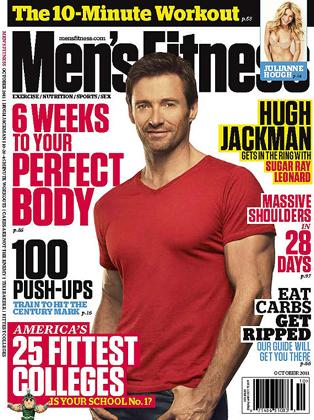
Push-ups are one of the most popular exercises out there, especially in youth sports. When performed correctly, push-ups are a terrific exercise to promote core/shoulder stability, upper body strength, and a proper upper body pressing movement pattern. I was recently featured in Men’s Fitness for a segment on how to train to perform 100 push-ups consecutively.


As you can imagine, the first step in being able to perform 100 push-ups is being able to perform one, correctly. In reality, the push-up form I see most frequently is pretty far from optimal. This is the result of never being taught how to perform the movement correctly or having been taught incorrectly. In either case, the result is a continued development of an improper movement pattern, which will inevitably lead to a breakdown SOMEWHERE (front/top of the shoulder, back of the next, and lower back are the most likely culprits). Shortly after the Men’s Fitness article went live, I received an email from a reader that had to perform a push-up test for his work (police officer) and noted that his performance was limited by shoulder pain. My response to his email was:

If I understand your case correctly, it’s not uncommon. The reality is that most people have never been taught to do a push-up correctly, and MANY have been taught how to do them incorrectly. Assuming your shoulder pain is a result of a suboptimal movement pattern and not the result of another underlying issue (you should get that checked out by a doctor), you can improve your push-up ability immensely by following the guidelines I wrote about here: Shoulder Pain with Pressing Exercises

Rather than reinvent the wheel here with a new post on how to address shoulder pain with pressing exercises like push-ups, I’ll just direct you to a post I wrote a while back that covers the issue in-depth. Check it out here:

Click here >> Shoulder Pain with Pressing Exercises

One of the major take homes I try to reinforce with our athletes is that PROPER movement is more important (or at least equally as important) as strong, powerful, or quick movement. In general, athletes tend to overemphasize quantity and underemphasize quality, probably because it’s more easily observable and quantifiable. A perfect running stride resulting in a lost race doesn’t get much credit. On the other hand, a sloppy running stride that wins a race gets praise. Proper movement doesn’t only optimize long-term performance, it also SIGNIFICANTLY decreases the risk of non-contact injuries, which have become unacceptably overwhelming in youth sports. Optimization of all basic movement patterns (lower body push, lower body pull, upper body push, upper body pull, linear and transitional running mechanics, etc.) is a worth goal and should be the focus of early athletic development endeavors. This post will go into specific details on how to do this for upper body pushing patterns:

Click here >> Shoulder Pain with Pressing Exercises

To your success,

Kevin Neeld

P.S. My friend Mike Robertson has posted two great articles on the pros and cons of a very popular core exercise. The posts include thoughts from a couple of really bright guest contributors (including Stuart McGill). Check them out here: Should You Crunch: Part 1 , Should You Crunch: Part 2

Please enter your first name and email below to sign up for my FREE Athletic Development and Hockey Training Newsletter!
If you’re on the fence about Fitness Business Blueprint you’ve probably had some of these same questions. Pat Rigsby just fired me over responses to a few of the most frequently asked questions he’s received after announcing the new resource. Check it out below:

Do I have to have an existing training business to benefit from Fitness Business Blueprint?

Answer: Ideally, Fitness Business Blueprint would work best if you have your own business or at least the desire to start one. Because at the end of the day, that’s where your long-term success will come from.

But that being said, having your own business is NOT mandatory to benefit from Fitness Business Blueprint.  You can still benefit if you are an employee or a contractor in someone else’s business by learning how to be a better coach, a better marketer and a better salesperson.

But at some point, you’ll want to have the freedom that running your own business provides. And by using what you learn from us to build your own business, you’ll achieve that in record time.

What if I’m brand new to the fitness industry. Is Fitness Business Blueprint right for me?

Answer: That’s one we’re getting a lot. And it’s a legitimate concern.

So here’s the deal…

If you know absolutely nothing about coaching, have no training experience whatsoever, and are a complete novice in the industry, then this probably isn’t for you.

Because Fitness Business Blueprint is not one of those products that don’t ask you to be good at your craft, we ask more of you than the average ‘marketer’ would before investing in this product.

If you have no training background, then you need to study your craft.

Dig in to Mike and Eric’s materials as well as some of the other coaching / training resources that we recommend.  Only after you’ve done that legwork will FBB yield it’s true benefit to you. And if you’re willing to actually spend the time learning your craft, then apply what we show you, then you’ll be starting a business armed with a skill-set entrepreneurs everywhere only wish they had when they started.

You’ll avoid all the paralyzing mistakes while consistently building a successful and profitable business. But, by simply utilizing what you learn in Fitness Business Blueprint, you’ll be able to avoid the dreaded “overworked and underpaid” stage and ascend to having the business you want much faster than you ever thought possible.

Can I go through Fitness Business Blueprint at my own pace?

Answer: Absolutely. You get access to the entire Fitness Business Blueprint package so you can go through the material at whatever pace you feel most comfortable.  No rush, no pressure.

I already have some other fitness business products. Is Fitness Business Blueprint different?

Answer: I’ve seen every product on the market and have created a number of them myself – and yes it’s different.

Fitness Business Blueprint takes you inside both Mike and Eric’s businesses and they share things that you just don’t get from my or any other business building products.

While some of the concepts that are shared in FBB are things that have been taught before in all of our products, nothing like this has ever been compiled in one comprehensive resource designed specifically to build a successful fitness business before.

If you’d like to learn more about Fitness Business Blueprint you can go here:

Click here >> Fitness Business Blueprint

To your success,

Kevin Neeld

Please enter your first name and email below to sign up for my FREE Athletic Development and Hockey Training Newsletter!